MASTER OF SCIENCE IN BIOCHEMICAL ENGINEERING
Enhance your skill set, increase your earning potential, and learn about new technology and modeling approaches for biopharmaceutical production and development with a graduate degree in biochemical engineering.
Villanova’s Master's in Biochemical Engineering program provides real-world knowledge for practical application covering hot-button topics including biopharmaceutical design and biomaterials and drug delivery. This degree exposes students to upstream and downstream bioprocess fundamentals and provides the tools to design and optimize pharmaceutical facilities, processes and products, using state-of-the-art analysis and technology.
Our Community
Pursuing an engineering master's degree at Villanova is to become part of a close-knit, scholarly community. Professors are highly available and engaged in their students' success.
Master's in Biochemical Engineering:
- 46% female
- 67% part-time
- Average age: 26
- Total enrollment: 24
Flexible Options
Classes are conveniently held in the evenings to allow you to successfully balance work and family while earning your degree. You can participate in class on campus, in real-time (synchronously) via our E-Learning program, or on your own schedule through recorded materials and lectures. Our graduate programs are unique in that you can combine online and on campus options, attending class or participating remotely depending upon your availability and preference. You can also complete your biochemical engineering graduate degree entirely online. Learn more about the opportunities of E-Learning.
Successful Outcomes
Villanova’s Biochemical Engineering graduate program alumni work for some of the largest pharmaceutical companies in the nation, including:
Bristol-Myers Squibb
Eli Lilly and Company
GlaxoSmithKline
Johnson & Johnson
Janssen Pharmaceuticals
Merck
RESEARCH
Ongoing research areas for faculty in Biochemical Engineering:
- Alternating tangential flow system optimization
- Thin film delivery of anti-inflammatory agents
- Nano/Micro particle design for drug delivery
- Design and delivery of gene therapy vehicles
- Characterization of thin film nanomaterials
- T-cell activation and production
- Optimization of microbioreactors
- CHO cell metabolism
- Pathogens in biofilms
- Development of blood substitutes
To learn more about curriculum and academic requirements for the program, please contact:
Zuyi (Jacky) Huang, PhD | Email
Director of Graduate Studies, Biochemical Engineering
Associate Professor of Chemical and Biological Engineering
For additional information regarding the admissions process, requirements and deadlines, please contact:
Samantha Phipps | Email
Assistant Director of Graduate Admissions and Recruitment, College of Engineering
STUDENT PERSPECTIVES

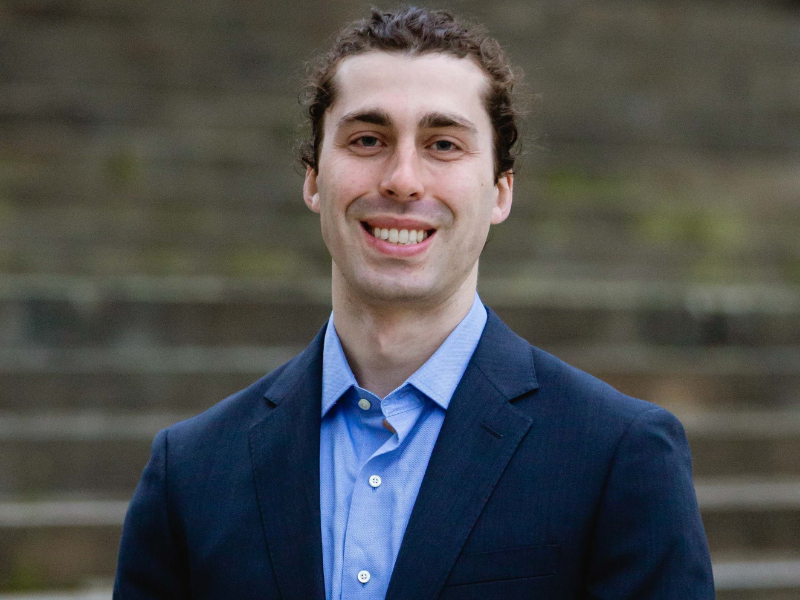
"As a full-time student, I enjoyed the independence I had on my research project, but also appreciated the support of Dr. Bill Kelly who provided guidance and connected me with people in industry for further discussion on the topic.”
Evan Kurt, PhD student and graduate researcher, Biomedical Engineering, Duke University

“I'm grateful to have been part of a graduate program that was small enough to allow me to interact with all of the other graduate students and all of the faculty. It helped me develop a really well-rounded approach to my research.”
Emily Harris ’20 MSBChE, Associate CAR T Cell Scientist, Janssen Pharmaceuticals
“There were a lot of pharmaceutical courses throughout the program that were in line with what I do every day. The combination of theory and the practical application in the classroom helped me to apply what I learned to what I do in the lab at work.”
Mike Weiss ’09 ChE, ’16 MSBChE, Senior Supply Execution Manager, Janssen Pharmaceuticals.