CENTER FOR ADVANCED COMMUNICATIONS (CAC)
The mission of the Center for Advanced Communications is to advance knowledge in the areas of wireless communications, satellite navigations, acoustic and ultrasound sensing and radar systems, and to facilitate the transformation of this knowledge into commercial innovations.
In 1991, a year after its founding by the late Joseph DiGiacomo ’58 EE, the CAC was designated a Center of Excellence for Advanced Communications by the National Science Foundation. This placed the CAC in the unique position of being the only NSF research center at what was then a non-PhD granting institution.
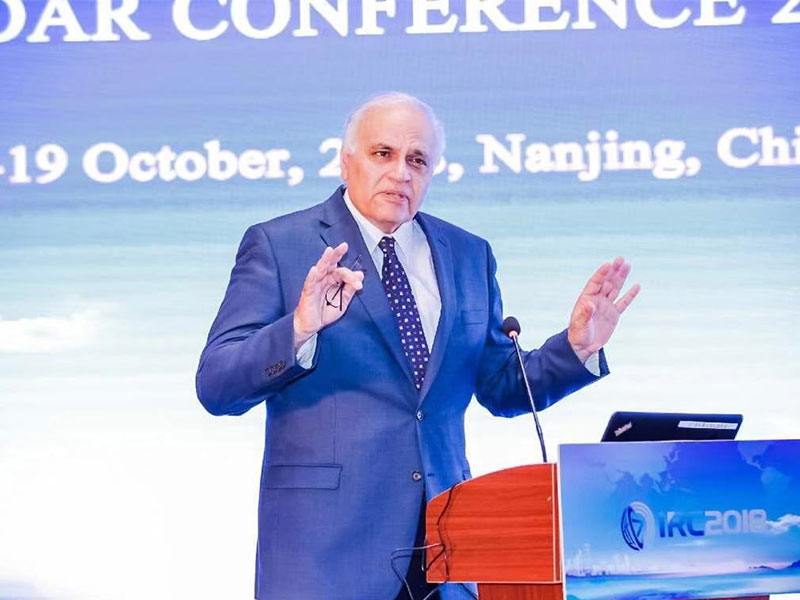
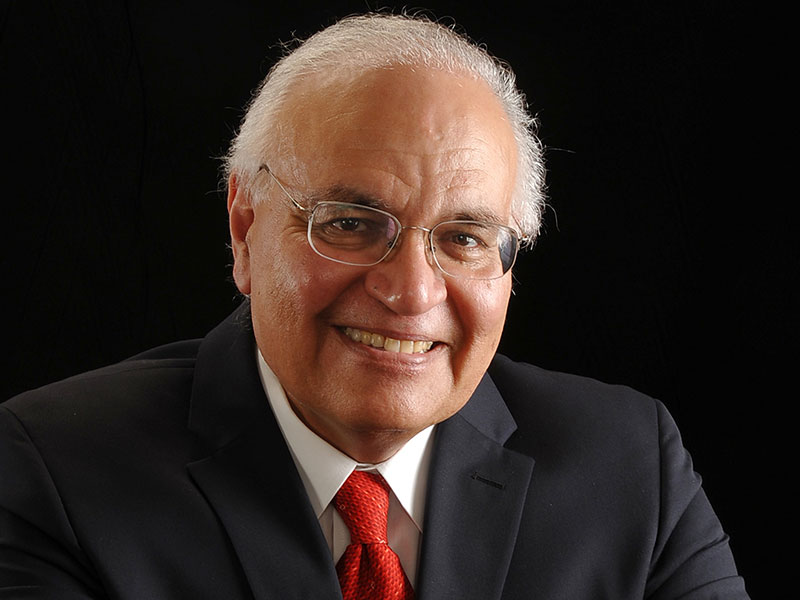
In 2002, Professor Moeness Amin, PhD, Department of Electrical and Computer Engineering, was named the Center’s director. He is credited with transforming the Center for Advanced Communications into “an excellent and rare example of how to sustain and grow a research operation in a smaller university.” The NSF's national report, which featured the CAC as one of four case studies, found the Center’s research talent, lab facilities and entrepreneurial mindset to be a “great accomplishment.”
CAC AT A GLANCE
8
Faculty Researchers
5
Number of current research projects
5
STATE-OF-THE-ART RESEARCH LABS
OUR RESEARCH
Projects undertaken by the Center for Advanced Communications are led by College of Engineering faculty and involve undergraduate and graduate students, research professors, research associates and postdoctoral fellows. CAC projects have been sponsored by Pennsylvania state agencies, federal government agencies and companies of all sizes.
The CAC has five state-of-the-art research labs:
- Acoustics & Ultrasound Lab
- Antenna Research Lab
- Radar Imaging Lab
- Radio Frequency Identification Lab
- Wireless Communications and Positioning Lab
Primary research areas, include:
- Electromagnetics
- GPS Technologies
- Radar Systems
- Sensor Technology (including Through Wall Radar Imaging)
Current research projects:
- Machine Learning-based RF Signal Detection and Classification
PI: Dr. Xun Jiao; Co-PIs: Drs. Mojtaba Vaezi and Moeness Amin
Sponsor: L3Harris Technologies, Camden, NJ
Project Duration: one year (2021)
Investigating the discrimination of RF signals based on distinctions in their temporal structures, spectral characteristics, and time-frequency signatures, which are automatically learned from the training data.
- Cognitive Radar
PI: Dr. Moeness Amin
Sponsor: Army Research Lab
Improve cognitive radar’s perception-action cycle of cognition and radar sensor adaptation to optimally satisfy the needs of its mission according to desired objectives
- Manufacturing Process, Assembly and System Yield Optimization for Microelectromechanical Systems (MEMS) Devices
PIs: Dr. Rosalind Wynne and Avo Photonics, Inc
Sponsor: PA Department of Community and Economic Development
Optimizing MEMS fabrication, assembly and packaging to improve product performance and life spans in smart consumer electronics including wearable devices
- Brain Systems of Locomotion & Falls in Older Persons with Multiple Sclerosis
PI: Dr. Meltem Izzetoglu
Sponsor: National Institute of Health
Project Duration: 05/15/2019 – 02/29/2024
Identifying brain systems, structures and novel mechanisms of mobility using advanced neuroimaging methods which can predict increased incident fall risk among MS patients
- Data Collection and Analysis of Tracheal Sounds
PI: Dr. Moeness Amin
Sponsor: RTM Vital Signs, LLC
Project Duration: 01/01/2020 – 12/31/2020
Measuring, processing, and analyzing trachea sounds to detect and classify respiratory phases and abnormality
- COVID-19 Risk Monitoring by Wearable Sensor
PIs: Dr. Moeness Amin and RTM Vital Signs, LLC
Sponsor: PA Department of Community and Economic Development
Detecting early signs of COVID-19 by measuring acoustic sounds as the air goes out and in through the trachea
- Smart Brain Imager
PI: Dr. Meltem Izzetoglu and Infrascan, Inc.
Sponsor: PA Department of Community and Economic Development
Accelerating cognitive health monitoring by developing a universal, durable, affordable and reliable platform, based upon functional near infrared spectroscopy (fNIRS) technology, that is miniaturized, fully wireless and app-operable
Director
Dr. Moeness Amin, Professor,
Department of Electrical and Computer Engineering