
MENDEL MEDAL
HONORING PIONEERS IN THE SCIENCES
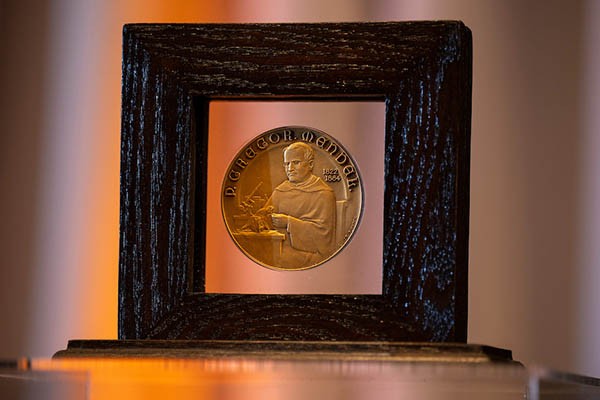
The Villanova University Mendel Medal was established and awarded to outstanding scientists who have done much by their painstaking work to advance the cause of science, and, by their lives and their standing before the world as scientists, have demonstrated that between true science and true religion there is no intrinsic conflict.
The Mendel Medal, in honor of Gregor Johann Mendel Abbot of the Augustinian Monastery, Brünn, Austria, (now Brno, the Czech Republic), who discovered the celebrated laws of heredity which now bear his name, was established in 1928 by the Board of Trustees of Villanova University to recognize scientific accomplishment and religious conviction. The Mendel Medal was first awarded in 1929 and given annually until 1943. Between 1946 and 1968, the Mendel Medal was awarded eight times. After a hiatus of twenty-five years, it was reestablished in 1992 as part of the Villanova University's Sesquicentennial Celebrations.
Past recipients have included Nobel Laureates, outstanding medical researchers, pioneers in physics, astrophysics and chemistry, and noted scientist-theologians.
CURRENT RECIPIENT
Huda Zoghbi, MD
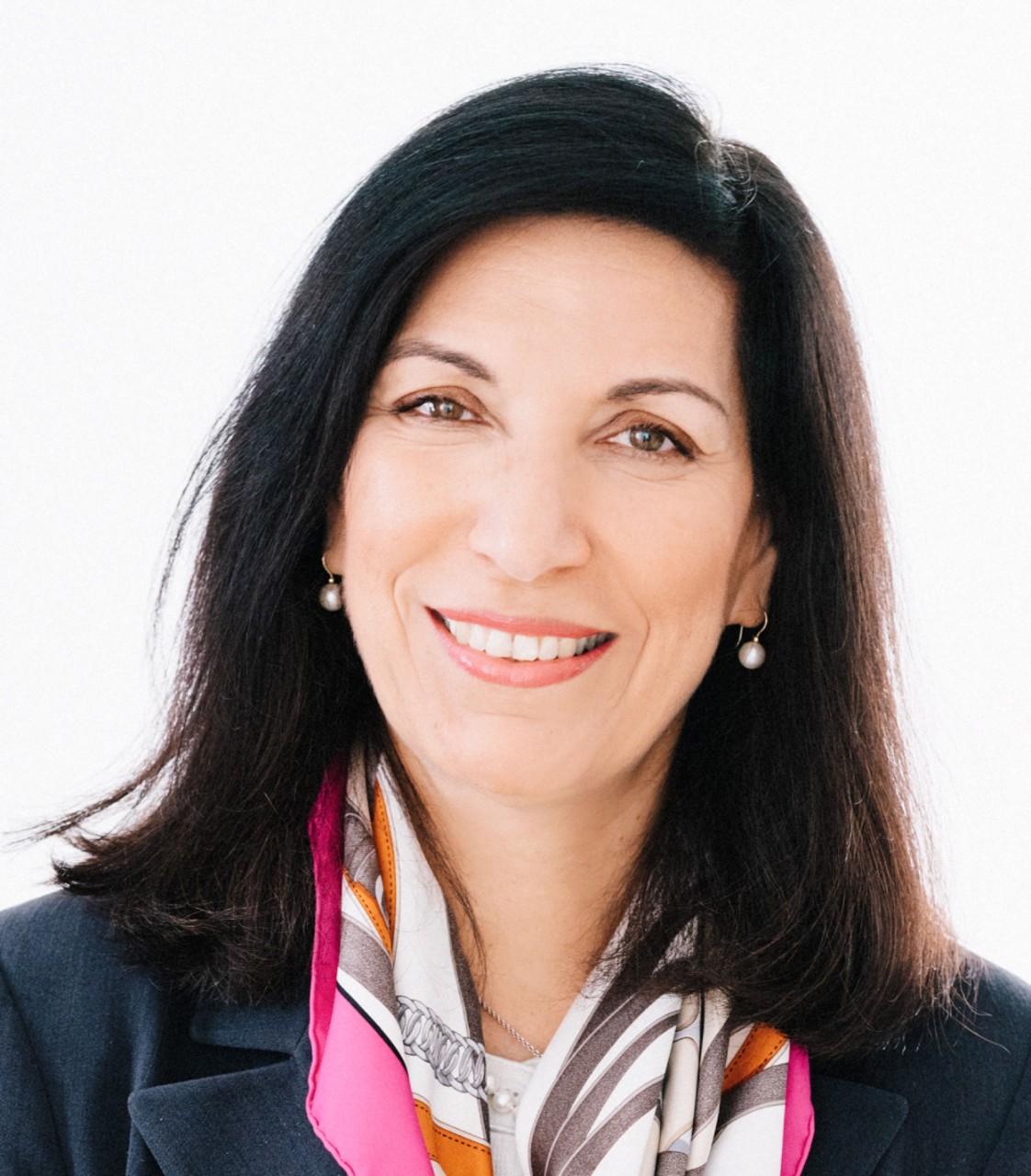
Huda Zoghbi, MD, is Distinguished Service Professor at Baylor College of Medicine, an Investigator with the Howard Hughes Medical Institute, and founding Director of the Jan and Dan Duncan Neurological Research Institute at Texas Children’s Hospital.
Dr. Zoghbi graduated from the American University of Beirut (AUB) and received her medical degree from Meharry Medical College. She joined Baylor College of Medicine for her residency and subsequently obtained postdoctoral research training in molecular genetics.
Dr. Zoghbi’s expertise ranges from neurodevelopment to neurodegeneration. She and Dr. Harry Orr discovered that Spinocerebellar Ataxia type 1 is caused by expansion of a polyglutamine tract. Her subsequent studies demonstrating that CAG expansion leads to accumulation of the mutant protein in neurons has had profound ramifications since many late-onset neurological disorders involve similar accumulations of disease-driving proteins and inspired her studies in Alzheimer disease. Zoghbi and collaborators identified regulators of tau levels providing entry points for development of therapeutics to lower tau. Dr. Zoghbi’s pursuit of the genetic basis of Rett syndrome led to her discovery that mutations in MECP2 levels cause this postnatal neurological disorder. Her mechanistic studies highlighted the importance of MeCP2 levels for normal brain function.
Her team discovered that subtle changes in MeCP2 levels (~30%) can cause isolated autism phenotypes. She and her team provided the proof-of-concept data showing that antisense sense oligonucleotide therapy can normalize MeCP2 levels and reverse phenotypes of a MECP2 duplication mouse model, which led to the ongoing clinical trials. Her ongoing studies are focused on characterizing non-coding regions of X-linked neurodevelopmental disease genes as potential sites for mutations in autism and on developing therapeutics for Tau-driven neurodegenerative disorders and Parkinson disease.
Dr. Zoghbi has trained over 110 scientists and physician-scientists and is committed to educating the next generation. She has been elected to the National Academy of Medicine, the National Academy of Sciences, and the American Academy of Arts and Sciences. Dr. Zoghbi’s honors include the Breakthrough Prize in Life Sciences; the Canada Gairdner International Prize; the Lundbeck Foundation’s 2020 Brain Prize; the Kavli Prize, the August M. Watanabe Prize in Translational Research, and most recently the The Nancy Lurie Marks Prize for Autism Research.