
Villanova Communication Professor Examines Gender, Nationalism and the “Hindu Modern” in New Book
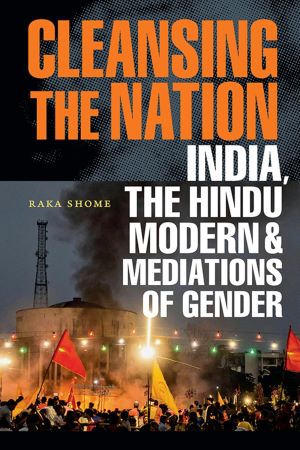
Villanova, Pa. — A campaign to promote cleaner streets, better sanitation and healthier communities may not seem overtly political. But in her latest book, Cleansing the Nation: India, the Hindu Modern, and Mediations of Gender, Raka Shome, PhD, The Harron Family Endowed Chair and Professor of Communication, explores how India’s cleanliness movement reveals multifaceted questions about nationalism, gender, identity and belonging.
In Cleansing the Nation, Dr. Shome examines the Swachh Bharat Mission, or Clean India Mission, a nationwide campaign launched in 2014 to eliminate open defecation and improve sanitation across India. Through an analysis of government initiatives, media coverage and popular culture surrounding the campaign, she explores how efforts to promote cleanliness also communicate ideas about what a modern nation should look like, and who has a place in it.
For Dr. Shome, the Clean India Mission is just one case study for understanding the rise of Hindu nationalism through what she refers to as the “Hindu modern”—the notion that Hindu identity is intertwined with modernity, progress and development.
“There is this constant juxtaposition between being Hindu and being modern,” explains Dr. Shome. “That logic of the Hindu modern plays out in the Clean India movement, where we are reminded that in ancient times, cleanliness was so important to us, our bodily discipline, that we have to recover that kind of a civilization and ethos.”
The book illustrates how the Hindu modern can reinforce religious and caste inequalities by elevating a specific vision of desirable “clean” citizens, while alienating those who do not fit that ideal. Dr. Shome highlights disparities in access to sanitation, particularly among marginalized groups in rural communities who could face penalties for not following government orders.
Dr. Shome finds that gender is a key element of the movement’s messaging. Several media campaigns aimed at educating citizens about cleanliness, primarily in rural areas where they may use open fields for sanitation, connect these efforts to concerns about women’s safety. She articulates how this focus on protecting women intersects with Hindu nationalist rhetoric about perceived threats from other groups.
“The more we try to understand authoritarian nationalism through different contexts, perhaps we can begin to better understand how it circulates at an everyday level and how we participate in it without realizing it,” says Dr. Shome. “I think this book is a strong contribution to understanding authoritarian nationalism that does not seem authoritarian.”
Cleansing the Nation builds on Dr. Shome’s scholarship on media, communication, postcolonial cultures, feminism and nationalism. She received her PhD at the University of Georgia, Athens, and has published numerous articles and book chapters in leading journals and anthologies in the field of media and communication. Dr. Shome is also the author of Diana and Beyond: White Femininity, National Identity, and Contemporary Media Culture. Her work has earned international recognition, including the 2026 Teresa Award for the Advancement of Feminist Scholarship from the International Communication Association.
About Villanova University’s College of Liberal Arts and Sciences: Since its founding in 1842, Villanova University’s College of Liberal Arts and Sciences has been the heart of the Villanova learning experience, offering foundational courses for undergraduate students in every college of the University. Serving more than 4,500 undergraduate and graduate students, the College is committed to fortifying them with intellectual rigor, multidisciplinary knowledge, moral courage and a global perspective. The College has more than 40 academic departments and programs across the humanities, social sciences, and natural and physical sciences.

“Boundless” is a publication that illustrates the extraordinary accomplishments of our students and faculty with examples of their collaborative research, innovative teaching and outstanding scholarship.