
Fall 2026 Graduate Research Symposium

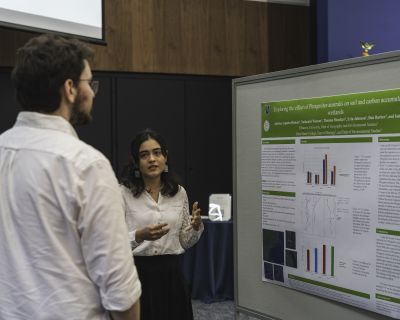
Research is central to the graduate experience in Villanova’s College of Liberal Arts and Sciences. It gives students the opportunity to explore questions that matter, pursue new ideas and contribute knowledge that can make a difference within their disciplines and beyond.
On Friday, October 30, 2026, graduate students from across the College came together for the annual Graduate Research Symposium, sharing their research through 3MT-style oral presentations and poster sessions. The symposium offers students a chance to step beyond their individual programs and disciplines, engage with one another’s work and make their research accessible to a broader audience.
The event celebrated the curiosity, creativity and scholarly excellence of our graduate students and the faculty mentors who help them pursue ambitious questions and meaningful work. It also reflects the many ways Villanova supports graduate research, including Summer Research Fellowships, conference travel funding, language workshops and CONCEPT, Villanova’s interdisciplinary graduate research journal.
Together with partners such as the Villanova Institute for Research and Scholarship, the Center for Research and Fellowships and the Center for Graduate Research and Education, these opportunities help create a vibrant research community where graduate students can develop their ideas, share their work and contribute to the larger scholarly conversation.
We invite you to explore the 2026 symposium by watching the oral presentations in the video below, or by reading the abstracts from the oral and poster presentations below.
Read the Oral Presentation Abstracts
"Kensington‚ Social Death: Authority, Media, and Visual Resistance"
This study examines the social death, or dehumanization, of communities experiencing homelessness and/or addiction in Kensington, Philadelphia. It argues that Mayor Cherelle Parker, "Clean-up Kensington" initiative equates "cleaning up" with the removal of encampments, a framing reinforced and amplified by local news media. By quantifying these representations and employing photography as a resistance strategy, this study highlights the intersection of social death, authority, and media while positioning visual methods as tools for social justice and activism.
"Fiddler Crab Real Estate: Environmental constraints on burrow distribution across the range of Minuca pugnax"
Fiddler crabs are important coastal ecosystem engineers whose burrowing alters sediment structure, biogeochemistry, and vegetation in salt marshes. As temperatures have warmed, the mud fiddler crab, Minuca pugnax, has expanded northward along the U.S. Atlantic coast. In its historic range, crab activity has often been associated with increased vegetation growth, whereas studies in its expanded range have documented reduced plant and algal biomass. These contrasting effects may depend on environmental conditions that shape where burrowing occurs and, in turn, how fiddler crabs engineer the marsh.
To characterize burrow distribution and identify environmental drivers of burrow abundance, we surveyed salt marshes in Georgia and New Jersey within the historic range and Massachusetts within the expanded range. We expected sediment shear strength to be particularly important because greater sediment resistance may constrain digging. Burrow abundance declined markedly from south to north, averaging 19.6, 4.1, and 2.0 burrows per 0.0625 m2 quadrat in Georgia, New Jersey, and Massachusetts, respectively. In Massachusetts, 83% of quadrats contained no burrows, and those observed were concentrated near creek edges.
Within sites, burrow abundance declined strongly with increasing sediment shear strength, with no burrows observed in sediments exceeding 13 kPa. These results suggest that sediment strength may constrain where M. pugnax can physically burrow within a marsh. In Massachusetts, high shear strength across the marsh platform may restrict burrowing to areas of lower sediment strength near creek edges. Concentrating crab activity in these areas could intensify engineering effects in parts of the marsh already vulnerable to erosion and vegetation loss. As M. pugnax continues to expand northward, predicting its ecosystem engineering effects may therefore depend not only on where crabs are present, but also on the environmental conditions that determine where they can burrow within marshes.
"Sublethal effects of multiple environmental stressors on the physiology and ecological function of wild and farmed Eastern oysters"
Eastern oysters (Crassostrea virginica) support an important commercial fishery and are foundational ecosystem engineers (EEs) along the Atlantic and Gulf coasts. Oyster reefs provide critical habitat for diverse faunal communities and protect shorelines from erosion, while filter feeding improves water quality and facilitates nutrient cycling.
Despite their ecological and economic importance, oyster populations have declined globally due to interacting environmental and anthropogenic stressors that cascade to affect broader estuarine processes. The protozoan parasite Perkinsus marinus, which causes Dermo disease, is a major contributor to this decline. Although the lethal effects of Dermo are well documented, its effects on oyster physiology and ecological function remain poorly understood. This gap is particularly concerning in the context of climate change, as elevated temperatures accelerate P. marinus replication while simultaneously increasing host metabolic demand, potentially intensifying the effects of Dermo.
With ongoing ocean warming, both wild and farmed oysters are increasingly exposed to temperatures favorable to P. marinus proliferation. These concurrent stressors may interact to intensify host-parasite interactions and impair physiological processes that underpin EE functions like filtration. To address these gaps, I conducted a controlled laboratory experiment exposing wild and farmed oysters to 26°C, 30°C, and 32°C across a 21-day period. At 7-day intervals, I measured oyster filtration, respiration, body condition, disease prevalence and intensity, and mortality to assess how temperature and disease influenced oyster physiology and EE function. Preliminary analyses suggest that wild oysters had more intense Dermo infections than farmed oysters, but no difference in mortality rates. Disease intensity did not differ among temperature treatments in either oyster population.
Overall, this study aims to inform climate-resilient aquaculture and management of oyster-mediated ecosystem services in warming estuaries.
"Same Disease-Causing Yeast Species, Different Survival Patterns"
Opportunistic yeast infections are an increasing concern due to antifungal resistance, yet the traits that allow some yeasts to survive and replicate within macrophages remain poorly understood. Macrophages are immune cells that engulf and destroy disease-causing organisms, but some yeasts, such as Candida tropicalis, can survive and replicate within them. C. tropicalis is an opportunistic pathogenic yeast found in clinical and environmental settings, where isolates may experience different conditions that influence survival.
Previous work in the Opulente Lab found substantial variation among individual strains without a consistent difference between isolates from the two sources. However, how these strain-level differences emerge during macrophage infection remains unknown. To address this gap, I examined C. tropicalis survival and replication across multiple time points to identify when strain trajectories begin to diverge and select an informative time point for future cytokine and transcriptomic analyses. Murine macrophages were infected with clinical and environmental C. tropicalis and lysed at timepoints between 2 and 16 hours. Viable yeast recovered were quantified using colony-forming units (CFUs), and mixed-effects models evaluated strain and time effects while accounting for variation among biological replicates.
Yeast counts increased over time, but the magnitude and timing varied among strains. Strain-level differences were detected at multiple time points and did not consistently correspond to clinical or environmental isolates. While early trajectories were similar, strain differences became more pronounced later in the assay. Variability increased substantially at 14–16 hours, coinciding with microscopic observations of macrophage lysis and yeast escape. Because strain differences were detectable by 8 hours, before macrophage lysis, this time point provides a useful window for examining yeast and macrophage gene expression and cytokine production. These findings demonstrate strain-specific variation in C. tropicalis survival and replication during macrophage infection, providing a framework for investigating the mechanisms underlying these differences.
"Identifying the postsynaptic partners of developmentally reprogrammed neurons in Drosophila"
My thesis will ask how the postsynaptic partners of these neurons change across metamorphosis. In our lab, we noticed that mated female fruit flies behaved differently to male courtship songs. Specifically, they would do a rejection response unique to only mated female fruit flies. Our lab discovered the neurons DDAG C/D which we found to be responsible for the mated rejection behavior. And that they are embryonic born meaning that they remained as functioning larval neurons. Larval and adult fruit flies look very different. So how does these neurons change? When they do change, where do their postsynaptic connections go?
To test these ideas, series of experiments using genetic tools such as split-GAL4 and confocal microscopy will be used. First, I will test the hypothesis that the DDAG_C/D neurons in adult females are connected to abdominal motor neurons. Next, I will look to ask whether the motor neurons are also present in larvae and whether they are connected to the counterparts of the DDAG_C/D neurons in larvae.
By determining whether the DDAG_C/D neurons retain larval synaptic partnerships that are coordinately reprogrammed for adult behaviors or instead establish connections with new postsynaptic partners during metamorphosis, I am hopeful that my work will eventually provide new insights into how neural circuits are remodeled during maturation.
"Apophasis and Excess: Rethinking Apophatic Theology as a Hermeneutic of Theophanous Manifestation"
My dissertation deepens the conventional view of apophasis (negative theology) as an intellectual exercise of negation by which the mind ascends to God through unknowing. Instead, I argue that apophasis functions as a hermeneutic of theophanous manifestation, that is, as a mode of reception in which divine manifestation is interpreted as an incomprehensible excess that gives itself wholly without becoming conceptually containable. I develop this argument by reading the Dionysian apophatic tradition through John Scottus Eriugena and Jean-Luc Marion, both of whom demonstrate that apophasis is not exhausted by the via negativa but is the way in which thought receives and interprets the self-disclosure of God while preserving divine incomprehensibility.
Through a historical retrieval of apophatic theology from its classical and medieval sources to its modern and postmodern receptions, the dissertation shows that Eriugena’s metaphysics of theophany and Marion’s phenomenology of givenness converge in understanding apophasis as responsive to excess rather than absence. Taken together, they reveal that apophasis both traverses and challenges the rigid opposition between metaphysical and phenomenological accounts of divine manifestation because the excess of divine self-manifestation cannot be contained within either framework alone. In this sense, theophanous revelation names the self-disclosure of God in and through creation as a divine excess that is genuinely manifest yet irreducible either to the metaphysical order of being or to phenomenal appearance alone. Ultimately, I argue that apophasis is not merely a path of negation culminating in absence but a hermeneutic of reception through which the overwhelming and superabundant mystery of God is disclosed, interpreted, and praised as beyond the full power of human knowing.
"'And They Were Roommates': Assessing Carbon and Nitrogen Exchange between Coral, Dinoflagellates and Algae"
Coral reefs support 25% of all ocean life, relying on tiny organisms called dinoflagellates that use sunlight to provide their coral hosts with essential carbon and nitrogen. When ocean temperatures rise, corals can lose these partners, leaving them vulnerable to starvation. But, algae that live inside the coral's skeleton may provide an alternative source of nutrition, helping corals survive until new dinoflagellates are recruited.
However, this relationship has been studied exclusively in tropical corals, which depend heavily on dinoflagellates for survival. In contrast, the temperate North Star Coral (Astrangia poculata) found along the U.S. Northeast coast can live with or without dinoflagellates by supplementing its diet through feeding. I am investigating how this thermally and symbiotically resilient coral exchanges nutrients with both dinoflagellates and skeletal algae. In the laboratory, I separate the coral tissue, the dinoflagellates living inside the coral, and the algae living within the skeleton, then analyze the carbon and nitrogen signatures of each component.
These values reveal where nutrients originate and how they are shared among the coral and its partners. Similar to tropical corals, we expect that skeletal algae will provide an additional source of nutrients to the North Star Coral, particularly when dinoflagellates are less abundant. By understanding how these partnerships, this research may help explain why the North Star Coral is so resilient and provide new insight into how corals interact with multiple partners under non-stressful conditions.
"Impact of Land Use on Freshwater Salinization Syndrome Solute and Nutrient Export in Two Suburban Headwater Streams"
Upon application, road salt is transported to nearby freshwater systems through surface runoff and groundwater via baseflow. Excess sodium in road salt-impacted runoff can lead to reverse cation exchange in nearby soils, causing increased cation exports and enhanced mobilization of organic matter and nitrogen to waterways through a process known as the Freshwater Salinization Syndrome (FSS).
While the FSS has many recognized negative impacts, little is known about how land use/land cover practices and configuration can affect the timing and delivery of FSS ions and nutrients to suburban watersheds. We hypothesized that (1) FSS-related solutes will decrease as % forest cover increases longitudinally in the downstream direction reflecting dilution and increase as % impervious surface cover (ISC) remains stable longitudinally reflecting a cumulative effect; (2) there will be a temporal lag between Cl- and NO3-/DOC pulses; and (3) DOC and NO3- pulses will be the highest following a winter storm event. To address these research questions, we performed weekly synoptic sampling over the 2026 water year for nine subwatersheds in the greater Philadelphia, Pennsylvania, area which vary in ISC in their upstream area GIS analysis was conducted to determine relative ISC and forest cover in each subwatershed.
A temporal analysis of Cl- and DOC/NO3- was performed at a subwatershed scale to determine the relative lag time of solutes following a winter storm event. The study results contribute to the understanding of FSS solute and nutrient transport in suburban watersheds, particularly in road salt-affected regions.
"Passer domesticus (House Sparrows) as Bioindicators of Environmental Heavy Metal Exposure in the Greater Philadelphia Region"
This study investigates heavy metal pollution within the Greater Philadelphia area using House Sparrows (Passer domesticus) as an indicator species. Heavy metal pollution has been an ongoing crisis in many areas, including Philadelphia, Pennsylvania. Lead, especially, has had a long history within the city, and lead poisoning is a threat many Philadelphians face, with approximately 1,500 children newly identified with elevated blood lead levels yearly.
Current research explores House Sparrows as a bioindicator species for monitoring heavy metal pollution, especially in urban areas or when comparing urban and rural environments, but little research has used these birds in Philadelphia or in the United States more broadly. Previous studies in the United States have examined eggshell or other parts of the Sparrow (heart, lungs, feathers, etc.), whereas this study isolates only the liver. Sparrows were collected for this study from various wildlife rehabilitation clinics within the study area. Due to their status as an invasive species, each bird is euthanized upon arrival at the clinic and stored for pickup. The birds are dissected to isolate the liver, which is then placed into an oven to be slowly dehydrated. Once dehydrated, livers are weighed and microwave-digested using a MARS6 microwave digestion unit in order to analyze them within the ICP-MS. Initial findings show good dispersal of birds within the study area, with many “home ranges” overlapping within Philadelphia.
With additional ICP-MS analysis, these birds will be analyzed for many common heavy metals. Heavy metal readings will then be compared to the readings of nearby birds to observe any spatial patterns and identify any heavy metal hot spots. Initial ICP-MS readings are promising, and more ICP-MS analysis is underway.
"Contextualizing the Modern Plague Play: The Representation of COVID-19 in United States Playwriting"
Theatre and plague have been inextricably linked for as long as performances have been occurring in human history. To identify what makes COVID-19 playwriting unique, I first interrogate how plague has functioned in theatrical works of the past. In Rene Girard’s The Plague in Literature and Myth he points out the central "reversal" present in plague plays of the past - spanning from Oedipus The King, to Troilus and Cressida - stating, “This destruction is often preceded by a reversal. The plague turns the honest man into a thief... Friends murder and enemies embrace. Social hierarchies are first transgressed and then abolished.”
This “transgression” is well exemplified in Ben Jonson’s The Alchemist which is set during 1610, during a plague in London that shuttered theatres citywide. Jonson’s central commoner characters, Face, Subtle and Dol, have taken up residence in the house of the nobleman Lovewit who has fled due to the plague. This trio then decides to use their new social capital to lure others into the house and rob them. The plague Jonson writes about enables social mobility, and The Alchemist centers the very "reversal" Girard wrote about in 1974.
Half a century later, this “reversal” is not at the heart of pandemic playwriting. Instead of abolishing social hierarchies, they are reinforced by COVID-19’s disproportionate impact on Black and Brown people, those with preexisting conditions, or in situations of economic instability. This is mirrored in the playwriting inspired by this pandemic. Intersectionality takes center stage in the plague play of today. This phenomenon is exemplified in Branden Jacobs- Jenkins’s The Comeuppance and Suzan-Lori Parks’s Plays for the Plague Year, plays that center diverse characters and seek to show the massive differences between each individual’s experience with the pandemic.
"Performing Activism: Ireland's cultural performance as occupied territory"
Trinity College Dublin became the first western institution to divest from Israeli companies active in Palestine. My research frames this monumental divestment through the lens of theatrical tradition as a cultural practice to expose the tragedy of the United States' contribution of 3.3 billion dollars of military funding to Israel. Ireland's divestment efforts coupled with anti-occupation themes in Irish theatre as a nation once occupied by England is cultural evidence that the U.S. positioned itself on the wrong side of history. Cultural practice defined by performance scholar Diana Taylor serves as the framework in which the intersection of Ireland's political action and theatrical traditions further proved this cultural difference between Ireland and the U.S.
"Reading Three Voices in Harmony"
In order to read medieval mystical texts through a literary lens, I developed a methodology that would allow me to assert their literary qualities in a way that both addressed and reconciled the contradictions that arose in that process. I describe my methodology as "hearing three voices in harmony." The three "voices" are the Literary, or those elements that fulfill our expectations of a crafted story, the Social or Personal, which refers to the presence in the text of an individual's particular experiences and motivations, and the Religious, or the author's faith in a divine source or mission for their work.
The nature of their "harmonization" is best understood through each voice's relationship to the other voices. First, to define something as a spontaneous, ecstatic vision (Religious) seems to necessarily preclude defining it also as a crafted narrative (Literary). However, the act of writing down such a vision transforms it from raw spiritual material into a performance or reconstruction of that material, which is inevitably a creative act. Second, to understand a text as either purely creative (Literary) or devotional (Religious) feels at odds with the presence of any external motivating factor (Social). Any written work is limited by the subjective filter of an author's mind, so the problem here is better framed as a qualitative one rather than an absolute contradiction: if the messaging is too obvious or disagreeable, this amounts to a judgement of quality not genre.
I found that reading for and into these moments of simultaneous dissonance and consonance, justifies, and provides a fruitful site for, a critical literary reading. My reading of Hadewijch of Brabant's "Letters and Visions" exemplifies the critical value of these vertices by focusing on the performance of temporal and locational shifts, contemporary allusions, and the text's beauty or ability to entertain.
“'It Matters What You Call A Thing': The Effect of Linguistic Interference on Trauma Narratives"
This project analyzes Solmaz Sharif's look through the lens of semiotics, structuralism, and trauma theory to uncover how governmental linguistic [re]construction after 9/11 disrupts the ability to integrate traumatic events into personal narrative, prevents psychological healing, and hinders collective retellings of traumatic events.
While scholars of the 9/11 novel note the manifestation of trauma in motifs of absence, Sharif attempts to explicate this absence through textual gaps and capitalized use of militarized language but in doing so, she highlights the multiplicity of language and the triviality of meaning by attempting to integrate terms within the United States Dictionary of Military and Associated Terms as she copes with the remnants and trauma from 9/11 and wars in the Middle East.
Applications of trauma theory and structural linguistics reveal the effects of governmental and institutional language on the ability to recall, cope with, and make sense of a traumatic experience. Contemporary trauma theory stresses the importance of verbalizing traumatic events, or, as in Caruth's Unclaimed Experience: Trauma, Narrative, and History, allowing the wound, or the traumatic experience, to speak, or be expressed.
Institutional and governmental language impacts the narrative processing of trauma and can distort the personal memories and collective retellings of traumatic events. Contemporary structuralists draw upon Saussurean linguistics, Barthesian semiotics, and Bourdieu's theory of cultural production to explore how institutional linguistic insertion often creates and reproduces a narrative that does not reflect lived experience. While providing additional evidence for the importance of personal narrative and humanity's role in linguistic creation, this project broadens 9/11 literature by considering such written works outside the context of genre studies and expanding applications of trauma theory to post-9/11 poetics and cultural production.
"ChatGPT and Me: Validating the AI Use Survey and Identifying Associations with Personality Traits"
Artificial intelligence (AI) has become increasingly prevalent across all areas of life, especially for young adults. Yet, the literature has not explored how young adults use AI and what personal factors might influence AI engagement. The current study investigated the relationship between AI use, personality traits, and attitudes towards AI within a young adult population.
The study also evaluated the internal consistency of a survey assessing how frequently a respondent engages with various applications of AI. Utilizing the online research platform Prolific, the study sampled 249 participants in representative percentages for sex and ethnicity. Participants completed a series of three structured questionnaires on Qualtrics: the AI Use Survey, the Big Five Inventory-2, and the General Attitudes Towards Artificial Intelligence Scale.
Reliability analysis was used to calculate Cronbach's alpha for the eight items of the AI Use Survey. Linear regression analysis was conducted to predict AI use and, separately, attitudes towards AI from the Big Five domains and facets. Coefficient alpha for the AI Use Survey total score was .85, reflecting good reliability for measuring overall engagement with AI. High extraversion and low open-mindedness predicted more frequent overall use of AI. Negative Emotionality predicted both positive and negative attitudes towards AI.
The Open-Mindedness facets of Intellectual Curiosity, Aesthetic Sensitivity, and Creative Imagination predicted almost all AI outcome measures. Intellectual Curiosity was negatively correlated with AI use, while Creative Imagination was positively correlated with AI use. The results of this study indicate that personality characteristics influence how young adults engage with and feel about AI. This study also provides the field a way to assess use of AI. Further research should explore the contrasting influences of the Open-Mindedness facets on AI use and attitudes.
Read the Poster Presentation Abstracts
"More than 'Just a Girl': Pathways to Intersectional Awareness and Critical Feminism Among White Women"
White American women often lack intersectional awareness (IA), which is defined by a recognition of how other people face unique social circumstances based on their specific intersecting identities. Similarly, White women tend to endorse feminist ideals which platform their own needs while overlooking the distinct experiences of women of color with intersecting sexism and racism. These ideals contrast with critical feminism, which emphasizes the intersectional nuance of sexism and the need to listen to all women's experiences.
While the factors underlying these tendencies are unclear, the way that White women think about their own gender and racial identities (as connected or singular) may play a role. The current pre-registered experiment (N = 308) tested whether inducing a multiple (vs. singular) identity mind-set increases intersectional awareness and support for critical feminism among White American women.
Although this prediction was not supported, exploratory regression analyses revealed that White privilege acknowledgement was positively correlated with intersectional awareness. This highlights the role of critical reflection on the advantages associated with one's intersecting identities in developing an understanding of intersectionality. Future research can explore this further by investigating the impact on intersectional awareness and support for critical feminism when the unearned privileges of Whiteness are made salient to White American women.
"Stress Trajectory and Cumulative Stress: Impacts on Mouse Anxiety- and Depression-like Behaviors"
Chronic stress is a major risk factor for psychiatric diseases, such as depression and anxiety. While cumulative stress theories argue that greater lifetime stress leads to greater functional impairments, it remains unclear whether the changes in stress exposure over time (i.e., stress trajectory) influence psychological outcomes beyond the cumulative amount of stress experienced.
Therefore, the current study examined whether recent changes in stress trajectories will lead to behavioral consequences in ways not fully predicted by cumulative stress alone, using groups that differed in total stress load and stress duration. It is hypothesized that the higher cumulative stress group, which experiences a recent reduction in stress exposure, will not exhibit worse behavioral outcomes than the lower cumulative stress group, which experiences a recent intensification in stress exposure.
We included 20 male C57BL/6 mice produced by Sachs Lab in-house breeding colony at Villanova University. We utilized a modified version of the chronic restraint stress paradigm in rodents and behavioral tests that are widely used to assess anxiety- and depression-like behaviors in mice, as well as the effort-related reward choice test (ERRC), which included running-wheel activity and peanut butter intake. Repeated-measures analyses showed no significant differences in ERRC across stress conditions. Among behavioral tests, the open field test showed a significant effect on total distance traveled (p = .034), where the reduction group (higher cumulative stress) traveled a significantly greater distance than the intensification group (lower cumulative stress), suggesting lower anxiety-like behavior, supporting the hypothesis. No significant group differences were observed in the light-dark emergence test and forced swim test, although a strong trend was observed where the reduction group showed less depressive-like behaviors than the intensification group.
Overall, understanding behavioral responses to changing stress patterns may provide critical insight into the complex relationship between stress exposure and the development of psychopathology.
"Tryptophan Hydroxylase 2 (Tph2) Associated Serotonin Deficiency Effects on Memory and Learning Cognition in Mice"
Serotonin deficits have been associated with both Neurodegenerative disorders such as Alzheimer's and normal aging. While research has been done on serotonergic receptor correlations with behavior in childhood, adolescence, and young adulthood, less is known about how serotonin neurotransmission affects memory, learning, and executive function in the aging population.
Through this research, I studied the behavioral consequences of partial serotonergic loss of function by conducting behavioral tests designed to measure memory, learning, and planning ability in Tph2 knock-in mice. Through this research, we found that age and genotype were not significantly correlated. However, my research did find a significant main effect of age, indicating that behavioral outcomes changed across the lifespan. Additionally, my research replicated findings in other behavioral Tph2 knock-in mouse research, suggesting that Tph2 knock-in mice are hyperactive and perform worse on cognitive testing.
Therefore, our results did not support our hypothesis that TPH2 knockout would exacerbate age-related behavioral decline. These findings are informative because they suggest that the relationship between serotonergic dysfunction and aging-related behavioral decline may be more complex than predicted. Additionally, further insight into mechanisms involved, as well as not involved, in cognitive decline could aid in future treatment of cognitive decline in the neurodegeneration and aging populations. Future research could examine whether this effect depends on specific cognitive domains, the age ranges chosen for testing, or compensatory mechanisms within the serotonergic system.
Characterizing the Spatial Variability and Human Health Risks of Soil Heavy Metal Contamination Across Berks County, Pennsylvania
Urban soil reflects legacies of diverse land use, industrialization, and human activities. Consequently, urban soils often have elevated concentrations of pollutants, particularly heavy metals, which can adversely affect human health. Metal pollution in the environment disrupts essential soil processes and bioaccumulates within food webs. Despite Berks County, Pennsylvania's rich industrial and metallurgical history, there is a lack of data and published research on soil heavy metal content.
Studies in other regions have shown that legacy industries have led to environmental contamination with chromium, lead, arsenic, and other hazardous materials. The main objective of this study is to examine the soil heavy metal and metalloid concentrations in Berks County, PA. A total of 137 soil samples were collected from ten community gardens, five urban parks, five children's playgrounds, and two control sites across Berks County during 2025 and 2026.
The total concentrations of heavy metals (Al, As, Cr, Co, Cu, Pb, Ni, V, and Zn) were determined using the complementary methods of X-Ray Fluorescence (XRF) spectroscopy and Inductively Coupled Plasma Mass Spectrometry (ICP-MS). Mean metal concentrations (XRF) in mg kg-1 were: 26487.71 for Al, 9.47 for As, 41.93 for Cr, 54.26 for Co, 104.87 for Cu, 73.18 for Pb, 36.41 for Ni, 73.35 for V, and 269.96 for Zn. Children's playground soil had the highest overall metal concentrations and control sites had the lowest. The high concentrations in playground soil could indicate greater influence of anthropogenic contamination and lack of routine soil maintenance.
While most concentrations are below U.S. EPA and PA DEP guidelines, elevated levels still raise concerns for exposure among young children. Future in vitro bioaccessibility analysis will quantify the associated health risks of soil metal exposure. Through an environmental justice perspective, this study will address green space soil contamination and inform the community about associated health risks.
"Quantifying the Propagule Pressure of Released Species posed by Local Exotic Herpetofauna Trade Networks in the Mid-Atlantic Region"
The exotic trade in reptiles and amphibians, also known as herpetofauna, is a major industry that can result in the spread of invasive species when non-native herpetofauna are accidentally or intentionally released into the wild. The biggest driver of invasion risk is propagule pressure, i.e. the quantity of organisms released into a non-native environment.
In this study, we sought to quantify differences in potential propagule pressure of exotic herpetofauna traded in the mid-Atlantic region using local trade data and species-specific release probabilities. To determine local trade volume, we first visually surveyed 15 exotic trade shows and 76 exotic pet stores across 5 states in the mid-Atlantic region. For each species we observed, we then calculated relative release probability based on six biological and economic traits associated with release using a boosted regression tree modeling approach.
Finally, we calculated expected propagule pressure for each species by multiplying relative trade prevalence by release probability. Across 653 non-native species recorded in our surveys, release probabilities ranged from 0.035 to 0.681 (mean = 0.11), and approximately 8.3% of species had above average propagule pressure, including potentially risky species such as Varanus niloticus or Xenopus laevis. Furthermore, 25.6% species had above average release probabilities despite below average trade volume, indicating these species could be at higher risk of establishment if demand for these species increases in the future.
These findings help identify which species exhibit the highest risk of release and establishment in the mid-Atlantic region, and have the potential to guide regional invasive species management and prevention.
"Making Meadows, Unmaking Wetlands: Hydrology and Hay in Colonial Philadelphia's Urban Hinterland"
Beginning in the 1760s, Pennsylvanians living in and immediately outside of Philadelphia organized meadow companies, groups of owners and occupiers of discrete parcels of land interested in constructing and maintaining wet meadows. These landscapes, heavily engineered and optimized for hay production, replaced a sprawling series of wetlands and marshes to become a dominant topographic feature in Philadelphia's urban hinterland (modern-day Philadelphia, Chester, and Montgomery Counties).
My project ponders the prehistory of 18th-century meadow companies by examining the formation of Northeastern wetlands over 15,000 years ago, the relationships Lenape people cultivated with these places, and the progressive diminution of Delaware Valley wetland cover in the decades following European settlement in the seventeenth and eighteenth centuries. Ultimately, the causes of ecological change in the region's wetlands were several but followed patterns apparent across the Atlantic World in which ecological diversity made way for a natural world that was rationalized, commodified, and engineered.
"Hey, Stranger: Examining the Role of Microinteractions in Loneliness and Social Isolation"
The United States is facing a "loneliness epidemic," a public health crisis stemming from a lack of social connection. Previous research largely focuses on the role of primary relationships in combating the loneliness epidemic, neglecting the role of interacting with strangers. Expanding upon Granovetter's social tie theory, this study focuses on the impact of small micro-interactions with strangers, such as a greeting or shared smile, on participants' feelings of loneliness and social isolation.
This research uses a qualitative, interview-based approach to gather perspectives on emotional and interactional processes that affect human behavior. Ten semi-structured interviews gathered participants' opinions regarding the importance of interacting with strangers, along with their approach for initiating them. Participants unanimously agreed that microinteractions with strangers help alleviate feelings of loneliness and social isolation.
A thematic analysis of these interviews uncovered three themes: seeking co-presence, intentionally noticing, and strategically engaging. This analysis also reveals a gap between participants' positive beliefs surrounding stranger interactions and their persistent reluctance to initiate those interactions. These findings are currently being used to inform the creation of a mixed-method secondary study. This secondary, survey-driven study will help uncover the contextual factors of the three themes and further dissect the perception-behavior gap that participants value stranger microinteractions yet do not often initiate these interactions.
This research helps us better understand how microinteractions with strangers can help alleviate feelings of loneliness and social isolation, along with factors that impact participants' willingness to engage in these microinteractions.
"Elucidating the transcriptional regulation of neuronal reprogramming in sexually dimorphic neurons of drosophila"
Throughout the animal kingdom, functional neurons in juvenile animals reprogram for adult-specific functions during a period of maturation, such as puberty in mammals or metamorphosis in insects. However, the regulatory mechanisms driving this reprogramming are poorly understood. The dissatisfaction (dsf)- and doublesex (dsx)-expressing abdominal ganglion (DDAG) neurons in the ventral nerve cord of adult female Drosophila offer a unique system to study neuronal reprogramming during maturation.
In larvae, both sexes have DDAG neuron precursors. During metamorphosis, they acquire dsx expression, resulting in neuronal death in males and reprogramming into DDAG neurons in adult females to influence their mating behaviors. The gain of dsx expression thus marks a key step in reprogramming and provides an entry point to identify the transcription factors that regulate it. To identify candidate regulators, we analyzed larval scRNA-seq data and selected 17 transcription factors expressed in the precursors that express dsx during metamorphosis. In an RNAi (RNA interference) screen of these candidates, knockdown of one factor, jing, phenocopied dsx-RNAi by preventing the death of female-specific DDAG neurons in males, with minimal effect in females.
Two independent RNAi lines produced this result; however, they rescued distinct DDAG neurons. jing is also expressed in DDAG precursors in our scRNA-seq data. Because the phenotype matches loss of dsx, jing may act upstream of, or alongside, dsx, though this link is currently being tested. These results identify jing as a candidate regulator of neuronal reprogramming during maturation.
Future work will test whether jing directly controls dsx expression and how it interacts with temporal cues such as the steroid hormone ecdysone. Understanding how spatial and temporal factors interact will be important for explaining neuronal reprogramming across species.
"Maternal nitrogen enrichment can increase early seedling success in the black mangrove (Avicennia germinans)"
In the southeastern United States, the range of the black mangrove, Avicennia germinans, has expanded northward into saltmarshes primarily due to decreasing freeze events. While temperature regulates where A. germinans can survive, nutrient availability may determine the success of population establishment.
Avicennia germinans is a viviparous angiosperm and reproduces via propagules, which are supplied with nutrients and carbohydrates during development and represent a significant maternal resource investment. The effects of maternal N enrichment on second generation success have not been studied in the black mangrove and could represent a bottleneck in population expansion. This project investigated how maternal N addition affects reproduction and allocation of nutrients during propagation in A. germinans, and the subsequent developmental impacts on seedling growth.
Propagules were collected from fertilized (+ N) and control trees two field sites at the northern range limit of A. germinans in northeastern Florida, U.S.A (300 g urea/year). A subset of propagules was analyzed for N concentrations (%), and another subset were grown in a controlled greenhouse for 7 months in separate sibling groups and nitrogen-poor conditions (n = 70). Growth rates, leaf production, and chlorophyll concentration were measured regularly to quantify seedling development. Under nutrient stress, maternal + N history increases growth rates (p < 0.0001) and leaf production (p < 0.00001) in seedlings from the southernmost site (Palencia) but does not affect seedling development at the northernmost site (NMAT). Initial propagule size was found to be a greater predictor of seedling success than N %, with site-dependent trends in N % possibly driven by luxurious uptake of N by fertilized trees at Palencia.
Overall, this study will inform the management of transitioning mangrove-marsh ecosystems as our world's climate continues to change and anthropogenic influence continues to shape our coasts.
"Feeding Strategy Influences Heavy Metal Accumulation in Astrangia Poculata"
While the consequences of heavy metals (HMs) exposure on corals are known, the pathways of exposure are currently unclear. Ingestion of contaminated zooplankton, suspended sediment, and/or microplastics (MPs) may independently or in combination contribute to HM loads in corals.
To investigate potential sources of HM exposure, we are studying the facultative coral Astrangia poculata that lives with varying densities of symbionts in their tissues. We collected colonies (n=60) with visibly different concentrations of symbionts and analyzed the tissue for symbiotic density, MP ingestion, and HM concentration. MPs in the tissue were counted by type with a dissecting microscope and blacklight, and HMs of the coral and plankton were analyzed via ICP-MS. To date, the majority (73%) of MPs were fibers, the average metal pollution index for tissue samples was 6.54 ± 4.93, and the average symbiont density was 0.13 symbionts/polyp ± 0.3 symbionts/polyp.
Corals with lower symbiont densities were found to ingest more MPs than corals with higher symbiont densities; however, with our current samples, this did not contribute to more HM accumulation. In addition, there was no relationship between symbiont density and HM accumulation. HM concentrations were similar between coral tissue samples and plankton samples indicating that plankton is a primary source of HM contamination for corals.
Overall, these results suggest that symbiont densities play a role in mediating the interaction between A. poculata and its environment, and that plankton may act as vectors for HMs for A. poculata.
"Evaluating Urban Nuisance Flood Detectability Using Sentinel-1 SAR Imagery and Multisource Flood Reports"
Urban nuisance flooding (UNF) is a common problem in cities, but it is difficult to study because floods are often shallow, localized, and short-lived. Many events are never formally reported, and even when they are, the flood may disappear before a satellite passes overhead. This creates a major challenge for understanding when and where urban flooding occurs.
This study develops a multi-source framework to investigate urban nuisance flooding in Philadelphia, Pennsylvania, using Sentinel-1 Synthetic Aperture Radar (SAR), rainfall observations, flood reports, terrain information, land-cover data, and drainage-system indicators. The workflow begins by assembling flood observations and locations from National Weather Service Local Storm Reports and community-based sources. Rainfall data are then used to identify dry-reference satellite acquisitions and establish normal SAR behavior at each location. Sentinel-1 time series are extracted at the identified locations and matched control locations, allowing radar responses to be evaluated relative to dry-condition baselines at specific points.
A central component of the framework is evaluating both observability and detectability. Observability examines whether Sentinel-1 actually images a flood while water is present, while detectability evaluates whether the resulting SAR signal is distinguishable from normal background variability and rainfall-related surface wetness. Results show that Sentinel-1 rarely passes over Philadelphia while a short-lived flood is still present, that riverine flooding along the creeks is detectable when it does, and that shallow street ponding leaves at most a faint signal. By integrating hydrologic, topographic, infrastructural, and Earth-observation datasets, and, for recent storms, images from the City of Philadelphia's flood-monitoring cameras, this workflow provides a systematic approach for assessing the practical capabilities and limitations of Sentinel-1 for urban nuisance flooding applications.
The framework also offers a transferable methodology for improving urban flood characterization and supporting resilience planning where reliable ground observations of shallow flooding are scarce.
"Fear of Being Single as a Predictor of Romantic Interest in Self-Expanding vs. Self-Adulterating Dating Targets"
Psychological research has examined individuals in romantic relationships, yet less is known about singlehood. Fear of being single (FOBS), defined as distress about being without a romantic partner, has been linked to suboptimal relational decisions.
Romantic attraction can prompt desire to change oneself through self-expansion (addition of positive traits into the self-concept), and self-adulteration (addition of negative traits). This study examines short-term and long-term FOBS as a predictor of romantic interest in self-adulterating vs. self-expanding dating targets. Single adults with relationship experience (N = 155) completed online measures and indicated their romantic interest in 8 self-expanding or self-adulterating dating vignettes.
Multilevel modeling revealed a main effect of relational self-change: participants preferred self-expanding over self-adulterating targets. A main effect of FOBS also emerged, such that individuals higher in FOBS reported greater romantic interest across all targets. Effects did not differ between long-term and short-term fear of being single; both measures produced the same pattern of results. These findings suggest that while self-adulterating dating targets are generally less preferred, FOBS is associated with greater interest across potential partners.
"Effects of Semantic Congruency on Associative Memory Specificity"
Memory is not always an exact record of our experiences. Sometimes we may remember the relationship between two things without remembering what that relationship was. My research examines whether the meaning we bring to information influences what we remember.
Participants studied pairs of objects and words that were either meaningfully related (e.g. a picture of a wallet and the word "thief") or unrelated (e.g. a picture of a balloon and the word "purse"). Participants were shown pairs again and asked to identify whether the pair was the same one they had seen (the same wallet paired with the word "thief"), a similar pair (a different wallet paired with the word "burglar"), or a different pair (a camera paired with the word "thief").
This allowed for the examination of whether participants remembered the specific details of each experience or instead remembered each experience at a more general level. We tested two possibilities: that meaningful relationships would make pairs easier to remember by providing established associations to rely on, or that unrelated pairs would be more memorable because their unusual combinations might stand out.
Our results were more consistent with the first hypothesis. For meaningfully related pairs, participants more often recognized that lures resembling the gist of what they studied were "same" or "similar" than they did for unassociated pairs. These findings suggest that existing knowledge may provide a framework that supports memory even when specific details become less accessible.
Understanding this distinction is important because remembering is not simply a matter of whether information is retained or forgotten. Our memories can preserve the general meaning of an experience even when its specific details are no longer available. This research provides insight into how existing knowledge shapes what we remember and how the gist of an experience can sometimes outlast its details.
"A Second Chance: Built-In Error Detection"
Nonsense-mediated decay (NMD) is a process by which specific mRNA molecules, or transcripts, are degraded prior to being translated into proteins. This process is an important regulatory mechanism for cells to control which proteins are translated. However, the functions of specific factors and how they contribute to which transcripts are selected for decay remain not fully understood.
Specifically, the RNA helicase UPF1 is considered the central coordinator of NMD, but it is unknown how this helicase selects transcripts for degradation and the extent to which interaction with its cofactor, UPF2, modifies this process. Here, we show that a regulatory loop located within the core of UPF1 modifies the extent to which UPF2 stimulates the helicase activity of UPF1 and its function in selecting mRNAs for decay. In vitro studies reveal that UPF1 containing a shorter regulatory loop, termed UPF1SL, exhibits stimulated dissociation and unwinding activity by UPF2, while a UPF1 isoform containing a longer regulatory loop, termed UPF1LL, does not exhibit stimulation of helicase activity with the addition of UPF2. Cellular studies reveal that NMD is rescued by UPF1SL when the cofactor UPF2 can bind, while NMD functions independently of UPF2 when only UPF1LL is present.
Together, these findings demonstrate that the UPF1 regulatory loop plays a critical role in determining the extent to which UPF2 modulates UPF1 activity and how NMD is regulated.
"Associations Between Tonic Immobility and Posttraumatic Sleep Disturbance"
During a traumatic event, many experience tonic immobility (TI), or the "freeze" response characterized by an inability to move or vocalize. TI is associated with the development of more severe posttraumatic stress disorder (PTSD) symptoms. PTSD frequently co-occurs with sleep disturbances which often remain chronic following PTSD remission.
However, sleep disturbances have not yet been examined in relation to TI. Recent work suggests that fear of sleep (e.g., fear of falling asleep, loss of control during sleep) may also play a role in the development and maintenance of posttraumatic sleep disturbances. Increased fear of sleep may occur because the act of sleep (e.g., lying still, vulnerability) serves as a reminder of the TI experience, and elicits fears associated with TI sensations including loss of control and paralysis.
Therefore, sleep disturbances may be particularly severe for those who experienced TI and subsequently endorse elevated fear of sleep. The current study examined the relationship between TI and sleep disturbances (nightmares and insomnia) and explored whether fear of sleep moderated this association. During the Summer of 2026, adults (ages 18+) were recruited to complete an anonymous online survey distributed via the CONNECT crowdsourcing platform.
Participants first completed a screening questionnaire to report traumatic experiences. Those who endorsed at least one traumatic experience within the past five years then completed additional questionnaires regarding TI, PTSD, fear of sleep, and sleep disturbances (N = 256). TI predicted insomnia (b = .27, SE = 0.04, p < .001) and nightmare symptoms (b =1.76, SE = .22, p < .001) after adjusting for demographic factors, but not after accounting for PTSD symptoms. Fear of sleep did not significantly moderate the link between TI and sleep disturbances. Findings affirm the need to further evaluate TI in relation to sleep disturbances to better support those recovering from traumatic experiences.
"Hospitality Toward Woundedness: Christian Trauma Theology Beyond Repair"
This dissertation develops a constructive theological approach to trauma that moves beyond the dominant paradigms of healing and repair, to theorize a Christian ethic for living with traumatic woundedness. The frameworks for healing that I critique (and appreciate) often have an end-goal in sight for the traumatized person: that they will be liberated from the effects of their traumatic wounding, to various degrees (ranging from full restoration to a somewhat ameliorated condition).
The issue I take with these approaches is not to dispute the degrees of good that they can attain for traumatized persons (making meaning of suffering, offering hope, orienting political action toward resisting structures of domination, shedding light on structural sin), but rather that they overpromise a liberation from one traumatic past. The persistence of traumatic wounds in reappearing, opening up with an often painful freshness, even when they might have seemed finally closed and healed, is the undergirding concern here.
Instead, I advocate a hospitality toward woundedness that is not about instrumentalizing trauma for better outcomes, but about an attentive waiting and finding the right stream to wait within.
Because trauma is a permanent wound, in my understanding which can damage one's self-relation, capacity to desire good (for oneself and others), and severely distort one's perception of God (turning God into a sadistic abuser, or an uncaring observer, or annihilating one's ability to believe in a God at all), this ability to more flexibly and creatively relate to one's trauma, seems crucial to me. It is my view that this flexibility might allow for the painful aspects, and the damage of traumatic harm, to be transformed into something different. While there is no reversing of trauma, or becoming un-wounded, the wound need not remain something purely defined by its painful and damaging aspects.
"An Observational Analysis of Human Activity, Physical Conditions, and Social Context Around Green Stormwater Infrastructure Sites in Kensington, Philadelphia"
As cities implement Green Stormwater Infrastructure (GSI) programs to mitigate urban flooding and meet combined sewer overflow (CSO) regulations, attention has turned to governance and management strategies that sustain GSI performance over time.
Integrated, multi-stakeholder governance is increasingly recognized as critical for sustaining neighborhood GSI benefits. Understanding perceptions, uses, and practices around neighborhood GSI sites is key to implementing these strategies. While several studies have assessed knowledge and attitudes using self-reporting and survey-based methods, few have documented how neighborhood GSI sites are actually used, maintained, and cared for. Through repeated ethnographic observation at 29 GSI sites in Kensington, Philadelphia, between spring and fall 2026, with roughly 20 visits per site, combined with historical research on study sites, analysis of satellite imagery, and interviews with GSI stakeholders, this research documents how communities interact with the sites, how site conditions change within and across seasons, and what physical traces reveal about who maintains them and when.
This presentation describes the observation protocol and presents initial findings, including an emerging typology of GSI socio-material regimes that distinguishes sites by who maintains them, how they are used, and how their condition changes over time. These observations will inform the broader NSF Smart and Connected Communities project of which this work is part, contributing community-grounded data to the development of AI tools for GSI management that integrate technical performance with neighborhood context.
Heavy Metal Transport and Bioavailability Across Particle Size Fractions in Green Stormwater Infrastructure Receiving Highway Runoff
Green stormwater infrastructure (GSI) is increasingly deployed to manage urban runoff, yet the accumulation, transport, and bioavailability of heavy metals within these systems remain poorly characterized.
This study investigates the distribution of Cd, Cr, Cu, Ni, Pb, and Zn in sediments deposited within two contrasting GSI installations receiving highway runoff from Interstate 95 in Philadelphia, Pennsylvania. One site routes runoff through an impervious forebay followed by a series of vegetated steps before it reaches a bioinfiltration basin; the other discharges runoff over impervious splash pads bordered by silt socks directly into bioinfiltration basins.
Event-based sediment sampling targeting 360 after event samples was conducted at multiple locations from the inlets to the outlets within each system following precipitation events. Samples were separated into three grain size fractions (<63 μm, 63–250 μm, 250–2000 μm) and analyzed for total metal concentrations using X-ray fluorescence and exchangeable (bioavailable) fractions using an acetic acid extraction followed by ICP-MS analysis.
Continuous inflow monitoring at each site enabled statistical analysis of relationships between storm characteristics (intensity, duration, volume, antecedent dry period) and metal transport patterns. We present results comparing metal distribution across particle sizes, the bioavailable fraction of each metal, and capture efficiency across the two GSI designs. This research addresses a critical knowledge gap regarding the fate of highway-derived metals in GSI systems and has practical implications for maintenance scheduling, worker exposure assessment, and the protection of communities where these systems concentrate urban pollutants.
"Generating a framework for cofactor specificity within the hydroxybutyrate dehydrogenase family of enzymes: lessons from sequence and structure"
Cofactor specificity of hydroxybutyrate dehydrogenases (HBDH) has proven unique among trypanosome parasites. HBDH catalyzes the reversible conversion of hydroxybutyrate to acetoacetate, utilizing NAD+ as a cofactor in nearly all characterized enzymes except trypanosome HBDHs, which either use both NAD+ and NADP+ or solely NADP+.
Using the sequences of trypanosome HBDHs, we hypothesized the amino acid residues responsible for the cofactor specificity of the trypanosome enzymes. In addition to this, a recent crystal structure for Trypanosoma cruzi HBDH revealed a specificity loop structure involving a residue of interest not obvious through sequence alignments: Cys56.
To ask if the equivalent residue influences cofactor specificity in other HBDHs, we made mutants of NAD-dependent bacterial Pseudomonas putida HBDH with the goal of altering its cofactor specificity to be more trypanosome-like. A single equivalent mutation in PpHBDH is sufficient to alter the cofactor specificity of the enzyme and allow it to utilize NADP+.
We have shown that these amino acids are indeed important for cofactor usage. Michaelis-Menten kinetics of each enzyme will be presented.
"Can Critique Survive the Predictive Human? Negative Anthropology in the Age of Algorithmic Capitalism"
Since the mid-twentieth century the human has repeatedly been displaced as a foundation for thought. From French anti-humanism to contemporary posthumanism and computational accounts of cognition, human capacities increasingly appear as effects of larger systems.
In science and technology studies, the suspicion of critique has accompanied this shift, as social explanation and the exposure of ideology have increasingly given way to attention to networks and material arrangements. At the same time, predictive models of cognition describe thought as a process of continual adjustment to an uncertain environment. Their growing prominence coincides with a broader capitalist investment in prediction, where reducing uncertainty makes the future increasingly actionable in the present.
Prediction becomes valuable when anticipated futures can be brought into present economic decision-making. This paper argues that the problem lies in separating human malleability from the social conditions through which it takes form. The human has never been a fixed substance. What we are is shaped through historically specific forms of mediation, and this makes transformation possible in the first place. The same malleability takes on a different significance in cybernetic and predictive models of the mind. When human capacities are understood primarily through their capacity to adjust to changing conditions, plasticity risks becoming indistinguishable from integration into technical systems.
Prediction then does more than describe human behavior. It participates in organizing the conditions under which behavior takes shape. I reconstruct a negative anthropology through Ulrich Sonnemann and Günther Anders, read alongside Theodor W. Adorno’s negative dialectics. Their work offers a conception of the human that avoids both fixed essence and complete dissolution into external systems. The human emerges through mediation while never being exhausted by the conditions that produce it. This gap between what is and what could be provides a basis for critique.
"Combinatorics of agreement zero codes"
A code is a mathematical object that is used for error-correction in data transmission and storage. Reed-Solomon codes are constructed using discrete polynomials. In this research, we enumerate sub-codes of Reed-Solomon codes over a set of size q, where the number of codewords in a sub-code is q, and no two codewords agree in any position.
Exact enumeration for any field size and maximum degree 0,1, and q-1 are proven. More general results, such as factors and bounds, for all degrees are found. Finally, exact results for small maximum degree and field size pairs are calculated. In simpler terms, this can be thought of as constructing as groups of q polynomials, where at any evaluation point, all polynomials output a different number modulo q. These results are helpful for constructing group testing schemes when tests are limited.
"Getting Lost in the Story: Film Immersion and Creativity in Young Adults; Presentation-Beyond the Screen: How Film Immersion Triggers Real-Time Creative Cognition"
How do narrative experiences shape cognitive processing and problem-solving? Recent research in the STAR Lab found that science fiction (SF) and fantasy fans differed from fans of other genres in creativity, perceived possibility, and moral permissibility. These findings raised the question of whether these differences reflect genre preferences or whether exposure to a genre through media can influence cognitive processing. The present study examined whether film genre and narrative transportation were associated with divergent thinking, perceived possibility, and moral permissibility.
Participants were 89 Villanova undergraduates (mean age = 19.21, SD = 0.95; 54.1% female). Participants watched The Abyss (SF), Glory (historical fiction), Ladyhawke (fantasy), or no film and then completed the Divergent Association Task (DAT), along with measures of modal possibility, moral permissibility, and narrative transportation.
Creativity did not differ across film conditions or the control group, F(3,85) = 0.51, p = .678, η² = .018. However, narrative transportation was associated with higher DAT scores (r = .385, p = .003), accounting for 14.8% of the variance. This relationship was strongest among Ladyhawke viewers (r = .526, p = .006). Moral permissibility did not differ across film conditions, but the SF condition showed a trend toward lower modal-possibility judgments when compared with the control group (p = .055). Participants’ genre preferences were also examined. Preference for imaginative/novelty-oriented genres was associated with higher divergent thinking following film exposure (p = .016).
These findings suggest that genre preference and narrative transportation may be associated with creative performance. People who prefer more imaginative genres may show greater divergent thinking, while narrative transportation may be particularly relevant to creative performance among fantasy viewers. Next, we are repeating the study with shorter TV shows and adding horror to further examine how genre and narrative engagement relate to creativity, modal judgment, and moral permissibility.
"The Great Salt Tree Freeze of '26: Freeze Resistance and Recovery in Avicennia germinans and Rhizophora mangle"
Mangroves are increasingly expanding into temperate salt marshes in the southeastern United States as extreme cold events decline, yet periodic freezes continue to constrain establishment and survival near poleward range limits. While freeze thresholds for Avicennia germinans are relatively well defined, less is known about the mechanisms governing freeze resistance, recovery, and regeneration in Rhizophora mangle, a species widely considered freeze-intolerant and incapable of resprouting.
Because A. germinans and R. mangle co-occur as they expand into temperate salt marshes, understanding how nutrient availability and microclimate shape freeze outcomes is critical for predicting future expansion. We investigated how nutrient availability and microclimate influence mangrove freeze resistance and recovery in Northeast Florida. At two field sites with contrasting nitrogen histories, we monitored height, canopy area, defoliation, and regrowth of nitrogen-enriched and control trees at forest edge and interior positions before and after a natural freeze in winter 2026.
We also surveyed freeze damage and basal resprouting along transects. Before the freeze, nitrogen enrichment and forest position produced clear differences in tree height and canopy size, but the freeze erased these structural differences at both sites. Nitrogen-enriched trees generally experienced greater defoliation than controls. At the more exposed site, fertilized trees showed little regrowth and were shorter than controls months after the freeze, suggesting nitrogen enrichment may impair recovery; at the more buffered site, a flush of new leaves closed the treatment gap within one growing season.
Freeze impacts differed sharply between sites, with one site largely buffered and the other experiencing widespread canopy loss accompanied by substantially more basal resprouting in A. germinans. These results suggest that nutrient enrichment may trade pre-freeze growth gains for reduced cold resilience, and that resprouting is an important, site-dependent recovery pathway that could shape mangrove persistence at poleward range limits.
"The relationship between impervious surface cover and macroinvertebrate taxa richness and diversity in suburban Philadelphia, Pennsylvania Watersheds"
Macroinvertebrates are generally more sensitive to pollution and changes in their environment compared to other aquatic organisms and can be used as bioindicators in rivers and streams to monitor water quality and overall health of an ecosystem. Studies have shown that an increasing urbanization (e.g., impervious surface cover [ISC]) and human population negatively impact macroinvertebrate taxa richness and diversity within urban watersheds. Though, little is known about the relationship between macroinvertebrates with other potential stressors associated with ISC, such as road salts and heavy metals.
This study examines the relationship between macroinvertebrate family richness and diversity with stressors, such as solute concentrations (sodium and chloride), sediment heavy metal concentrations (chromium, nickel, copper, zinc, and lead), and the relative ISC in the upstream area in seven sample locations within four watersheds in Lower Merion Township, PA. Field sampling for all parameters was conducted in May 2026.
All macroinvertebrates were sorted and identified by hand using a microscope to the family level or the lowest taxonomic rank possible, for calculating the Family Biotic Index, taxonomic richness, and diversity. Sediment metal concentrations were determined using x-ray fluorescence spectrometry while water chemistry was determined using ion chromatography. The study results are of immediate interest to watershed and regional planners tasked with mitigating the impacts of road runoff on our waterways.
About Villanova University’s College of Liberal Arts and Sciences: Since its founding in 1842, Villanova University’s College of Liberal Arts and Sciences has been the heart of the Villanova learning experience, offering foundational courses for undergraduate students in every college of the University. Serving more than 4,500 undergraduate and graduate students, the College is committed to fortifying them with intellectual rigor, multidisciplinary knowledge, moral courage and a global perspective. The College has more than 40 academic departments and programs across the humanities, social sciences, and natural and physical sciences.
SYMPOSIUM ARCHIVES
Office of Graduate Studies
College of Liberal Arts and Sciences
Villanova University
Vasey Hall - Suite 202
SCHEDULE YOUR CAMPUS TOUR

The CLAS Office of Graduate Studies offers personal tours of the beautiful Villanova campus. All tours begin in the Graduate Studies Office, located in Vasey Hall.
Schedule your tour!
FOLLOW GRADUATE STUDIES