Benched Before Proven Guilty: The NFL’s Commissioner Exempt List and Pre-Trial Discipline
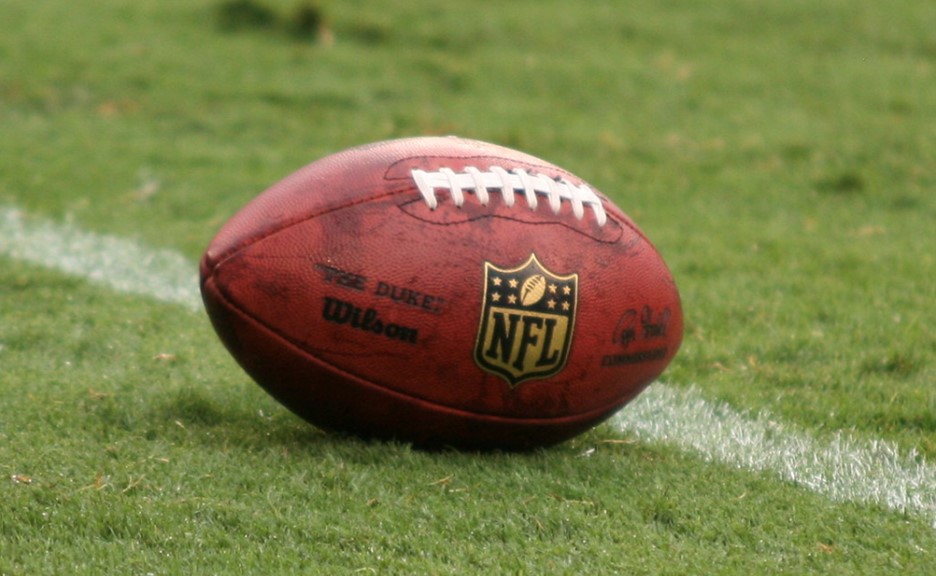
Photo Source: Parker Anderson, NFL, Flickr (Sep. 25, 2011) (CC BY-ND 2.0).
By: Blayne Laliberte* Posted: 04/08/2026
In February 2026, Atlanta Falcons rookie James Pearce Jr. was arrested following allegations that he assaulted his ex-girlfriend, WNBA player Rickea Jackson, and fled from police after a violent confrontation.[1] These serious charges quickly drew widespread public attention.[2] Almost immediately, the conversation shifted from the criminal case itself to a different question: would the NFL place Pearce on the Commissioner’s Exempt List and remove him from playing before the case was resolved?[3]
In American criminal law, the guiding principle is that every person accused of a crime is presumed innocent until proven guilty.[4] Yet the NFL, like most professional sports leagues, appears to follow a different standard in certain situations.[5] This blog post examines the NFL’s Personal Conduct Policy and the Commissioner’s Exempt List, the disciplinary tools the NFL utilizes despite the status of a player’s criminal investigation, exploring whether the league’s current systems produce inconsistent and unfair outcomes for players who face similar allegations.[6]
The NFL’s Authority to Discipline Player Conduct
The NFL Commissioner’s power to discipline players for off-field behavior is governed by several provisions contained in the league’s governing documents and collective bargaining agreement (“CBA”).[7] Most importantly, the League’s Constitution and Bylaws allow the Commissioner to punish any player, coach, owner, or employee found to have engaged in “conduct detrimental to the welfare of the League or professional football.”[8] Article 46 of the CBA reinforces this authority, allowing the Commissioner to discipline players for “conduct detrimental to the integrity of, or public confidence in, the game of professional football.”[9] The standard NFL player contract uses nearly identical language, meaning every player who signs a contract effectively consents to this disciplinary framework three times.[10]
Historically, the Commissioner’s disciplinary authority was rarely used in cases involving off-field criminal conduct.[11] That began to change in 2007, when Commissioner Roger Goodell suspended cornerback Adam “Pacman” Jones for the entire season solely on the basis of pending criminal charges.[12] The league’s approach changed again in 2014 following the Ray Rice domestic violence scandal.[13] After video footage surfaced showing Rice striking his fiancée in an Atlantic City elevator, the NFL faced criticism for imposing only a two-game suspension.[14] In response, the league revised its Personal Conduct Policy, establishing a baseline six-game suspension for domestic violence and formally incorporating the Commissioner’s Exempt List to prevent players from competition during investigations.[15]
The revised Personal Conduct Policy makes it clear that a player can still face discipline even if they are never convicted of a crime.[16] The policy states that NFL players are “held to a higher standard,” allowing the league to impose discipline based on its own investigation even when criminal proceedings are ongoing.[17] The primary mechanism for this pre-trial discipline is the Commissioner’s Exempt List.[18] Under the policy, a player may be placed on paid administrative leave when (1) formally charged with a felony or crime of violence, (2) when the Commissioner’s own investigation suggests a policy violation occurred, or (3) on a temporary basis while the league conducts a preliminary investigation.[19] The policy emphasizes that placement on the list “will not reflect a finding of guilt or innocence” and is not subject to the same legal standards as those that apply in criminal court.[20]
The Commissioner’s Exempt List in Practice: Is the Application Consistent?
The Commissioner has the discretion to place any player charged with a felony or crime of violence on the Exempt List.[21] The policy itself does not distinguish between different types of felony charges, such as domestic violence, vehicular assault, or street racing.[22] In practice, however, the NFL applies the Exempt List selectively, producing different outcomes for players facing similar allegations.[23]
In October 2024, New England Patriots safety Jabrill Peppers was placed on the Exempt List just four days after being arrested on charges of assault and battery on an intimate partner, strangulation, and cocaine possession.[24] He missed seven games before being reinstated from the list in late November 2024.[25] A league source confirmed that Peppers was removed from the list because the baseline suspension for the alleged conduct was six games, and he had already missed more than that.[26] In January 2025, a jury acquitted him of the assault charges, convicting him only of cocaine possession.[27]
The league handled Patriots teammate Stefon Diggs much differently.[28] In late December 2025, Diggs was charged with felony strangulation and misdemeanor assault following an alleged confrontation with his personal chef.[29] The charges were very similar to those that prompted Peppers’s immediate placement on the Exempt List.[30] Surprisingly, the NFL announced that Diggs remained “eligible to play at this time,” explaining that Exempt List placement would only be considered following his arraignment.[31] Diggs’s attorney postponed his arraignment until after the Super Bowl, allowing him to play through the Patriots’ entire postseason.[32]
The league’s different treatment of Peppers and Diggs is not the only example of the Exempt List being applied inconsistently.[33] In 2024, Kansas City Chiefs wide receiver Rashee Rice faced eight felony charges stemming from a multi-vehicle street-racing crash in Dallas, TX.[34] The NFL declined to place him on the Exempt List, stating it did not anticipate doing so unless there was a “material change in the case.”[35] Rice remained eligible to play throughout the 2024 season before later pleading guilty and receiving a six-game suspension from the NFL in 2025.[36]
The inconsistent outcomes of these cases are difficult to understand.[37] The Personal Conduct Policy authorizes Exempt List placement for any player “formally charged with a felony offense” or a “crime of violence,” and each of the offenses above fits into these categories.[38] The league’s actual application, however, tells a different story.[39] Multiple reports indicate that the NFL typically uses the Exempt List for domestic violence cases, even though the policy itself does not make that distinction.[40] As a result, the system appears less like a clear rule and more like discretionary decision-making.[41] The NFL Players Association raised this concern as early as 2015, when it filed a grievance challenging the Commissioner’s ability to remove players from competition before any finding of guilt.[42] That dispute was later addressed in the 2020 CBA, which created a jointly selected Disciplinary Officer to oversee punishment decisions.[43] However, the Commissioner’s authority to place players on the Exempt List remained unchanged.[44]
What Will Happen with James Pearce Jr.?
James Pearce Jr. now faces three felony charges, including aggravated battery with a deadly weapon, fleeing and eluding police, and resisting an officer with violence.[45] The NFL has confirmed it is reviewing his case under the Personal Conduct Policy, but as of this post, Pearce has not been placed on the Exempt List.[46] If the Exempt List is to function as a legitimate disciplinary tool, the NFL must apply it more consistently and transparently.[47]
*Staff Writer, Jeffrey S. Moorad Sports Law Journal, J.D. Candidate, May 2027, Villanova University Charles Widger School of Law.
[1] See Marc Raimondi & Michael Rothstein, Falcons’ James Pearce Jr. Charged with 3 Felonies, Misdemeanor, ESPN (Mar. 12, 2026, at 18:28 ET), https://www.espn.com/nfl/story/_/id/48188048/falcons-james-pearce-jr-charged-3-felonies-misdemeanor (reporting that NFL player James Pearce Jr. faces three felony charges, including aggravated battery with deadly weapon, after allegedly ramming his ex-girlfriend’s vehicle and fleeing police).
[2] See id. (explaining Pearce was charged with three felonies and misdemeanor stalking charge after felony stalking charge was reduced and another felony charge was dropped); see also Mirna Alsharif & Anthony Cusumano, Falcons Linebacker Arrested Following Alleged Domestic Dispute with WNBA Star, NBC News (Feb. 8, 2026, at 15:27 EST), https://www.nbcnews.com/news/us-news/atlanta-falcons-linebacker-arrested-domestic-dispute-wnba-star-rcna258014 (reporting Pearce’s arrest as national breaking news and noting that video of Pearce being tackled by officers spread widely on social media).
[3] See Nat’l Football League, Personal Conduct Policy 2 (2022) [hereinafter NFL Personal Conduct Policy] (allowing NFL Commissioner to place players on Commissioner’s Exempt List when criminal investigation or charge involving violent conduct is pending, preventing player from participating in games while matter is resolved).
[4] See Coffin v. United States, 156 U.S. 432, 453 (1895) (holding presumption of innocence in favor of accused “is the undoubted law, axiomatic and elementary, and its enforcement lies at the foundation of the administration of our criminal law”); In re Winship, 397 U.S. 358, 363 (1970) (requiring proof beyond reasonable doubt in all criminal proceedings as matter of due process).
[5] See Janine Young Kim & Matthew J. Parlow, Off-court Misbehavior: Sports Leagues and Private Punishment, 99 J. Crim. L. & Criminology 573, 575 (2009) (observing commissioners of four major professional sports leagues possess “dominant powers in governing league matters.”); see also Jeremy Cole, Dropping the Ball: How the Commissioner’s Exercise of His “Best Interests” Authority Is Failing the NFL and What Can Be Done About It, 17 Tex. Rev. Ent. & Sports L. 43, 44 (2015) (explaining NFL–NFLPA Collective Bargaining Agreement grants NFL Commissioner unusually broad authority to discipline players for “conduct detrimental to the integrity of, or public confidence in, the game of professional football”).
[6] For a further discussion of the NFL’s Personal Conduct Policy, the Commissioner’s Exempt List, and the consistency of disciplinary outcomes for players facing similar allegations, see infra notes 6–47 and accompanying text.
[7] See NFL, Constitution and Bylaws of the National Football League art. VIII, § 8.13(A), at 30 (2016) [hereinafter NFL Constitution & Bylaws] (granting Commissioner broad disciplinary authority over league personnel); NFL & NFLPA, Collective Bargaining Agreement art. 46, § 1(a), at 276 (2020) [hereinafter NFL CBA] (governing disputes involving Commissioner action against player for conduct detrimental to professional football); see also Cole, supra note 5, at 46 (describing multiple sources of Commissioner’s disciplinary power).
[8] See NFL Constitution & Bylaws, supra note 7, art. VIII, § 8.13(A), at 30 (allowing Commissioner, after notice and hearing, to suspend, fine, or cancel contract of any person found guilty of “conduct detrimental to the welfare of the League or professional football”).
[9] See NFL CBA, supra note 7, art. 46, § 1(a), at 276 (providing disputes involving “action taken against a player by the Commissioner for conduct detrimental to the integrity of, or public confidence in, the game of professional football” are processed exclusively through Article 46 disciplinary framework).
[10] See NFL CBA, supra note 7, app. NFL Player Contract, at 340 (providing player may be fined, suspended, or have his contract terminated if he engages in conduct “reasonably judged by the League Commissioner to be detrimental to the League or professional football”).
[11] See Cole, supra note 5, at 43–44 (noting although Commissioner has possessed “best interests” disciplinary authority since 1960, he did not exercise it to punish player for non-gambling-related off-field offense until 2002).
[12] See id. at 47 (describing how Commissioner Goodell suspended Jones for sixteen games after Jones “had serious, repeated run-ins with the law”).
[13] See id. at 49 (describing Ray Rice scandal as turning point for NFL’s 2014 policy revisions).
[14] See id. at 51–60 (recounting Commissioner Goodell initially suspended Rice for only two games, prompting “significant backlash” after TMZ released video of Rice punching his then-fiancée in face).
[15] See NFL Personal Conduct Policy, supra note 3, at 2–3 (codifying Commissioner’s authority to place players on Commissioner Exempt List when formally charged with felony or crime of violence).
[16] See id. at 1 (providing that “even if the conduct does not result in a criminal conviction,” players found to have engaged in prohibited conduct “will be subject to discipline”).
[17] See id. (“It is not enough simply to avoid being found guilty of a crime in a court of law. We are all held to a higher standard and must conduct ourselves in a way that is responsible, promotes the values of the NFL, and is lawful.”).
[18] See NFL CBA, supra note 7, art. 46, § 5, at 279 (describing Commissioner’s Exempt List).
[19] See NFL Personal Conduct Policy, supra note 3, at 3–4 (authorizing placement on Exempt List when player is formally charged with felony or crime of violence, when Commissioner’s investigation leads him to believe policy violation may have occurred, or on “limited and temporary basis” while league conducts preliminary investigation).
[20] See id. (describing manner in which NFL weighs player’s alleged conduct).
[21] See id. (authorizing paid administrative leave when player is “formally charged with: (1) a felony offense; or (2) a crime of violence”).
[22] See id. (referencing “felony offense” without differentiating among categories of felony charges).
[23] See Cole, supra note 5, at 70 (arguing Commissioner’s disciplinary track record is “inconsistent at best,” leaving players unable to predict “if, when, or how severely they will be punished for their conduct.”).
[24] See Kevin Patra, NFL Places Patriots Safety Jabrill Peppers on Commissioner Exempt List Following Arrest, NFL (Oct. 9, 2024, at 12:07 ET), https://www.nfl.com/news/nfl-places-patriots-safety-jabrill-peppers-on-commissioner-exempt-list-following-arrest (reporting NFL placed Peppers on Commissioner’s Exempt List on October 9).
[25] See Associated Press, Patriots Safety Jabrill Peppers Removed from Exempt List, Cleared to Practice and Play, NFL (Nov. 25, 2024, at 17:38 ET), https://www.nfl.com/news/patriots-safety-jabrill-peppers-removed-from-exempt-list-cleared-to-practice-and-play (reporting Peppers missed seven games since being placed on exempt list).
[26] See Doug Kyed, Patriots’ Jabrill Peppers Removed from NFL’s Commissioner’s Exempt List; Here’s Why, Bos. Herald (Nov. 25, 2024, at 16:23 EST), https://www.bostonherald.com/2024/11/25/patriots-jabrill-peppers-removed-from-nfls-commissioners-exempt-list/ (explaining why Peppers was removed from NFL Commissioner’s Exempt List).
[27] See ESPN News Services, Patriots’ Jabrill Peppers Acquitted in Assault and Battery Trial, ESPN (Jan. 24, 2025, at 15:08 ET), https://www.espn.com/nfl/story/_/id/43549359/patriots-jabrill-peppers-acquitted-assault-battery-trial (reporting jury acquitted Peppers of all assault and battery charges, and that he had separately admitted to cocaine possession, which was continued without finding).
[28] Compare Nicole Yang & Ben Volin, Patriots Safety Jabrill Peppers Placed on Commissioner’s Exempt List Following Arrest, Bos. Globe (Oct. 9, 2024, at 11:46 ET), https://www.bostonglobe.com/2024/10/09/sports/jabrill-peppers-patriots-exempt-list/ (reporting Peppers was placed on Commissioner Exempt List just three days after his arrest on similar charges), with Mike Reiss, Patriots’ Stefon Diggs Faces Strangulation, Assault Charges, ESPN (Dec. 30, 2025, at 12:15 ET), https://www.espn.com/nfl/story/_/id/47454989/patriots-stefon-diggs-faces-strangulation-assault-charges (reporting Stefon Diggs faced felony strangulation and misdemeanor assault charges but was not placed on Exempt List).
[29] See Reiss, supra note 28 (reporting Diggs faced felony charge of strangulation and misdemeanor charge of assault stemming from alleged December 2 incident in which his personal chef accused him of striking her and choking her during dispute over unpaid wages).
[30] For further discussion of the charges that prompted Peppers’s immediate placement on the NFL Exempt List, see supra notes 24–27 and accompanying text.
[31] See Mike Florio, NFL: Stefon Diggs, Christian Barmore Are Eligible to Play While Cases Are Under Review, ProFootballTalk (Dec. 31, 2025, at 15:08 ET), https://www.nbcsports.com/nfl/profootballtalk/rumor-mill/news/nfl-stefon-diggs-christian-barmore-are-eligible-to-play-while-cases-are-under-review (quoting NFL’s statement that “[b]oth are eligible to play at this time” and that placement on Commissioner Exempt List “may be considered following formal charges in the form of an indictment by a grand jury”).
[32] See Mike Florio, Postponement of Stefon Diggs’s Arraignment Virtually Guarantees No Paid Leave, ProFootballTalk (Jan. 9, 2026, at 20:10 ET), https://www.nbcsports.com/nfl/profootballtalk/rumor-mill/news/postponement-of-stefon-diggss-arraignment-virtually-guarantees-no-paid-leave (discussion postponement of Stefon Diggs’s arraignment).
[33] For further discussion of further inconsistent treatment of placing players on the NFL Exempt List, see infra notes 34–36 and accompanying text.
[34] See Mike Florio, Rashee Rice Likely Will Play the Entire 2024 Season, Despite Felony Charges, ProFootballTalk (Sep. 6, 2024, at 10:45 ET), https://www.nbcsports.com/nfl/profootballtalk/rumor-mill/news/rashee-rice-likely-will-play-the-entire-2024-season-despite-felony-charges (reporting Rice faced eight felony charges from Dallas street-racing incident in March 2024).
[35] See id. (reporting that league “doesn’t anticipate placing Rice on paid leave unless there was a ‘material change’ in the case”).
[36] See Grant Gordon, Chiefs WR Rashee Rice Suspended for First Six Games of 2025 Season, NFL (Aug. 27, 2025, at 19:51 ET), https://www.nfl.com/news/chiefs-wr-rashee-rice-six-game-suspension-2025-nfl-season (reporting Rice accepted six-game suspension without pay for violating personal conduct policy after pleading guilty to two third-degree felony charges of collision involving serious bodily injury and racing on highway causing bodily injury).
[37] See Cole, supra note 5, at 61–63 (arguing Commissioner’s inconsistent disciplinary track record leaves players unable to predict how similar conduct will be treated, which Cole argues is “unfair to the NFL’s players.”).
[38] For further discussion on the NFL’s Personal Conduct Policy, see supra notes 7–20 and accompanying text.
[39] For further discussion of the NFL’s application of the Personal Conduct Policy, see supra notes 21–36and accompanying text.
[40] See Mike Florio, supra note 34 (observing that NFL typically uses paid leave “in cases involving domestic violence” and that Rice’s street-racing case “did not” fall into that category);
[41] See Cole, supra note 5, at 44 (describing Commissioner as “not only the prosecutor, but . . . the judge and jury too.”).
[42] See Mike Florio, NFLPA Files Grievance over New Conduct Policy, ProFootballTalk (Jan. 23, 2015, at 06:13 ET), https://www.nbcsports.com/nfl/profootballtalk/rumor-mill/news/nflpa-files-grievance-over-new-conduct-policy (reporting NFLPA filed non-injury grievance challenging revised Personal Conduct Policy on ten separate grounds, including that placement on Commissioner’s Exempt List “constitutes a form of discipline” imposed before player has been found legally responsible for misconduct).
[43] See NFL CBA, supra note 7, art. 46, § 1(e)(i)–(ii), at 276 (establishing “Disciplinary Officer jointly selected and appointed by the parties” who is “responsible for conducting evidentiary hearings, issuing binding findings of fact and determining the discipline that should be imposed” under Personal Conduct Policy); see also Cole, supra note 5, at 50 (noting disciplinary officer under 2014 Personal Conduct Policy was “a member of the league staff” chosen by and employed by Commissioner).
[44] See NFL CBA, supra note 7, art. 46, § 5, at 279 (keeping Commissioner’s authority to place players on Exempt List).
[45] For further discussion on the James Pearce Jr. charges, see supra notes 1–3 and accompanying text.
[46] See Mike Florio, Regarding James Pearce Jr., Rickea Jackson Told Court She Was “In Fear of My Life,” ProFootballTalk (Mar. 11, 2026, at 18:10 ET), https://www.nbcsports.com/nfl/profootballtalk/rumor-mill/news/regarding-james-pearce-jr-rickea-jackson-told-court-she-was-in-fear-of-my-life (reporting NFL is reviewing situation under Personal Conduct Policy and that Pearce “could be placed on paid leave until the criminal case is resolved.”).
[47] See Cole, supra note 5, at 62–63 (arguing Commissioner’s inconsistent use of disciplinary authority is “inherently unfair to the NFL’s players”).