Reimagining Engineering Education
An Engineering professor and her students combine technology and nature to advance STEM education
By Emily Sgroi
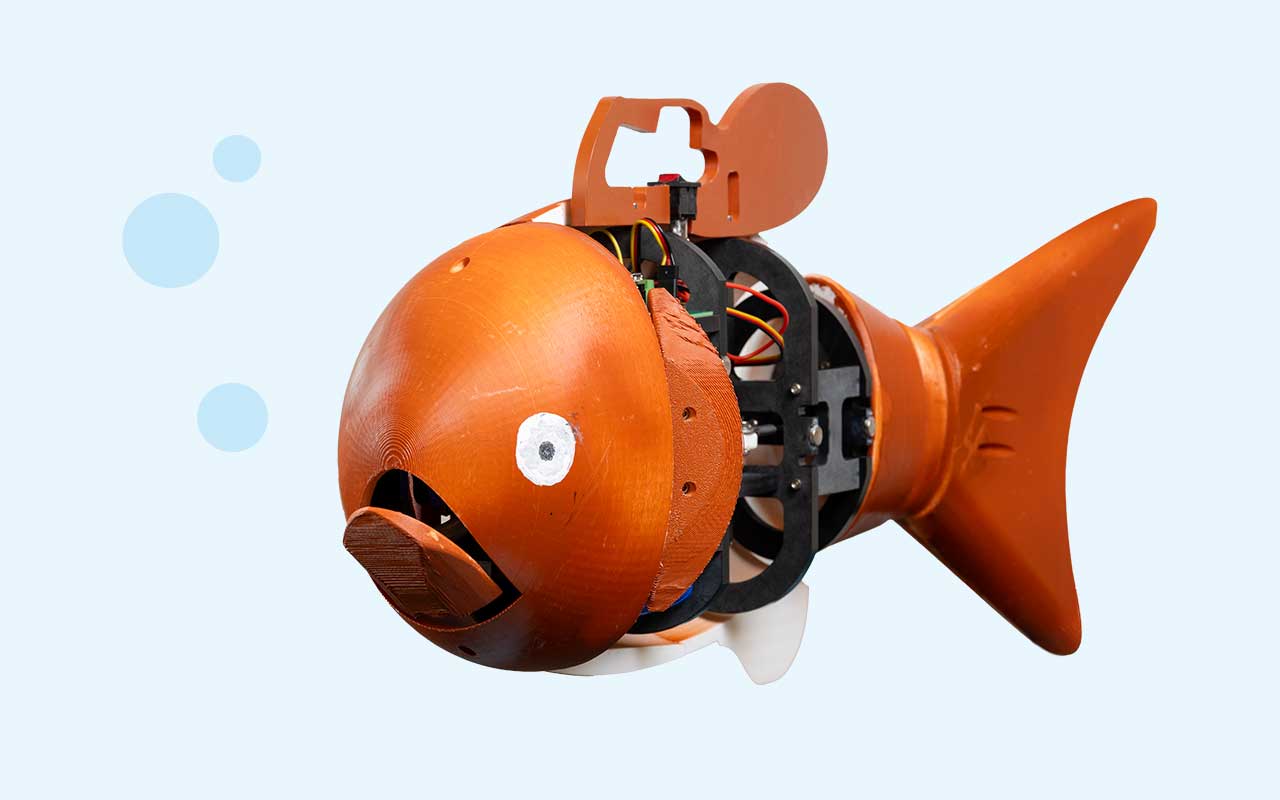
Autonomous vehicles traverse our roads. Drones deliver packages to our front doors. Voice-command interactive toys entertain children with their lifelike personalities. Robotics has permeated everyday life, sometimes to simplify tasks and sometimes to entertain.
Assistant Professor of Mechanical Engineering Deeksha Seth, PhD, has implemented a more scholastic use of this technology: improving engineering education. Dr. Seth’s pursuit of engineering education research is driven by her desire to cultivate socially engaged engineers—professionals who blend technical skills with an understanding of social, cultural and ethical considerations to address global challenges.
Her commitment to shaping human-centered engineers inspired her to develop a unique pedagogical framework called design-inspired problem-based learning (DI-PBL). This education methodology builds on traditional problem-based learning—a long-established approach in which students use critical thinking to address real-world challenges—by incorporating a design element.
“Engineering education has traditionally focused on disciplinary learning with limited opportunities for students to cross into different disciplines,” says Dr. Seth. “As educators, we should encourage students to draw connections beyond their courses and promote integrative thinking.”
Dr. Seth also draws research inspiration from her collaborations with community partners, including the Center for Aquatic Sciences in Camden, NJ, the Delaware Museum of Nature & Science, the Please Touch Museum in Philadelphia, the Science Museum of Virginia and local school districts.
Through these partnerships, young learners can engage with STEM subjects through new technology. Dr. Seth builds bio-inspired robots that promote classroom engagement by demonstrating animal biology. One robot displays a goldfish swimming and breathing using its gills, and another shows how a python’s jaw opens to catch prey.
Daniel Whitman ’26 MS, Mitchell Matella ’26 COE and Brent Virata ’28 COE work on the robots that will be shared with local students for lessons. “There is something magical about taking our robots to a classroom and seeing kids become excited and engaged in their learning,” says Whitman. “It’s also rewarding to work directly with teachers to help bring this technology to their students.”
While much of Dr. Seth’s work focuses on K-12 learners, she is also exploring how educational robots could be applied to other fields, such as using an anatomical model to help patients understand their health conditions. Through her work at Villanova, she empowers students to become skilled engineers and thoughtful, socially engaged problem solvers, creating a ripple effect that extends far beyond the classroom.
DID YOU KNOW?
Through Dr. Seth’s National Science Foundation-funded project, 10 Villanova students have traveled to Montana to date to participate in a paleontological dig for dinosaur bones. Using drones, 360-degree video and other interactive media, the team documented the sights and science of real fieldwork. The footage is now being transformed into a free virtual field trip for K-12 students.
NEXT IN NOVA-WORTHY
Villanova coordinates a global three-year initiative on migration