
LEADING AND LEARNING IN ENGINEERING
Dr. Eric Musselman shares his enthusiasm for his new role as associate dean for Undergraduate Affairs
By Lauren Barnes
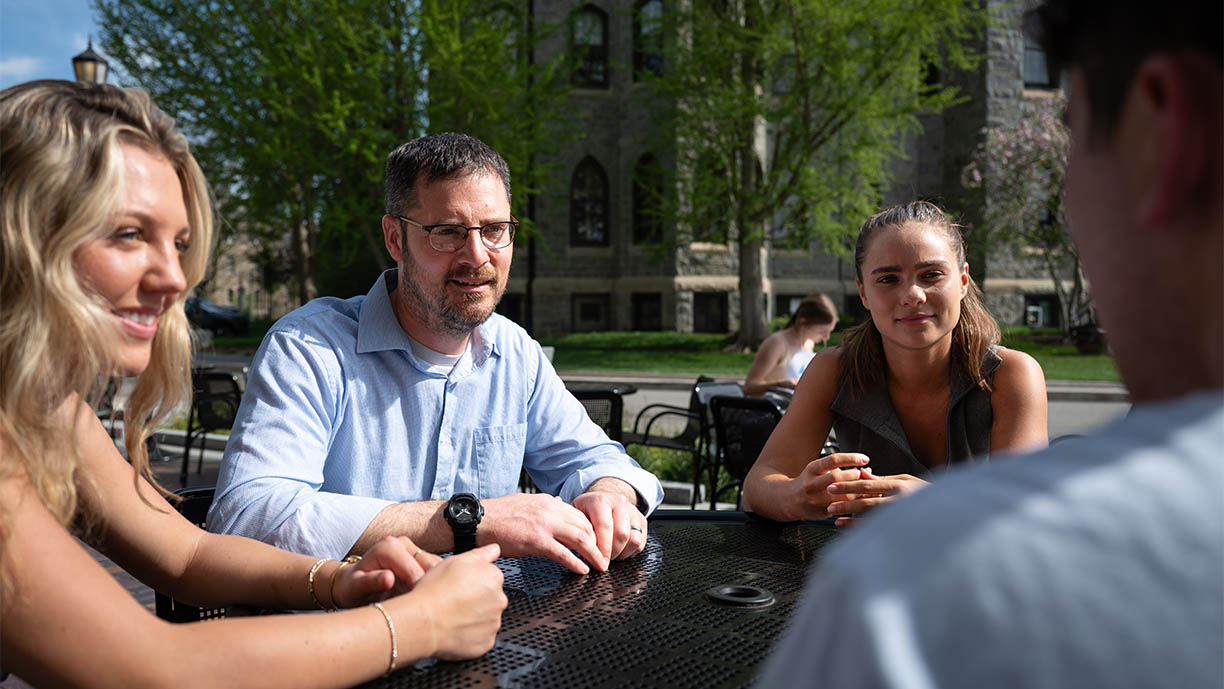
Eric Musselman, PhD, PE, the newly appointed associate dean for Undergraduate Affairs and an associate professor of Civil and Environmental Engineering, is blending his work in the classroom with his new leadership role to enhance the undergraduate experience and strengthen student engagement across the College of Engineering.
A Villanova faculty member since 2012, Dr. Musselman shares insights on his transition from department chair to associate dean, his student-centered approach and what excites him most about supporting the next generation of Villanova Engineers.
Q: What is something you look forward to about this role?
A: I think there are many compelling reasons why Villanova is a great school for engineering, and I look forward to sharing them with prospective students. To do that, I plan to increase our outreach to the surrounding community, including middle and high school students. We already do some of this, but I am excited to expand these efforts.
Q: How do you balance administrative leadership with a student-centered mindset?
A: I am fortunate to lead a group of staff who are all very student-focused. There is a great blend of experience and new perspectives, and everyone is working to support our students. As associate dean, I believe it’s very important to build and maintain an environment of trust and mutual respect that allows us to focus on the students and their experience here at Villanova.
Q: What lessons from the classroom shape your approach as a leader?
A: As a professor, I strive to be responsive to my students, actively seeking their feedback to understand what resonates and what may need to be explained or approached differently. I bring that same mindset to my leadership role, listening, adapting and ensuring we remain responsive to student needs.
Q: What has been the most rewarding part of your career?
A: Seeing a student understand something they have struggled with. On a small scale, this happens in class or during office hours when something finally clicks, but it also happens on a larger scale with graduate students who develop expertise in their research through months or years of hard work. Seeing that understanding develop is very rewarding.
Next: Student Perspective
Students move full speed ahead with Nova Baja racing team