
SCHOLAR PROFILES
SICJS faculty scholars foster research, scholarship and teaching in in climate, environmental justice and sustainability.
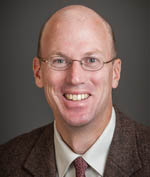
Todd Aagaard
Professor of Law
Heller McGuinness Leadership Chair
Charles Widger School of Law
Todd's research focuses on issues of environmental law, energy law and regulation. In each of these areas, he tries to bring conceptual coherence and clarity to the legal treatment of issues of sustainability.
Recent publications:
- Challenging Agency Deregulation, Florida Law Review (forthcoming 2026)
- Compensating Regulatory Losers, Illinois Law Review 555 (2025)
- Electricity Capacity Markets, Cambridge University Press (2022) with Andrew N. Kleit
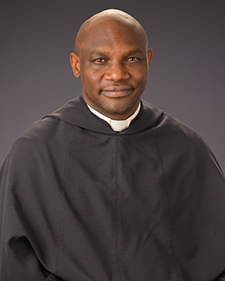
John Abubakar, OSA
Chief Sustainability Officer
Chair, Sustainability Leadership Council
Adjunct Professor of Sustainability
Department of Theology and Religious Studies
College of Liberal Arts and Sciences
John’s research focuses on sustainable cities, human flourishing, circular economy and sharing economy. He is a transdisciplinary scholar interested in advancing the polyculture of complementary knowledges in improving human flourishing and nature’s health. As a scholar-practitioner, he works within established systems to implement change. He is a fellow of the International Society for Development and Sustainability.
Recent publications:
- Abubakar, J. (2026). Sustainable Cities and Communities: Informal Settlements and Left behind places, (forthcoming)
- Abubakar, J. (2025). The Bible and Sustainability, London: Routledge.
- Abubakar, J. (2023). Urbanism: Using Settlement upgrading and Self-help housing in addressing the housing shortage in Nigeria and Italy, ICSD, Rome
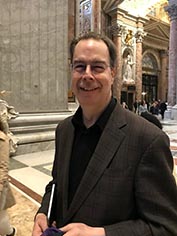
Timothy Brunk, PhD
Associate Editor, Horizons
Associate Professor of Theology
Convener, Ecology and Liturgy Seminar (North American Academy of Liturgy)
Associate Director of the Children, Liturgy and Ecology Project
Tim researches liturgical and sacramental theology and how worship practices both shape and are shaped by their cultural contexts. With his colleague Dr. Christy Lang Hearlson, he co-directs The Children, Liturgy, Ecology and Renewal (CLEAR) Project, funded with a $1.25 million grant from the Lilly Endowment. The CLEAR Project gathers scholars, church leaders, educators and musicians to create child-inclusive, ecologically sensitive resources for churches and schools. He is part of the Assisi Process, an international theological consultation seeking to promulgate a Feast of Creation on the liturgical calendar of every Christian denomination. He is co-directing a dissertation on Laudato si’.
Recent publications:
- “Children’s Wonder in Nature and in Worship,” forthcoming in Liturgy
- “Liturgy, Ecology, Consumerism: Liturgical Haecceity in the 21st Century,” Worship 100 (April 2026): 146-163
- “Singing with Creation,” a 2025 album produced by The CLEAR Project, with three groups of composer-musicians

Samantha Chapman
Professor and Co-Director Center for Biodiversity and Ecosystem Stewardship
Department of Biology
College of Liberal Arts and Sciences
Samantha and her group study biodiversity and global change in coastal ecosystems. She leads the WETFEET project, an interdisciplinary group of scientists, land managers and environmental educators who work with an array of field experiments in marshes and mangroves and plan climate adaptation strategies. She feels honored to be able to study the ways plants shape our world and hopes that her work can contribute to our ability to rediscover how to value and live with nature.
Recent publications:
- Mancera Pineda, José Ernesto; J.F. Blanco-Libreros, F. Adame, G.A. Castellanos-Galindo, S.K. Chapman, K. Diele, K. Rogers. 2025. Mangrove ecosystems for human well-being in a changing planet. Bulletin of Marine Science.
- Mack, M.R., Langley, J.A., Feller, I.C. and Chapman, S.K. 2024. The ecological consequences of nutrient enrichment in mangroves. Estuarine, Coastal and Shelf Science, p.108690.
- Chapman, S.K. I.C. Feller, G. Canas*, M.A. Hayes, N. Dix, M. Hester, J. Morris, J.A. Langley. 2021. Mangrove growth responses to warming differ across a latitudinal gradient. Ecology.

Sarah Cooney
Assistant Professor
2025 SICJS Faculty Fellow
Department of Computing Sciences
College of Liberal Arts and Sciences
Sarah’s research falls under the broad umbrella of Human-Computer Interaction (HCI), and more specifically she focuses on Sustainable HCI. She is interested in the ways people and communities use technology to promote sustainability and how this aligns with their personal values including spiritual and religious values. She has several ongoing research projects, including work on technological mediation in campus re-use programs, supported by the SICJS fellowship; a study of the way religious values shape how users imagine, design and use technology to promote sustainability, supported by an NSF CRII grant; and an upcoming First-Year Match project on Trad Wife culture and sustainability.
Recent publications:
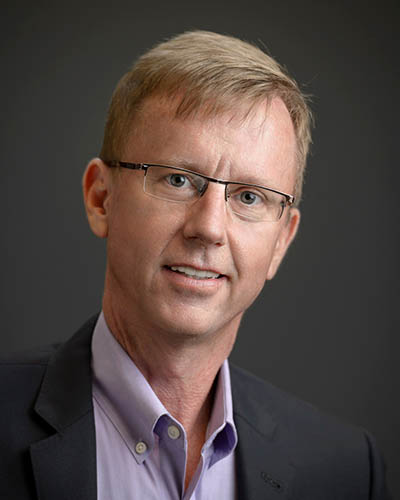
Jonathan Doh
Senior Associate Dean for Research, Faculty Advancement, and Global Engagement
Herbert G. Rammrath Endowed Chair in International Business
Professor, Management & Operations
Villanova School of Business
Jonathan’s research focuses on climate change adaptation, corporate socio-political engagement, sustainability in global supply chains, and ESG as a risk mitigation strategy. He has published more than 100 referred articles, eleven books, and two dozen case studies. He has been editor-in-chief of Journal of World Business and Journal of Management Studies and is currently Editor (Sustainability) at Journal of International Business Studies. He is a fellow of the Academy of Management and the Academy of International Business, has been ranked by Stanford/PLOS among the top .5% of management scholars globally (282 out of 57,191), and has 26,000+ google scholar citations.
Recent publications:
- Marano, V., Wilhelm, M. Doh, J.P., Kostova, T., Beugelsdijk, S. (2024). Multinational Firms and Sustainability in Global Supply Chains: Scope and Boundaries of Responsibility. Journal of International Business Studies, 55, 413-428.
- Yoon, D., Tashman, P., Benischke, M., & Doh, J.P. (2024). Climate Impact, Institutional Context, and National Climate Change Adaptation IP Protection Rates. Journal of Business Venturing. 39 (1). doi.org/10.1016/j.jbusvent.2023.106359
- Krammer, S., Lashitew, A., Doh, J.P., & Bapuji, H. (2022). Income Inequality, Social Cohesion and Crime Against Businesses: Evidence from a Global Sample of Firms. Journal of International Business Studies, 54, 385-400.
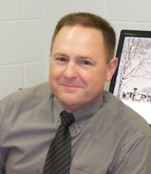
Frank Galgano
Professor
Director of Sustainability Studies
Executive Director, Pennsylvania Geographical Society
Department of Geography and the Environment
College of Liberal Arts and Sciences
If climate change is the most important problem facing the global community, then violent conflict that may be triggered by its adverse effects represents an existential threat to human security. This is the environmental security doctrine which is the focus of Frank’s research. Frank examines linkages among climate change, adaptive capacity, vulnerable populations, non-sustainable practices and violent conflict. He has published five books, three physical geography study guides, and more than 30 professional articles focused on geographic, environmental and military subjects. He recently published a new book titled The Environment-Conflict Nexus: Climate Change and the Emergent National Security Landscape (Springer, 2019), which examines the geography of global security from the perspective of climate and environmental change.
Recent publications:
- Laughlin, A. and Galgano, F.A., 2025. Spatial and Temporal Patterns of Drought and Violence in Darfur, Sudan. African Security Review, 34 (1): 60-83.
- Galgano, F.A. 2024. The 1964 Jordan River Diversion Plan: Transboundary Water Basins and Conflict. Case Studies in the Environment, 8 (1): 1-18.
- Galgano, F.A. 2024. Hostis Humani Generis: Pirates and Global Maritime Commerce. Research in Globalization, 8 (2024) 100188

Steven Goldsmith
Professor
Environmental Science Program Director
Department of Geography and the Environment
College of Liberal Arts and Sciences
Steven’s current research program focuses on identifying and mitigating environmental impacts on river systems. This research employs a community-inclusive approach, where academics, regulatory agencies, NGOs, students, and/or individual residents collaborate and utilize science to understand and mitigate the impacts on freshwater systems. He has published more than 30 peer-reviewed scientific articles on the biogeochemistry of river systems in journals such as Nature Climate Change and Science of the Total Environment. He has also developed and implemented an immersive, locally based, culturally responsive research experience in urban environmental geochemistry, through an environmental justice lens, to broaden a pathway to the geosciences for underrepresented students.
Recent publications:
- Hassebrock, J. M., Kremer, P., Seng, K. E., & Goldsmith, S. T. (2025). Long-term impacts of land cover change on nitrate export in mixed-use exurban and suburban watersheds. Science of the Total Environment, 1002, 180612.
- Marks, N. K., Cravotta III, C. A., Rossi, M. L., Silva, C., Kremer, P., & Goldsmith, S. T. (2024). Exploring spatial and temporal symptoms of the freshwater salinization syndrome in a rural to urban watershed. Science of the Total Environment, 947, 174266.
- Rossi, M. L., Kremer, P., Cravotta, C. A., Scheirer, K. E., & Goldsmith, S. T. (2022). Long-term impacts of impervious surface cover change and roadway deicing agent application on chloride concentrations in exurban and suburban watersheds. Science of the Total Environment, 851, 157933.

Kelly Good
Assistant Professor
Department of Civil and Environmental Engineering
Villanova Center for Resilient Water Systems
College of Engineering
Kelly’s work in water and environmental systems spans engineering, health and policy. She is particularly interested in evaluating the interactions of water systems with other infrastructure systems, such as energy systems. Conventional, disconnected approaches in managing infrastructure systems can lead to unintended consequences for the environment and public health, often in ways that are inequitable. With environmental and public health protection as motivation, Kelly’s research program has three core thrusts: watershed management and decision-making, contaminants and water quality, and resilient infrastructure systems.
Recent publications:
- Good, K.D., Robert, E., Kremer, P., Wang, Y., & Wilson, J. (2025). Subbasin-level discharge-intake flow index to assess potential iodine point source discharges upstream of surface drinking water sources. Discover Water, 5(1), 34.
- Cook, L. M., Good, K. D., Moretti, M., Kremer, P., Wadzuk, B., Traver, R., & Smith, V. (2024). Towards the intentional multifunctionality of urban green infrastructure: a paradox of choice? Nature: Urban Sustainability, 4(1), 12.
- Good, K.D. & Smith, V. (2024). Community engagement enhances undergraduate civil engineering capstone design projects. Environmental Research Letters, 19(11), 111004.

Suzanne Gray
Assistant Professor
Department of Psychological and Brain Sciences
College of Liberal Arts and Sciences
Suzanne’s teaching and research explores the depths of attention, reasoning and communication in human and nonhuman animals, especially birds. This research advances theories regarding the biological underpinnings of cognition and behavior by integrating ecological and evolutionary differences across many species. By linking cognitive science with real-world applications, this work supports animal welfare, conservation and sustainability by clarifying species-specific cognitive and behavioral needs, informing more responsible care, management and environmental practices.
Recent publications:
- Qadri, M. A. J.*, & Gray, S. L.* (2025). Examination of hierarchical form perception in African grey parrots (Psittacus erithacus). Learning & Behavior, 1-11. *Denote co-first authorship
- Gray, S. L., Qadri, M. A. J., & Cook, R. G. (2023). Dynamically occluded action recognition by pigeons. Attention, Perception, & Psychophysics, 1–16.
- Gray, S. L., Qadri, M. A. J., Brooks, D. I., & Cook, R. G. (2022). Use of different attentional strategies by pigeons and humans in multidimensional visual search. Journal of Experimental Psychology: Animal Learning and Cognition, 48(1), 46–59.

Rev. Christy Lang Hearlson
Associate Professor of Religious & Theological Education
Co-Director of The Children, Liturgy, Ecology and Renewal (CLEAR) Project
Christy’s research focuses on the idea of “ecological conversion,” in which people come to understand care for the Earth and its creatures as a central feature of faith. Cross-trained in pedagogy and theology, Christy teaches an introductory theology course around the theme of water, as well as a graduate course on ecological conversion. With her colleague Dr. Tim Brunk, she co-directs The Children, Liturgy, Ecology and Renewal (CLEAR) Project, funded with a $1.25 million grant from the Lilly Endowment. The CLEAR Project gathers scholars, church leaders, educators, and musicians to create child-inclusive, ecologically sensitive resources for churches and schools.
Recent publications:
- “Singing with Creation,” an album produced by The CLEAR Project, with three groups of composer-musicians
- Lang Hearlson, Christy. "Theological Imagination in a Throwaway Society: Contending with Waste." Theology Today. 2021; 78(2), 158-169.
- Lang Hearlson, Christy. "Ecological Conversion as Conversion to the Child: Becoming Caregivers, Becoming Childlike." Horizons. 2020;47(2):232-255.
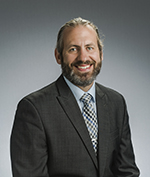
Chris Jeffords
Associate Teaching Professor
Department of Economics
Villanova School of Business
Chris is an environmental economist whose scholarship bridges sustainability, human well-being and the design of equitable environmental policy. His research highlights how constitutional environmental rights, governance structures and economic incentives shape real-world environmental outcomes, especially for vulnerable communities. Through empirical analysis, policy evaluation and interdisciplinary collaboration, he advances frameworks that integrate justice, resilience and sustainable resource management. Jeffords’ work informs decision-makers, strengthens public understanding of environmental rights and deepens the connection between sustainability and social welfare. His commitment to rigorous, accessible scholarship helps chart pathways toward more resilient, equitable and environmentally responsible societies.
Recent publications:
- Catanzaro, B., & Jeffords, C. (2025). The weight of words: how constitutional environmental human rights shape emissions. Journal of Environmental Studies and Sciences, 1-19.
- Barrett, M., Santoro, J., & Jeffords, C. (2024). Science on tap: pouring knowledge into the local community. Frontiers in Communication, 9, 1436234.
- Jeffords, C. (2022). Fostering Pluralism in an Environmental Economics Course. Sustainability and Climate Change, 15(2), 98-103.
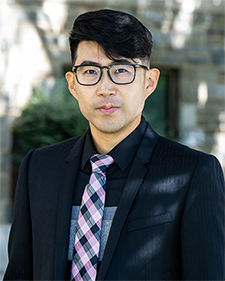
Kyoung Yong Kim
Kevin J. Hughes Family Endowed Senior Research Fellow
2026 VSB Dean’s Research Fellow
Associate Professor, Management & Operations
Villanova School of Business
Kyoung Yong’s research focuses on diversity and equity, as well as strategic human capital, employee–employer relationships and employee ownership. In the area of sustainability, he examines how individuals are encouraged to engage in climate, justice, and sustainability-related behaviors. His work has been published in leading academic journals, including Journal of Applied Psychology, Journal of International Business Studies, and Personnel Psychology. His research has also received recognition through several honors, including Best Paper Awards and Wiley Top Cited Article Recognition.
Recent publications:
- Kim, K. Y., Messersmith, J. G., & Allen, D. G. 2026. "A winning combination? Exploring the impact of demographic diversity and human capital on new venture survival." Personnel Psychology.
- Kim, K. Y., & Liden, R. C. 2025. "CEO servant leadership and organizational profitability: A social exchange perspective." Journal of Organizational Behavior, 46(6), 833-859.
- Kim, K. Y., & Patel, P. 2024. "Nonlinear effect of employee ownership on organizational financial misdeeds: The moderating role of organizational size." Journal of Applied Psychology, 109(4), 573-586.

Peleg Kremer
Associate Professor
Department of Geography and the Environment
College of Liberal Arts and Sciences
Peleg's research focuses on urban social-ecological systems and sustainable cities, with three interconnected themes: mapping and modeling ecosystem services, understanding urban landscape structure and ecological functions, and examining urban foodscapes and vacant land as public resources. Her work integrates geospatial analysis, environmental science, and community engagement to address environmental justice and equitable access to green infrastructure. Current projects investigate green stormwater infrastructure distribution and performance, urban air pollution disparities, community garden land security in Philadelphia, and the relationship between urban green spaces and public health outcomes. Through partnerships with municipalities and community organizations, Peleg works to ensure research findings support more equitable and sustainable urban planning and policy decisions.
Recent publications:
- Madeline Scolio, Achira Amur, Emma Olson, Virginia Smith, Bridget Wadzuk, Kate Homet, Eric Devlin, Peleg Kremer, Reconceptualizing urban flood modeling: Toward intersectional and equitable urban flood risk planning, Sustainable Cities and Society, Volume 130, 2025.
- Cook, L.M., Good, K.D., Moretti, M. et al. Towards the intentional multifunctionality of urban green infrastructure: a paradox of choice?, Urban Sustainability, 4, 12 (2024).
- Winkler, R.L., Clark, J.A.G., Locke, D.H. et al. Unequal access to social, environmental and health amenities in US urban parks. Nature Cities, 1, 861–870 (2024).

Joseph Lennon
Associate Dean, International and Interdisciplinary Initiatives
Emily C. Riley Director of Irish Studies
Co-Chair, Strategic Initiative for Climate, Justice and Sustainability
Professor, Department of English
College of Liberal Arts and Sciences
Joseph researches the literatures, cultures and histories of Ireland and Irish America, focusing on issues of famine, hunger and sustainability. At present, he co-edits an open-access issue of the American Journal of Irish Studies on “Sustainability in Irish Culture.” The special issue includes essays on Irish theatre, literature and tourism. He studies Irish governmental cultural policy and writes on audience commitment and engagement on sustainability. He has published histories on famines and fasting protests in Ireland and India, and his forthcoming book traces the prehistory of the first hunger-strike of the Women’s Social and Political Union in 1909. His scholarship crosses over into his community work with local Irish-American community groups across the Philadelphia region.
Recent publications:
- Marion Wallace-Dunlop and the Origins of the Hunger Strike (forthcoming SUNY UP, 2026)
- “Sustainability in Irish Culture,” American Journal of Irish Studies (forthcoming Spring 2026)
- “Afterword: Rabindranath Tagore and W.B. Yeats,” Tagore and Yeats: A Postcolonial Re-envisioning, eds. Elizabeth Brewer Redwine and Amrita Ghosh, Brill, 2022.

Ludwig Beethoven J. Noya
Arthur J. Ennis Postdoctoral Fellow
Augustine & Culture Seminar Program
College of Liberal Arts and Sciences
Ludwig’s research on sustainability focuses on reexamining the concept of “Sabbath for the Land” in the Hebrew Bible in conversation with land rights struggles faced by indigenous communities in the U.S. and Indonesia. He aims to highlight a discourse on sustainability that respects and supports indigenous land rights.
Recent publications:
- “Biblical Studies and Indonesian Contexts,” Oxford Bibliographies in Biblical Studies. Edited by Christopher Matthews. Oxford: Oxford University Press, 2026.
- “Happy Sabbath? Overemphasized Liberative Sabbath & White Ignorance” in Advancing Biblical Studies: Decentering Whiteness in Biblical Studies. Edited by Wongi Park. Sheffield: Sheffield Phoenix Press, 2026. 224–244.
- “To Do the Sabbath: Reassessing the Sabbath Laws in Exodus 31:12–17 & 35:1–3,” Revue Biblique 132, no. 2 (2025): 207–218.
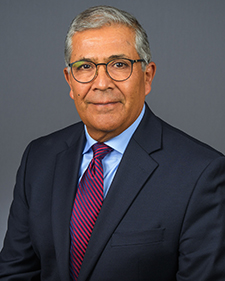
Al Ortega
James R. Birle Professor of Energy Technology in the Department of Mechanical Engineering
Director, Center for Energy-Smart Electronic Systems
Mechanical Engineering
College of Engineering
Al is the Director of the National Science Foundation Center for Energy Smart Electronic Systems (ES2), an industry-university research consortium. His current research interests are in advanced data center power and cooling technologies, data center sustainability, waste heat recovery, and community and environmental impacts of data centers and other advanced technologies. Al is actively involved in the search for environmentally safe refrigerants and other coolants. He is developing Digital Twins (computer models) of massive data center power and cooling systems to examine designs that maximize performance while minimizing energy and water consumption and the data center carbon footprint.
Recent publications:
- Nayar, A. and Ortega, A., “Co-generative Exergy Matched Waste Heat Recovery for On-Site Powered AI-Factories to Produce Power and Cooling,” Procs. 20th International Conf. on Energy Sustainability, Paper ES2026-183706, July 26-29, 2026.
- Khalid, R., Schon, S., Amalfi, R. L., Ortega, A., Wemhoff, A. P. (2024). Characterization of a Rack-Level Thermosyphon-Based Cooling System. ASME Journal of Electronic Packaging, 146(3), 031007.
- Silva-Llanca, L., Ortega, A., Fouladi, K., del Valle, M. and Sundaralingam, V., “Determining Wasted Energy in the Airside of a Perimeter-Cooled Data Center via Direct Computation of the Exergy Destruction,” Applied Energy, 213C, pp. 235-246, 2018.

Manuela Priesemuth
Professor
Faculty Director of Business Ethics and Social Responsibility
Department of Management & Operations
Villanova School of Business
Manuela is the Faculty Director of Business Ethics and Social Responsibility at the Villanova School of Business. Her research examines social issues in management, including workplace injustice, toxic work cultures, abusive leadership and (un)ethical behavior. Through this work, Manuela seeks to promote ethical and sustainable business practices. Manuela’s research has been nationally recognized and published in leading academic journals such as Academy of Management Journal, Journal of Applied Psychology, and Journal of Management. It has also been featured in prominent media outlets, including Harvard Business Review, The Guardian, BBC, CNBC, The Conversation, The Huffington Post and Psychology Today.
Recent publications:
- Hill, E. T., Colquitt, J. A., Burgess, R., Priesemuth, M., & McClain, J. T. (2025). Third-party perceptions of mistreatment: A meta-analysis and integrative model of reactions to perpetrators and victims. Journal of Applied Psychology, 110(1), 107–130.
- Priesemuth, M., Bigelow, B., & Johnson, M. (2025). Bad guys finish first? A moral emotional perspective of job performance outcomes for abusive supervisors. Business & Society, 64 (5), 968-1009.
- Priesemuth, M., & Schminke, M. (2024). Toxic work climates: An integrative review and development of a new construct and theoretical framework. Journal of Applied Psychology, 109(9), 1355–1376.
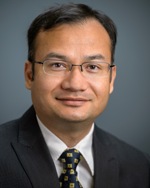
Kabindra Shakya
Associate Professor
Department of Geography and the Environment
College of Liberal Arts and Sciences
Kabin’s research focuses on outdoor and indoor air pollution, specifically particulate matter. He also studies heavy metal contamination such as lead in soils from community gardens, residences, parks and residences. His work addresses environmental justice and sustainability challenges in both developed and developing countries. He serves as an Associate Editor for Journal of Environmental Studies and Sciences and the Journal of Environmental Science and Health. He serves on the Upper Merion Environmental Advisory Council and the board of Centro de Cultura, Arts, Trabajo y Educación (CCATE), and actively collaborates with the Overbrook Environmental Education Center and Camden for Clean Air.
Recent publications:
- McDonough, R., Shakya, K.M. (2025). Trace Metal Contamination in Community Gardens in Pittsburgh, Pennsylvania. Environments, 12(5), 159.
- Rai, P., Gauchan, E., Pradhan, R., Shakya, K.M. (2025). Survey of Nepali doctors on the perception of climate change and health effects. The Journal of Climate Change and Health, 23, 100449.
- Terry, B., Shakya, K.M. (2024). Monitoring gaseous pollutants using passive sampling in Philadelphia region. Journal of the Air & Waste Management Association, 74 (1), 52-69.

Virginia Smith
Associate Professor
Civil and Environmental Engineering
Director, Graduate Studies
Associate Director, Villanova Center for Resilient Water Systems
Director, Sustainable Engineering Minor
College of Engineering
Virginia is an Associate Professor of Water Resources in the Civil and Environmental Engineering Department, whose projects have focused on urban sediment transport dynamics, sustainable stormwater management, and applying data management and artificial intelligence to water resource engineering challenges. Virginia has overseen and worked on a diverse collection of water and natural resource projects across the US and around the world, including projects in Asia, Africa, the South Pacific and Afghanistan. She has leveraged her experiences in her research focusing on rivers, floodplains, stormwater, and flooding dynamics, particularly in urban settings.
Recent publications:
- Scolio, M., Kremer, P., Smith, V., Amur, A., Wadzuk, B., Homet, K., Devin, E., Al Mehedi, A. & Moore, L. (2025). Delineating urban flooding when incorporating community stormwater knowledge. Environmental Research: Infrastructure and Sustainability, 5(1), 015008.
- Cook, L. M., Good, K. D., Moretti, M., Kremer, P., Wadzuk, B., Traver, R., & Smith, V. (2024). Towards the intentional multifunctionality of urban green infrastructure: a paradox of choice?. Nature: Urban Sustainability, 4(1), 12.
- Hosseiny, H., Nazari, F., Smith, V., & Nataraj, C. (2020). A framework for modeling flood depth using a hybrid of hydraulics and machine learning. Nature: Scientific Reports, 10(1), 8222.
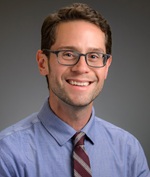
Tom Umile
Associate Teaching Professor
Department of Chemistry & Biochemistry
Tom is an advocate for infusing chemistry curricula with themes of Green Chemistry, the practice of chemistry that avoids the use or generation of toxic or hazardous substances. He is co-author of Real-world Cases in Green Chemistry, Volume II and Catalysis for Sustainability. Tom works with the educational nonprofit Beyond Benign and the American Chemical Society Green Chemistry Institute to develop teaching materials that help educators expose their students to green and sustainable chemistry, and he will be a co-lead for the forthcoming Green Chemistry Peer Mentoring Network.
Recent publications:
- Umile, T.P. "Reducing the production of waste in the synthesis of LAGEVRIO™ (molnupiravir), an antiviral treatment for COVID-19." Green Chemistry Teaching & Learning Community. 2026
- Umile, T.P., Hensley, M. "Polymers from Soybeans: The transesterification of triglycerides." Green Chemistry Teaching & Learning Community. 2026
- Barnhart, K., Kearns, P.J., LaBumbard, B. Ahsan, R., Whetstone, R. Bletz, M. AlKhalifa, S.E., Poltronetti, A., Tokash-Peters, A., Gabor, C., Schleip, K., Umile, T.P., Minbiole, K.P.C., Woodhams, D.C. "Micromanagement: Conditions influencing antipathogen function of the skin microbiome in spotted salamanders, Ambystoma maculatum." Frontiers in Amphibian and Reptile Science. 2024.

Pete Watkins
Director of Teaching, Learning, and Assessment
College of Professional Studies
Pete is Director of Teaching, Learning and Assessment at Villanova University. An educational psychologist by training, he is a former tenured faculty member who has worked in higher education since 2000. He has extensive teaching experience, both face-to-face and online, as well as expertise in course design, curriculum development and accreditation. He earned a bachelor's degree in psychology from the University of Pennsylvania, as well as a master's degree in social work and a PhD in educational psychology from Temple University. Pete believes that excellent teachers continually grow, develop and learn from one another.
Recent publications:
- Watkins, P. (2021). How Did Remote Teaching during the COVID-19 Crisis Affect Faculty’s Attitudes and Beliefs about Online Teaching?
- Watkins, P. (2018, February 26) “Everybody with Me?” and Other Not-so-useful Questions
- Watkins, P. (2017, March 3). Remembering vs. Understanding.

Aaron Wemhoff
Professor
Assistant Chair
Administrative Director, Centralized Research Computing Facility
Mechanical Engineering
College of Engineering
The data center industry has expanded significantly in recent years, driven largely by advances in artificial intelligence. Because these facilities consume vast amounts of resources, predicting and mitigating their environmental impacts is critical. Aaron's research focuses on developing methods to assess greenhouse gas emissions, water footprints, and water scarcity impacts from data centers, while also evaluating strategies to reduce these burdens. He specifically examines the effectiveness of equipment cooling approaches, waste heat recovery and on-site power generation.
Recent publications:
- Khalid R., McMullen M., Amalfi R.L., Ortega A., Wemhoff A.P. (2025). Performance Analysis of a Brazed Plate Heat Exchanger during Condensation of R1233zd(E), Journal of Electronic Packaging, 147 (2), 021005.
- McMullen M., Wemhoff A.P. (2024). Data Center Environmental Burden Reduction Through On-Site Renewable Power Generation, Journal of Engineering for Sustainable Buildings and Cities, 5 (2), 021001.
- Chen, L., Wemhoff, A. P. (2023). The Sustainability Benefits of Economization in Data Centers Containing Chilled Water Systems Resources, Conservation & Recycling, 196, 107053.
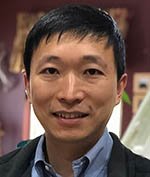
Jiafeng "Harvest" Xie
Associate Professor
Department of Electrical and Computer Engineering
College of Engineering
The rapid progress in quantum computing has sparked a new wave of cryptographic innovation, namely post-quantum cryptography (PQC). Along with this line of effort, Harvest's research focuses on developing efficient PQC accelerators for hardware platforms with minimal resource usage, fast operation and sustainability (long-term considerations).
Recent publications:
- Y. Tu and Jiafeng Xie, “EMINEM: Efficient FPGA Implementation of Mixed-RadIx NTT Hardware AccElerators for NIST Post-QuantuM Cryptography Falcon, Dilithium, and HAWK”, ACM Transactions on Reconfigurable Technology and Systems, pp. 1-25, 2025.
- P. He, T. Bao, and Jiafeng Xie, “High-performance instruction-set hardware accelerator for Ring-Binary-LWE-based lightweight PQC,” IEEE Trans. VLSI Systems, vol. 33, no. 5, pp. 1417-1421, 2025.
- S. Coulon, J. Xiong, and Jiafeng Xie, “LEAF: Lightweight and Efficient Hardware Accelerator for Signature Verification of FALCON,” 2025 International Conference on Computer-Aided Design (ICCAD), pp. 1-9, 2025

Wenqing (Vicky) Xu, PhD
Professor
Director, Center for Human-Environmental Systems (CHES)
Civil and Environmental Engineering
College of Engineering
With diminishing water resources and global water use skyrocketing, the provision of clean water has been identified as one of the grand challenges of the 21st century by the National Academy of Engineering. Vicky's research interest lies in addressing critical urban water challenges—from protecting drinking water supplies against wildfire-derived contaminants to enabling stormwater reuse as a sustainable water source through innovative treatment technologies for emerging contaminant removal—while fostering interdisciplinary collaborations that bridge fundamental research with practical solutions for water-scarce communities. The core of her research program builds on aquatic chemistry, analytical chemistry and material engineering, which extends to address key challenges in three main areas: (1) novel approaches to control emerging contaminants, (2) environmental monitoring and sensing, and (3) toxicity studies to understand the toxicity drivers in engineering processes.
Recent publications:
- Tailored carbonaceous materials as biofilter amendments for PFAS removal in stormwater runoff, JC Magee, NI Seenthia, B Wadzuk, D Hamidi, K He, L Blaney, W Xu, Water Research, 124569
- Simultaneous adsorption and hydrolysis of insensitive munition compounds by pyrogenic carbonaceous matter (PCM) and functionalized PCM in soils, NI Seenthia, W Abdelraheem, SA Beal, JJ Pignatello, W Xu, Journal of Hazardous Materials 494, 138501
- Electron exchange capacity of dissolved natural organic matter: further method development and interpretation using square wave voltammetry in dimethyl sulfoxide, JM Hudson, H Cao, W Xu, PG Tratnyek, Environmental Science: Processes & Impacts 27 (4), 917-935
Strategic Initiative for Climate, Justice and Sustainability
Villanova University
800 Lancaster Avenue
Villanova, PA 19085
