
Making an Impact with the Farmworker Legal Aid Clinic
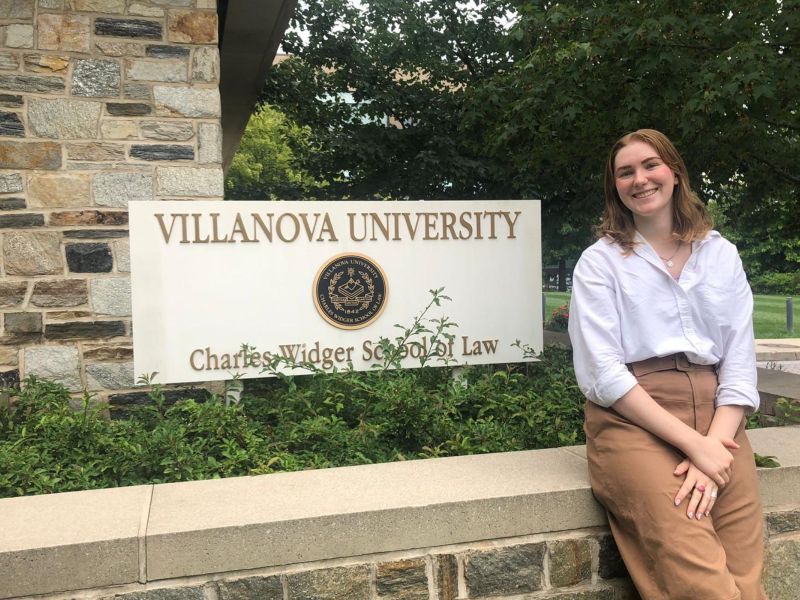
February 16, 2026 — As a graduate student studying immigrant and diasporic literature, Sidney Sponer ’26 also had a strong interest in human rights that eventually led her to law school.
“I knew I wanted to step away from the page and into the work of helping immigrants in my community with tangible legal and social needs...like helping someone get a visa,” Sponer said. “Since I've been at Villanova, the focus on community-building and doing good work for those in need has only reaffirmed my decision.”
In the fall of her second year, these passions drew her to Villanova Law’s Farmworker Legal Aid Clinic (FLAC), one of only two clinics of its kind in the nation. Students in the clinic provide pro bono services to farmworkers and their families and food chain industry workers, among other responsibilities, and support community organizations led by immigrant workers. All FLAC students learn how to interview, counsel and advocate for clients, and work with clinic interpreters to communicate effectively.
Sponer and her clinic partner gathered necessary background information on immigration law for their case, which focused on labor trafficking and T-Visas. T-Visas allow non-US residents who have experienced trafficking to apply for immigration status. Sponer spent time in the classroom immersing herself in the technical aspects of immigration law, the requirements of T-Visas and collaborating with other clinic students to frame their case. Outside of the classroom, she met with her client and drafted all the necessary documents for the visa application to validate her client’s trafficking experience so they could remain in the United States.
“The process was intensely collaborative,” Sponer said. “I worked with all the clinical students to frame our T-Visa cases in strong and unequivocal terms so that there would be no room for doubt that our clients all qualified.” By the end of the year, Sponer and her partner filed a more than eighty-page T-Visa application to United States Citizenship and Immigration Services, which included legal paperwork, an affidavit and supporting evidence from the client’s coworkers.
“This was a really incredible experience to get as a law student, because most lawyers will not work on this kind of case,” Sponer explained.
In addition to her client work, Sponer collaborated with other FLAC students to conduct research for an immigrant justice organization, helping to develop a state legislative strategy to empower dairy workers. The team met with the external organization to understand the scope of the project, then researched and wrote a report. In addition to her client work, Sponer collaborated with other FLAC students to conduct research for an immigrant justice organization, helping to develop a state legislative strategy to empower dairy workers. The team met with the external organization to understand the scope of the project, then researched and wrote a report. As an advanced student in the clinic the following semester, Sponer collaborated with the American Civil Liberties Union (ACLU) of Pennsylvania to craft a regional advisory document on how to argue evidence in immigration court.
Sponer’s time in FLAC added a new dimension to an already well-rounded academic résumé. “As a lawyer, it might be most effective to have a client recount their experiences in depth to craft the strongest possible humanitarian plea,” she said. “But when you treat your client as a person rather than a case, you learn to walk the line between learning enough about their history to write an effective plea while also providing the support they may need in recounting their experiences.”
Sponer’s time in the clinic changed her perspective on life after law school.
“FLAC made me think more broadly about the type of work that is out there and gave me the confidence that I could be the one doing it,” she said. “Wherever I end up after Villanova, I will always have the tools to do humanitarian immigration work thanks to the clinic.”