
From Chemist to Code: One Student’s Critical Pivot
Bridging disciplines, Emily Lugos ’26 MS applies her chemistry mindset to cutting-edge computer science research on misinformation and data analysis.
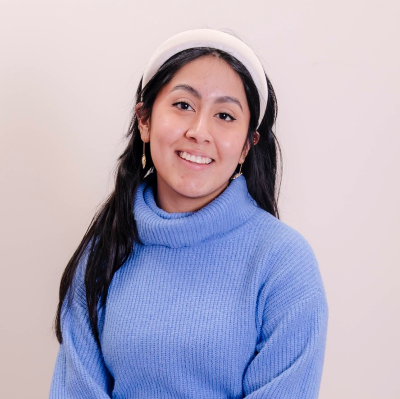
When Emily Lugos ’26 MS applied to Villanova University, she had a passion for studying something different from her undergraduate degree, eager to test herself in a unique way and in an unfamiliar discipline. She found that the College of Liberal Arts and Sciences and its distinguished faculty were up to that challenge.
“I came to Villanova because I knew I wanted to do something in computer science, but it was shaky because there was no foundation,” said Lugos, an undergraduate chemistry major who after four years was still searching for her purpose.
“I think Villanova is good for solidifying that foundation,” Lugos said.
Lugos found a home in Villanova’s graduate program in Computer Science, a shift away from her chemistry background. The connection between the two disciplines may not be immediately evident, as some may view the two at opposite ends of the scientific spectrum.
However, Lugos believes they share more in common than one might expect.
“The constant output and analysis of data is what keeps researchers and chemists going,” Lugos said. “As a chemist, I learned how to be a researcher, which helps me greatly in my current thesis work.”
Lugos conducts that research with Mauricio Gruppi, PhD, an assistant professor of computing sciences. Together, they analyze news coverage to understand how impactful events are framed, with the goal of identifying misinformation and hate speech.
“Analyzing news to identify misinformation and hate speech is critical because these forms of content can spread rapidly, shape public opinion and amplify social division, especially during crisis events,” Lugos said. “Detecting them at scale helps improve the reliability of information ecosystems and supports more informed public discourse.”
“Currently, there is no automated coding method that enables large scale broad analysis,” she said.
By improving event coding, Lugos hopes to be able to capture narrative nuance and context. This will lead to the detection of misinformation and harmful narratives, supporting more transparent and trustworthy information environments. She said this can help highlight credible sources, reduce exposure to misleading content and ultimately enable individuals to engage with news more critically and confidently.
Lugos has blazed her own academic trail—her time at Villanova fueling a new dream after realizing that studying chemistry may not have been her best fit. That’s the nature of science. You test something, and if it doesn’t work, you try something else.
Lugos feels that the interdisciplinary nature of computer science is what attracts her to the field, and she takes comfort in knowing that Villanova has shaped her passions and set her up for future success.
“My hope is to land a job as a data scientist or data engineer [and] have the opportunity to work with massive amounts of data,” Lugos said. “Coming from chemistry and not being sure where I wanted to land, it's very soothing now to be able to have an understanding of what I want to do for the rest of my life.”
About Villanova University’s College of Liberal Arts and Sciences: Since its founding in 1842, Villanova University’s College of Liberal Arts and Sciences has been the heart of the Villanova learning experience, offering foundational courses for undergraduate students in every college of the University. Serving more than 4,500 undergraduate and graduate students, the College is committed to fortifying them with intellectual rigor, multidisciplinary knowledge, moral courage and a global perspective. The College has more than 40 academic departments and programs across the humanities, social sciences, and natural and physical sciences.
Office of Graduate Studies
College of Liberal Arts and Sciences
Villanova University
Vasey Hall - Suite 202
SCHEDULE YOUR CAMPUS TOUR
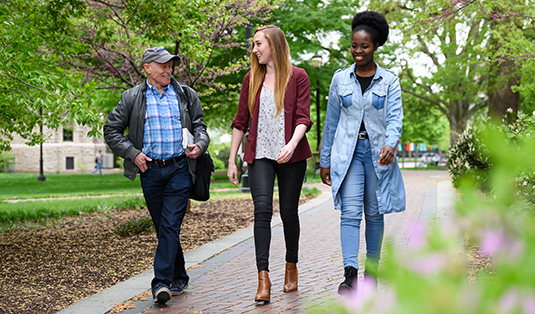
The CLAS Office of Graduate Studies offers personal tours of the beautiful Villanova campus. All tours begin in the Graduate Studies Office, located in Vasey Hall.
Schedule your tour!
FOLLOW GRADUATE STUDIES