Philosophy PhD Program Celebrates 30 Years
A weekend-long celebration brought together alumni, faculty and current students to reflect on three decades of Villanova University’s doctoral program in Philosophy.
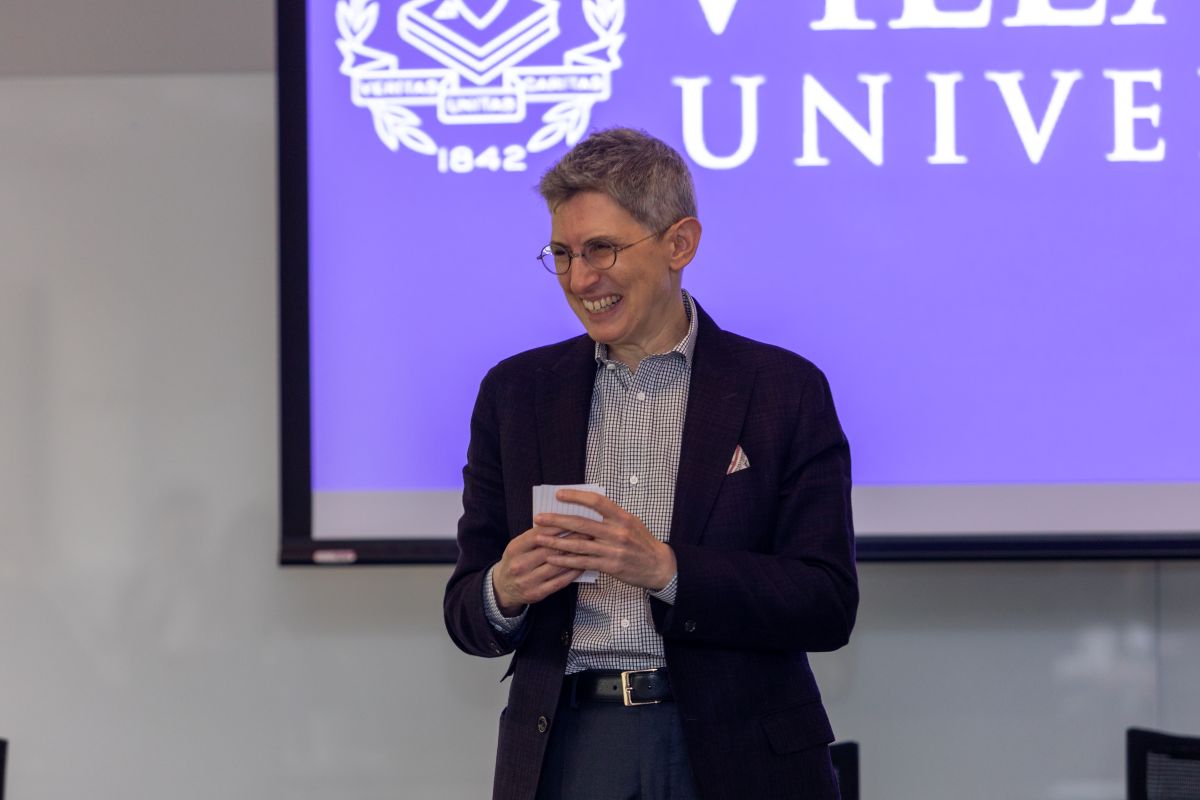
Looking back over three decades of Villanova University’s doctoral program in Philosophy, Julie Klein, PhD, emphasizes that its success is best measured not just in reputation, but in the trajectory of its students.
“I was at the very first doctoral defense—dissertation number one,” said Dr. Klein, department chair and professor of philosophy. “It’s very exciting for us to see what all our alumni have done. They’ve gone in directions we could not have imagined.”
Today, there are more than 100 graduates of the doctoral program, and they’ve contributed an extraordinary body of work and scholarship at colleges and universities; in professional societies; and within many books and articles that continue to shape conversations in the field.
On Saturday, May 2 and Sunday, May 3, many of those alumni gathered for a special 30th anniversary celebration of the program at the Inn at Villanova University, where they gathered to present their work, connect with one another and reflect on the program’s wide-ranging impact.
“The proof is in the effect,” Dr. Klein said. “Our students have been very, very successful in all kinds of positions. We’re gratified to see that their Villanova education and professional training really helped them.”
What began as a modest program has grown into one with national and international reach, fueled by graduates who have become ambassadors for its mission, and in some cases, who help shape its future.
“We thought early on we’d be pretty small potatoes, but that’s not been the case at all,” said John Carvalho, PhD, a former chair and longtime member of the department. “We have students teaching in Europe and all over the United States—that’s the biggest accomplishment. Students came to us, we formed them in a way, and they went out; And then some of them sent their own students back to us. It’s nice to have that full circle.”
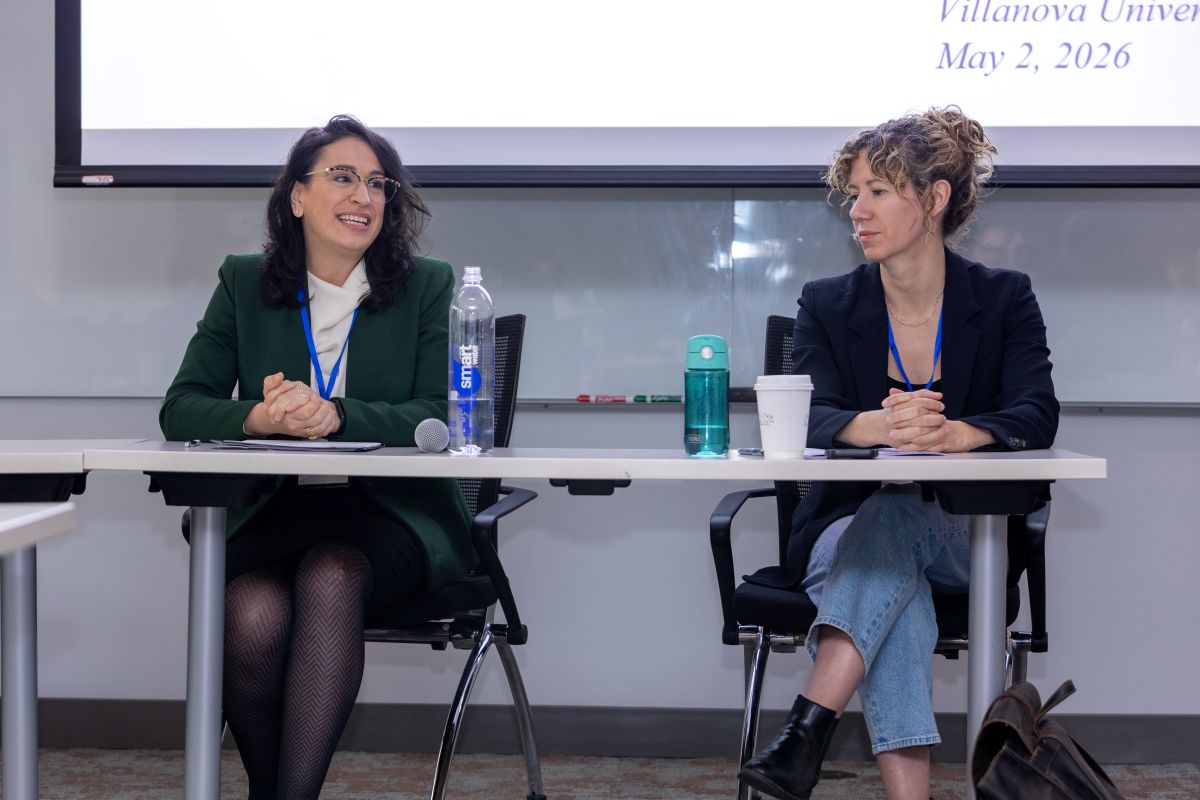
During the two-day event, alumni returned to present their work in a series of themed panels, including “Democratic Experience and Desire,” “Thomas and Hegel on Religion,” and “From Aristotle to the Enlightenment,” culminating in conversations on pedagogy, politics and more.
Speakers represented a wide cross-section of the program’s history and influence, including Jessica Elkayam ’16 PhD, Laura McMahon’15 PhD, Lee Cole ’15 PhD, James K. A. Smith ’99 PhD, Adriel Trott ’08 PhD, Michael Olson ’13 PhD, Christopher Drain ’20 PhD, Shannon Mussett ’02 PhD, Mark Westmoreland ’21 PhD, Edward Kazarian ’09 PhD and Joshua Ramey ’02 PhD, with current doctoral students serving as moderators.
Surti Singh, PhD, associate professor and director of graduate studies in Philosophy, noted the rare opportunity for those still in the program to see what lies ahead.
“Current graduate students are getting to see their future, and the future gets to revisit the past,” she said, adding that such moments make the often-abstract arc of graduate study more tangible.
In his welcoming remarks, Emory Woodard, PhD, dean of graduate studies for the College of Liberal Arts and Sciences, noted the deeper significance of the celebration given ongoing global conflicts and challenges “that demand moral clarity, historical understanding and ethical discernment.”
“These are not merely technical problems,” Dr. Woodard said, “They are human problems. They are ethical problems. They are philosophical problems. And they require the kind of formation that programs like this one are uniquely designed to provide.”
About Villanova University’s College of Liberal Arts and Sciences: Since its founding in 1842, Villanova University’s College of Liberal Arts and Sciences has been the heart of the Villanova learning experience, offering foundational courses for undergraduate students in every college of the University. Serving more than 4,500 undergraduate and graduate students, the College is committed to fortifying them with intellectual rigor, multidisciplinary knowledge, moral courage and a global perspective. The College has more than 40 academic departments and programs across the humanities, social sciences, and natural and physical sciences.
Office of Graduate Studies
College of Liberal Arts and Sciences
Villanova University
Vasey Hall - Suite 202
SCHEDULE YOUR CAMPUS TOUR
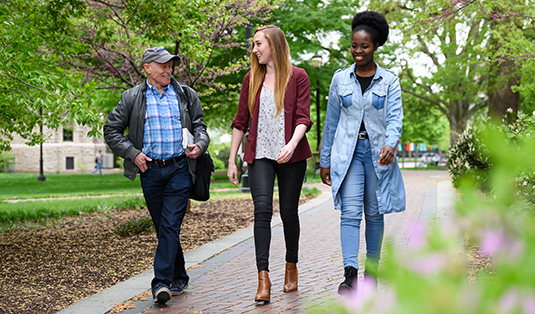
The CLAS Office of Graduate Studies offers personal tours of the beautiful Villanova campus. All tours begin in the Graduate Studies Office, located in Vasey Hall.
Schedule your tour!
FOLLOW GRADUATE STUDIES