
A Seat at the Table: Villanova Student, Alumni Present Research on Impostor Syndrome
Luvonda Fuller ’25 MS, Patrice Manasse ’25 MS and Carina Azuine ’26 MS attended the 2026 American Counseling Association (ACA) Conference and Expo to lead a discussion on how impostor syndrome manifests in people of color.
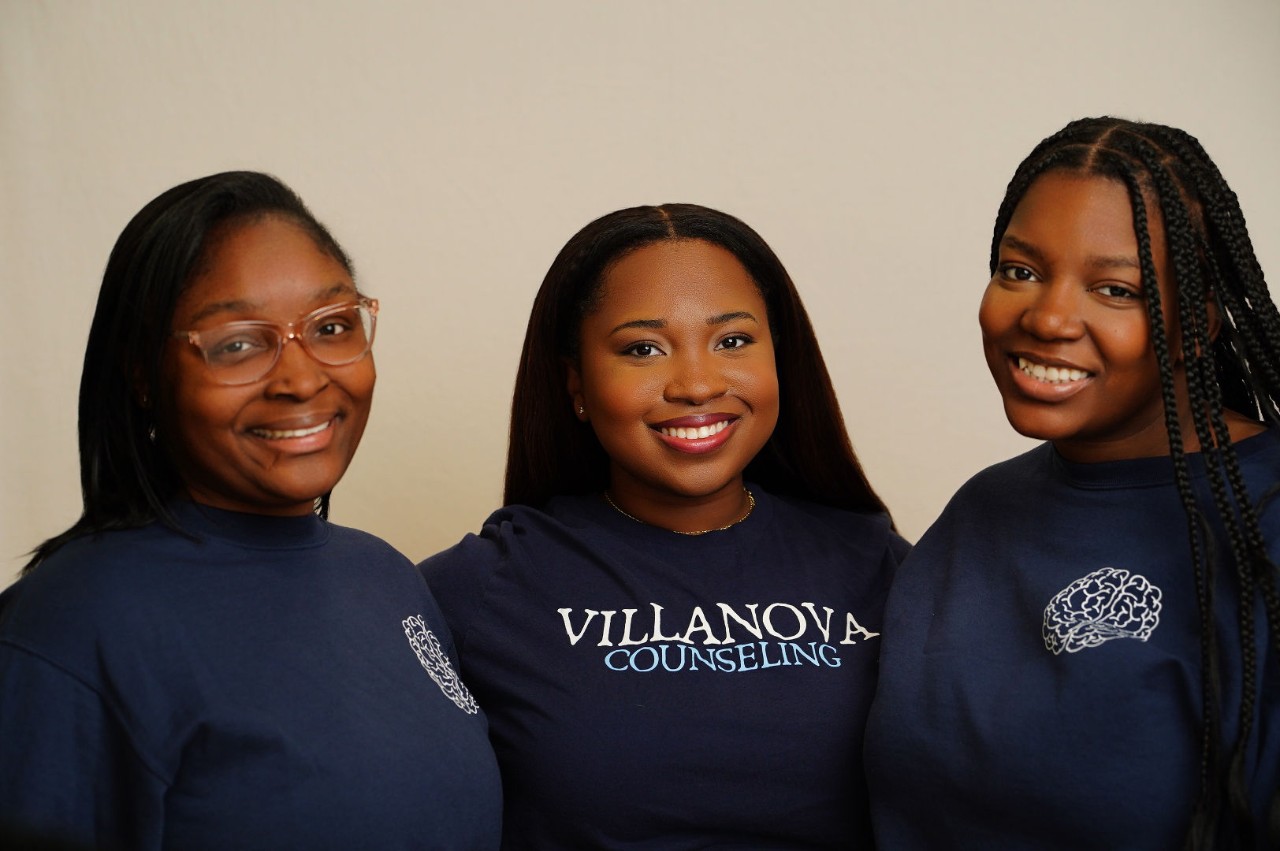
Before their session at the American Counseling Association (ACA) Conference and Expo began at 8:30 a.m. on an April Saturday morning, two Villanova University graduate alumni and one current master’s student took stock.
“It felt surreal at first,” said Carina Azuine ’26 MS, a graduate Counseling student. “Most presenters are years into their careers, and here we were, still finishing our program or less than a year out. But once people started engaging, it became a real dialogue.”
If they felt nervous, it wasn’t for long. An audience filled with educators, clinicians and graduate students leaned in, exchanging stories and ideas during a conversation led by the three budding counselors—Azuine and two recent graduates of the Counseling master’s program, Luvonda Fuller ’25 MS and Patrice Manasse ’25 MS.
The dialogue centered on a question the three friends and research partners had been developing for months: how imposter syndrome manifests among students of color in graduate counseling programs, and what structural factors might be fueling it.
“Oftentimes, we hear people calling what they’re experiencing ‘impostor syndrome,’ but what are the root causes for it to be exacerbated in this population of individuals,” asked Manasse. “While doing our analysis, our data showed that it’s not only an internal thing—which we know impostor syndrome to be—but there are external factors causing these individuals to feel it.”
To deeply explore their question, the team conducted a meta-analysis and literature review, drawing on existing studies. What emerged was a consistent theme: imposter syndrome, often framed as an internal struggle, is frequently shaped by external conditions. The group’s research highlighted how limited representation within a field can leave students of color feeling like outsiders in spaces where they are fully qualified to belong.
“There’s not a lot of space for them to see someone in the field who looks like themselves,” Azuine said. “In that sense, underrepresentation can be a precursor to feeling increased levels of impostor syndrome.”
“There’s this sense of being a ‘guest at the table,’” Manasse said. “Even though you’ve earned your place, the environment doesn’t always reflect that.”
Edward Wahesh, PhD, associate professor of Counseling, originally promoted the idea for the trio to submit a proposal to the ACA, and they were later invited to present a 60-minute educational session at the conference in Columbus, Ohio, through an initiative designed to help young and emerging professionals.
“Every article we read kept calling for more research,” said Fuller, currently a PhD student at Ball State University. “At some point we said, ‘Okay, let’s be part of that.’”
Their presentation reflected that same collaborative spirit that brought the three friends together. Rather than delivering a traditional lecture, they built interactive exercises that encouraged attendees to reflect, discuss and share their own experiences.
“People in the room brought their own perspectives, and that made the research come alive in a different way,” Azuine said.
Fuller credits Wahesh and the funding opportunities that are available for Villanova graduate students for making their participation in the ACA conference possible, particularly funding that allowed them to attend and present.
For all three students, the focus is on sustaining the momentum—expanding the research, finding mentorship and securing the resources needed to keep asking bigger questions.
“Without those opportunities,” Fuller said, “we wouldn’t have been in the room to begin with. We are grateful to God for even creating the opportunity for us and blessing us to bless others.”
About Villanova University’s College of Liberal Arts and Sciences: Since its founding in 1842, Villanova University’s College of Liberal Arts and Sciences has been the heart of the Villanova learning experience, offering foundational courses for undergraduate students in every college of the University. Serving more than 4,500 undergraduate and graduate students, the College is committed to fortifying them with intellectual rigor, multidisciplinary knowledge, moral courage and a global perspective. The College has more than 40 academic departments and programs across the humanities, social sciences, and natural and physical sciences.
Office of Graduate Studies
College of Liberal Arts and Sciences
Villanova University
Vasey Hall - Suite 202
SCHEDULE YOUR CAMPUS TOUR
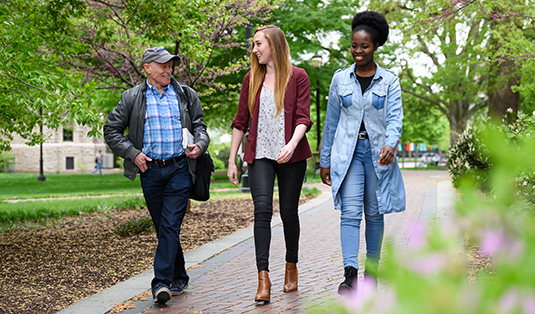
The CLAS Office of Graduate Studies offers personal tours of the beautiful Villanova campus. All tours begin in the Graduate Studies Office, located in Vasey Hall.
Schedule your tour!
FOLLOW GRADUATE STUDIES