AWARDS
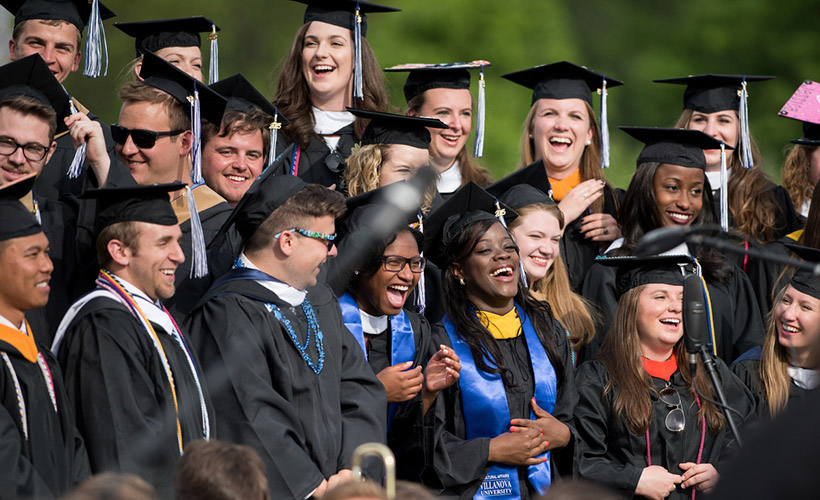
Karol Wojtyla Medallion for Excellence in Humanities
Before he became bishop of Kracow and eventually Pope Saint John Paul II, Karol Wojtyla was a poet, playwright, and professor of philosophy in Poland. His thought and writings articulate a deeply authentic humanism that is at the foundation of the Department of Humanities. His life bore witness to the vitality and expansive vision that is the fruit of such a humanism. In his encyclical Fides et Ratio, St. John Paul spoke of the love of wisdom that is “born and nurtured when the human being first asked questions about the reason for things and their purpose” and that “shows in different modes and forms that the desire for truth is part of human nature itself.” Our medallion winners are students who have not just excelled in their studies but whose love of wisdom has been stirred into a flame during their undergraduate studies. Below you’ll find the full list of our medallion winners since 2005.
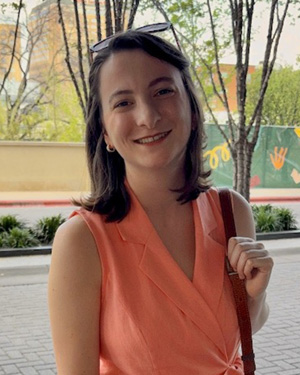
2026 Karol Wojtyla Award Winner: Emmaline Lombardo '26 CLAS
We are thrilled to announce that the 2026 Karol Wojtyla Medallion for Excellence in Humanities was awarded to Emmaline Lombardo ’26 CLAS, a double major in Humanities and Political Science in the Honors Program.
During her four years in Humanities, Emmaline exemplified a contagious love of learning, deep questioning, and intellectual fellowship. Her junior year was spent as a Catherine Barr Windels fellow at Blackfriars Hall, Oxford University. Upon her return to campus for senior year she was an inaugural student leader in the Augustinian Ambassadors Program and the founding feet of Villanova’s new Swing Dancing Club. Her yearlong Humanities thesis for the Honors Program was titled, “Constituted for the Kingdom: A Political Eschatology for Our Times.”
From Villanova, she heads to the University of Notre Dame, where she is entering the Master of Theological Studies program.
2026: Emmaline Lombardo
2025: Ashleigh Reen
2024: Christopher Cokinos
2023: Natalie Anderson
2022: Olivia Pfeiffer
2021: Robert Bulka
2020: Timothy Long
2019: Emily LaPorte
2018: Ethan Swain
2017: Gabriella Berman
2016: Hindley Williams
2015: Sara Thoms
2014: Michael Vazquez
2013: Ryan M. Brown
2012: Paul M. Dupont
2011: Paul R. Trahey
2010: Charles A. Gillespie
2009: Madeline A. Chera
2009: Anne Marie Bonner
2008: Loretta A. Vasile
2007: Paul John Gorre
2006: Michael Ostroff
2005: Gregory Grimes
Senior Essay Prize
The Department of Humanities Senior Essay Prize is awarded to a major in the Department of Humanities for an essay that demonstrates excellence, rigor, and wisdom in its sustained engagement with a question deserving renewed attention at the end of the degree. Seeking depth over breadth, students build on texts and issues from the gateway and elective classes to craft a long essay on a question that they identify in conversation with the symposium professor and an additional faculty advisor. Each essay is distinct in its demonstration of students’ particular intellectual loves and integrating interdisciplinary topics. Below are our past winners and posters of recent Humanities Senior Essays.
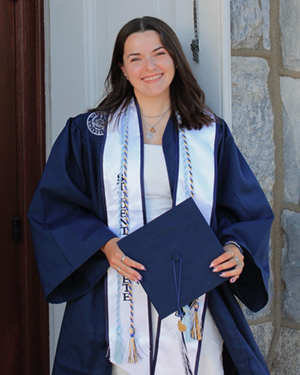
2026 Essay Winner: Cate Donnelly, ’26 CLAS
The 2026 Humanities Outstanding Senior Essay Prize was awarded in May to Cate Donnelly, ’26 CLAS, for her essay: “All Things Bright and Beautiful: Meditations on Beauty.”
A panel of three faculty had the challenging task of deliberating the most outstanding piece of writing submitted by a strong class of Humanities majors at the end of their final semester together in Senior Symposium.
Advised by Dr. Helena Tomko, Cate’s essay was extolled by the evaluating committee for its “splendid thinking and writing through and through” and as exemplary of the “total Humanities package: interdisciplinary, well argued, well illustrated through art, and touching upon a core theme of our department.” In the words of one evaluator, “What a beautiful essay on beauty!”
Cate is now working for an art gallery in Atlanta, Georgia, as she continues to pursue her love of art and beauty.
Cate Donnelly, 2026, “All Things Bright and Beautiful: Meditations on Beauty”
Grace Maresca, 2025, "Rediscovering Love in a Broken and Disoriented World"
Andrew Patton, 2024, "Ευχαριστία: Lifting the Veil from Our World of Gift"
Alexander Fezza, 2023, "Should We Just 'Let People Enjoy Things?': An Examination of Pleasure and Popular Appeal as Bases for Value Judgments"
Carrie Sweeney, 2022, "The Art Form that Keeps Opening and Opening: Poetry as a Way of Knowing"
Casey O'Donnell, 2021, "The Song of Creation: A Divine Love Song Transposed"
Caroline Arnold, 2020, "Insignes pietate viri: Virgil, Augustine, and Dante on the Virtue of Piety"
Matthew Faller, 2019, "A String of Minor Graces"
Patrick Hudak, 2018, "Acedia, Psychopathology, and the Human Person: Exploring Walker Percy's The Moviegoer and the Necessity of Meaning"
Eric Aldieri, 2017, "'Where Time and Eternity Spatter Each Other with Foam'": Signs of the Sacred & the Beautiful Impossibility of Home"
Ali Laird, 2016, "Sticky Little Leaves: Non-Locality, Non-Euclidean Geometry, and Positive Knowing in the Brothers Karamazov"
Charles Bates, 2015, "Is God Love?: Converging and Convincing Arguments for the Truth of Christian Faith"
David Kim, 2014, "Reconciling Man’s Irrationality through Synthesis: Love, the Crown of Rationality"
Sarah J. McNally, 2013, "The Good Life in the Age of Advertising"
Victoria L. Barry, 2012, "The Abolition of Justice: Exposing the Need to Restore the Virtue of Justice to American Legal Theory"
Cristina D'Averso, 2011, "The Circle of Love: Tracing Its Origin and Discussing Is Implications"
Keenan D. Lynch, 2010, "A Better Search for the "Better Place": Consideration of Hannah Coulter with regard to the State of Happiness Today"
Madeline A. Chera, 2009, "Counterculture and Communion: Beyond Industrial Systems for a Fuller Understanding of Food"
Maria Therese Barry
Language and Literature: The Literary Word and The Living Word
What is the purpose of literature? How does language illuminate God’s presence in literature and life?
Jane Brenninkmeyer
Teaching for Telos: Education, Intellectual Embarrassment, and Desire
How should the teacher shape the Good Life? Can we do so within the American education system?
Jane Butler
Special Education, Mutual Dependence, and the Good Life
What can special education teach us about forming the whole person and strong communities?
Jack Cichella
How Leisure Can Enable Superior, Sustainable, and Gratifying Work
What is True Work and True Leisure?
Mya Dell’Aquila
From Suffering and Displacement to Gratitude and Compassion
What is the role of suffering in a flourishing human life?
Kathleen Devine
The Effects of Uncontrollability and Resonance In Our Lives
Despite modernity’s pursuit of socio-economic control, how do uncontrollability and resonance add meaning to our lives?
Cate Donnelly
All Things Bright and Beautiful: Meditations on Beauty
Why is it important to recognize beauty? What does it mean to serve beauty or to further it?
Gabe Donovan
Dignity, Dependence, and Disability: Employing Imago Dei
Why does our society value work, while excluding individuals with disabilities from work? How do we fix this?
Ashley Flynn
The Limits of Mastery: Meaning from a World Larger than Our Plans
Is life something to earn or manage? Can learning to receive transform the meaning of the good life?
Liam Higgins
“Praecepta Volandi”: Examining Our Relationship with Technology
How does our modern technological society affect our relation to our humanity, world, community, and God?
Emmaline Louvarado
Constituted for the Kingdom of Heaven: A Political Eschatology for Our Times
What bearing do Catholic claims about Heaven and Judgment have on earthly politics and the common good?
Brian Luppy
The City and the Good Life
Amid isolation and fragmentation, can we better design our cities to increase the common good?
Nell Malette
The Virtue of Empathy in the Life of a Public Servant
Why does a public servant need to be virtuous? Why is empathy a necessary virtue for public servants?
Hunter McAllister
Working to Live: Philosophical Insights from Working-Class Labor
How can we find meaning in work?
Milton Meelavy
Faith, Charity, and Community: The Catholic Contribution
How does the widespread practice of Roman Catholicism impact the quality of life of a community?
Sebastian Moreland
Healing the Rift Between the Humanities and Sciences
How could the sciences and humanities work together to reveal irrefutable truths and extraordinary mysteries?
Wyatt Oatman
Joy in the End: Art and the Mortal Condition
How does encountering death reshape the human being?
Christian Rapattoni
Suffering as Refinement: Cleansing the Self in the Search for Meaning
How does suffering refine the self in the search for meaning?
Eileen Sceski
The Marriage of Giving and Receiving: Gratitude and the Heart of Human Experience
Can we live well without the art of giving and receiving? Can you live a good life without practicing gratitude?
Andrew Smith
Heroically Captaining Our Souls: Guidance from the Lighthouse
What makes a hero worth following? How does a hero serve the common good?
Samuel Smith
Honor, Courage, Commitment — and Wisdom
Why is the military seen as warmongers and not warfighters? How can the USMC use the Humanities?
Gabriella Wallace
Living with the Material World: Vanity, Identity, and the Search for Meaning
What is vanity in a consumerist culture of self-presentation? How can we best live with the material world?
Megan Zelch
Go Touch Grass!: Nature and Human Flourishing from Childhood to Adulthood
In what ways does nature play a role in human flourishing?
St. Rita of Cascia Humanities Award for Augustinian Ideals
The Humanities Award for Augustinian Ideals is named for St. Rita of Cascia, one of the most remarkable saints in the Augustinian Order. Her life was distinguished by her commitment and care for those in her life—as a daughter, mother, wife and member of a religious community; the depth of her contemplation and vision; her persistence and patience in the face of suffering; and her thoughtful, collegial generosity and service. She is popularly known as the “saint of the impossible” for overcoming adversity and resistance to realize her dream of joining the Augustinian community.
In the judgment of the department of Humanities faculty, the recipient of this award, inaugurated in 2026, best exemplifies such qualities of character and intellect among the graduating class of Humanities majors. This includes a joyful life of service to fellow community members that is founded on an understanding of the Humanities educational mission; a generosity, depth of insight, and profound love of learning in and outside of the classroom; dedication to enhancing the department’s common good at events and activities—formal and informal; and, when relevant, a dedication to Humanities that overcomes difficulties to share in our life of learning.
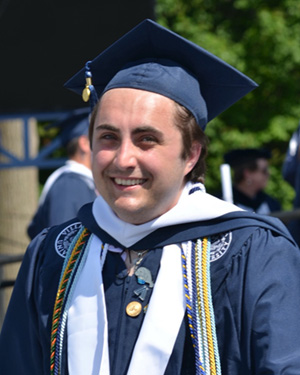
2026 St Rita of Cascia Award: Gabe Donovan '26 CLAS
Gabe Donovan, ’26 CLAS, a double major in Humanities and Public Administration in the Honors Program, became the inaugural recipient of the St. Rita of Cascia Humanities Award for Augustinian Ideals.
This new award is named for St. Rita of Cascia, one of the most remarkable saints in the Augustinian Order. Her life was distinguished by her commitment and care for those in her life—as a daughter, mother, wife, and member of a religious community; the depth of her contemplation and vision; her persistence and patience in the face of suffering; and her thoughtful, collegial generosity and service. She is popularly known as the “saint of the impossible” for overcoming adversity and resistance to realize her dream of joining the Augustinian community. In the judgment of the department of Humanities faculty, the recipient best exemplifies such qualities of character and intellect among the graduating class of Humanities majors. This includes a joyful life of service to fellow community members that is founded on an understanding of the Humanities educational mission; a generosity, depth of insight, and profound love of learning in and outside of the classroom; dedication to enhancing the department’s common good at events and activities—formal and informal; and, when relevant, a dedication to Humanities that overcomes difficulties to share in our life of learning.
Anyone who know Gabe knows how well this describe him! Gabe will remain at Villanova for a fifth year at Villanova to study for a Master of Public Administration before joining the Alliance for Catholic Education at the University of Notre Dame in Summer 2027.
2026: Gabe Donovan
Department of Humanities
St. Augustine Center Room 304
Villanova University
800 Lancaster Avenue
Villanova, PA 19085
Chairperson: Dr. Michael Tomko
Administrative Assistant: Laura Klee
FOLLOW THE HUMANITIES DEPARTMENT