
RESEARCH AND SCHOLARSHIP
Our department has nationally and internationally recognized scholars whose research addresses critical questions about society and the criminal justice system and has significant academic and policy impacts.
FACULTY SCHOLARSHIP

Congratulations to Melissa Hodges, PhD, for receiving a GRASP grant (Grants for Research for Arts and Sciences Professors) with Co-PI Camille Burge, PhD, chair and associate professor of Political Science, for 2026-2028. Their project explores how candidate family narratives shape political discourse and voter perceptions in United States presidential primaries from 2000-2004.
Lorena Avila, PhD, with coauthor Andres F. Rengifo, PhD, published the article “The Moral Economy of Pretrial Justice: Formal and Informal Punishments of Female Defendants in Colombian Courts” in Theoretical Criminology.
Meredith Bergey, PhD, published the article “'If It’s Going to Be, It’s Up to Me. . .’: Health-Related Coaching, Personal Responsibility, Empowerment, Digital Health, and the Expanding Practice of ADHD Care” in Health: An Interdisciplinary Journal for the Social Study of Health, Illness and Medicine.
Elif Birced, PhD, published several works, including: “All One Million Views are Not Equally Worthy: Relational Assessment of Influence in the Creator Economy” in Poetics; “Empowered by Consumers: How Content Creators Use Relational Labor to Resist Labor Control” in Socio-Economic Review; and “The Relational Work of Turkish Youtubers: Negotiating Money and Affective Bonding with the Audience” in Global South Creator Cultures.
Lorena Ávila, PhD, focuses on the role of law and legal bureaucracies in propelling inequalities through the immigration system. Her research aims to give visibility to the experiences, resources, and challenges of migrant families and migrant’s rights advocacy networks navigating inequality and racialization propelled by bureaucratic structures in place.
Meredith Bergey, PhD, is working on a paper with Thomas Mackie, PhD, Giuseppina Chiri, PhD, and Nikki Freeman, PhD, that examines intersecting social identities and health inequalities.
Elif Birced’s, PhD, research explores how social media platforms transform work and shape access to creative work. Currently, she’s working on a paper about how and why social media platforms, like YouTube, keep content creators committed without full-time employment or decent pay.
Glenn Bracey’s, PhD, scholarship examines the intersection of race, social movements, and religion. Drawing on research conducted through the Race, Religion, and Justice Project (rrjp.org), Bracey’s current work explores whiteness as a religion and the implications of the religion of whiteness for Christians of color.
Rick Eckstein, PhD, is currently exploring the social class bias in non-revenue intercollegiate sports.
Guillermo Jesús Escaño, PhD, (he/him), conducts research focusing on crime and violence in Latin America and the Caribbean, organized criminal groups, the structural and cultural causes and consequences of violence, and criminal justice policy (evidence-based practices). He is a quantitative researcher, mainly using panel and time series models.
Heidi Grundetjern, PhD, is currently conducting research on the opioid crisis in Philadelphia.
Lance Hannon, PhD, is currently working on a variety of sociological and criminological research projects utilizing digital text analysis tools.
Melissa Hodges, PhD, is currently working on a project that examines the relationship between the structural arrangements of care systems and variation in the distribution of economic inequality across gender, race, and class cross-nationally.
Rory Kramer, PhD, is finishing work on a book manuscript about diversity within the Black student body at selective colleges and universities with colleagues at Penn and Princeton. He is also working on a related paper on the impact of racial disparities in exposure to stressful events on college completion rates.
Jill MCCorkel, PhD, was granted a two-year research fellowship with the Philadelphia District Attorney's Office. Her project investigates the influence of prosecutorial discretion on increases in the number of women serving life and virtual life sentences. She has accepted a faculty position at the School of Law & Criminology at Maynooth University and is on a two-year leave of absence in Dublin, Ireland.
Max Osborn, PhD, is examining how LGBTQIA+ people navigate risk, safety, and gender presentation during encounters with institutional actors such as police and service providers. He is also studying representations of transgender victims of violence in the news media.
Allison Ann Payne, PhD, is collaborating with our department’s research associate, Denise Wilson, on a multilevel study examining the influence of school-related risk and protective factors on traditional and cyberbullying.
Brianna Remster, PhD, is writing a book with Rory Kramer, PhD, on the impact of mass incarceration on American democracy, tentatively titled Unspoken Injustice: How Prison Gerrymandering Distorts Political Representation.
Ken Sun, PhD, is currently working on two manuscripts, including a single-authored book on aging and migration, and the other on transnational social protection (with Professors Peggy Levitt, Erica Dobb, and Ruxandra Paul).
Kelly Welch, PhD, is editing the Research Handbook on Race, Crime, and Justice. The handbook is under contract with Edward Elgar Publishing.
Pratt, Tia Noelle. (2025). Black and Catholic: racism, identity, and religion. University of Notre Dame Pess.
Emerson, Michael and Glenn Bracey. (2024). The Religion of Whiteness. How Racism Distorts Christian Faith. Oxford University Press.
Levitt, Peggy, Erica Dobbs, Ken Chih-Yan Sun, and Ruxandra Paul. (2023). Transnational Social Protection. Oxford University Press.
Charles, Camille Z., Massey, Douglas S., Torres, Kimberly C., & Kramer, Rory. (2022). Young, Gifted and Diverse: Origins of the New Black Elite. Princeton University Press.
Ávila, Lorena and Andres F. Rengifo. (2026). The moral economy of pretrial justice: Formal and informal punishments of female defendants in Colombian courts. Theoretical Criminology.
Ávila, Lorena and Sarah Tosh. (2024). The institutional hearing program and the incarceration-to-deportation pipeline. Critical Criminology.
Bergey, Meredith. (2026). “If it’s going to be, it’s up to me. . .”: Health-related coaching, personal responsibility, empowerment, digital health, and the expanding practice of ADHD care. Health: An Interdisciplinary Journal for the Social Study of Health, Illness and Medicine.
Bergey, Meredith. (2024). Medicalization in global context: Current insights, pressing questions, and future directions through the case of ADHD. Sociology Compass.
Bergey, Meredith. (2024). “Pills don’t teach skills”: ADHD coaching, identity work, and the push toward the liminal medicalization of ADHD. Journal of Health and Social Behavior.
Birced, Elif. (2026). All one million views are not equally worthy: Relational assessment of influence in the creator economy. Poetics.
Birced, Elif. (2026). Empowered by consumers: How content creators use relational labor to resist labor control. Socio-Economic Review.
Birced, Elif. (2025). The relational work of Turkish YouTubers: Negotiating money and affective bonding with the audience. In Global South Creator Cultures (pp. 39-58).
Mears, Ashley, Birced, Elif, and Nguyen, Thao. (2025). The right amount of sex: Digital labor in the grey zone of platform governance. Work and Occupations.
Corr, Chris, Christopher Atwater, Mark S. Nagel, Richard Southall, Rick Eckstein, and Marek Taškár. (2025). Meet the FARs: An Examination of the Background, Roles, and Appointment of Faculty Athletic Representatives at National Collegiate Athletic Association Member Institutions. Journal of Issues in Intercollegiate Athletics.
Escaño, Guillermo Jesús and William Pridemore. (2026). The association between anti-cartel military intervention and municipal homicide rates in Mexico, 2000–2022. Journal of Quantitative Criminology.
Escaño, Guillermo Jesús and William Pridemore. (2026). When prices rise, so does crime: A time series analysis of the association between inflation and crime in Argentina, 1973–2022. Justice Quarterly
Escaño, Guillermo Jesús, David McDowall, and William Pridemore. (2025). Mano Dura v. Uneasy Peace in El Salvador: Effects of Tough-on-Crime and Gang Truce Policies in the Former Murder Capital of the World. The British Journal of Criminology.
Escaño, Guillermo Jesús and William Alex Pridemore. (2024). Population-level alcohol consumption and homicide rates in Latin America: A fixed effects panel analysis, 1961–2019. The British Journal of Criminology.
Escaño, Guillermo Jesús. (2024). Latin American homicide. In K. Burgason & M. DeLisi. (Eds.), Routledge Handbook of Homicide Studies (pp. 41-64). Routledge.
DiPietro, Stephanie M. and Heidi Grundetjern (2026). "I Will be a King There": Lies, Omissions, and the Maintenance of a Violent Criminal Identity International Journal of Offender Therapy and Comparative Criminology.
Fowler, Kurt W. and Heidi Grundetjern. (2025). “We’re basically just naked therapists”: Sexwork, stigma, and psychological empowerment. Criminology.
Grundetjern, Heidi and David Gadd. (2025). Toward a Trauma-Informed Psychosocial Criminology: A Case Study of Women’s Methamphetamine Use. Feminist Criminology.
Hannon, Lance and Molly Biddle. (2026). Are young black men traveling together targeted for traffic stops?. CrimRxiv.
Biddle, Molly and Lance Hannon. (2026). Not just black and white: Evidence of colorism in Philadelphia’s traffic stops. CrimRxiv.
Hannon, Lance and Molly Biddle. (2025). Unequal policing of black motorists in black communities by age and gender: A short report on intraracial applications of the veil-of-darkness test. American Journal of Criminal Justice.
Hannon, Lance, Lindsay Redditt, and Brooke Cordes. (2024). Curbing pretextual traffic stops to reduce racial profiling. Agenda for Social Justice 3 Solutions for 2024.
Hannon, Lance and Meredith Bergey. (2024). Policy variation in the external evaluation of research for tenure at U.S. universities. Research Evaluation.
Hodges, Melissa. (Forthcoming). Closure and consolidation: Cross-cohort variation in the wages for US care workers. Social Problems.
Ben-Menachem, Jonathan, Taylor B. Alarcon, and Rory Kramer. (2026). Sundown towns, durable exclusion, and the legacy of northern racial regimes. Open Science Framework.
Kramer, Rory, Victor Ray, and Eduardo Bonilla-Silva. (2025). Introduction: Racism of Omission. Social Problems.
McCorkel, Jill and LaTonya Myers. (2026). Prison Law Libraries and the Gender Gap in Exonerations. In C. Dum, J. Fader, T. LaBel, and K. Wright. (Eds.), Handbook on Lived Experience in the Justice System.
McCorkel, Jill and Janis Parker. (2026). Abolitionist Theory. In A. Hattery and E. Smith (Eds.), Theories of Family Violence.
McCorkel, Jill, Paisley Hahn, and Isabella Balian. (2024). Parenting from prison. Graterfriends.
Osborn, Max. (2025). Groomers, gays, and gender ideology: Why the anti-LGBTQIA+ legislative backlash is a moral panic and why criminologists should care. Punishment & Society.
Moore, B., Max Osborn, and C. DeJong. (2025). Consequences and considerations of “free speech” in higher education: Validating trans and non-binary identities in the classroom setting. Journal of Criminal Justice Education.
Osborn, Max, Tanyanne Ball, and Valli Rajah. (2024). Peer support work in the context of intimate partner violence: A scoping review. Trauma, Violence, & Abuse
Payne, Allison Ann. (2024). The search for social justice in school-based crime and delinquency prevention. The ANNALS of the American Academy of Political and Social Science.
Payne, Allison Ann. (2024). Reducing school crime and student misbehavior: An evidence-based analysis. In B. Welsh, S. Zane, and D. Mears (Eds.), The Oxford Handbook of Evidence-Based Crime and Justice Policy.
Warner, Cody and Brianna Remster. (2025). Does Local Context Matter? Unemployment Rates and the Labor Market Consequences of Incarceration. Social Problems.
Sun, Ken Chih-Yan and Erin M. Rehel. (2026). Replacing dad? How extended family support shapes gendered allocation of time in middle-class North American families. Social Problems.
Sun, Ken Chih-Yan and Lijun Lin. (2025). Confronting linked immobility: how Chinese migrants managed family crisis during a global catastrophe. Social Forces.
Welch, Kelly and Allison Ann Payne (2025). Unequal “in”security: How differential school security approaches discriminate against students of color. In A. Eizadirad and P. P. Trifonas (Eds.), Handbook of Anti-Discriminatory Education.
STUDENT SPOTLIGHT

Rita Sogoti ’26 CLAS
In the summer of 2025, I had an incredible opportunity to intern in Dublin, Ireland, through the Frederick Douglass Daniel O’Connell Global Internship program. This eight-week program was organized by the Council on International Educational Exchange (CIEE) in partnership with the Government of Ireland and the African American Irish Diaspora Network. The program honors the legacies of two great social justice leaders, Frederick Douglass and Daniel O’Connell, and aims to connect young leaders with meaningful international work experiences.
This was my first time studying abroad, and it was truly a dream come true. I had always desired to study and work in another country. I was placed at Abbey Law Solicitors, a law firm located in Dublin City Centre. Abbey Law specializes in human rights and immigration law. The firm also handles a variety of legal areas, including judicial review, family law, criminal law, and personal injuries. I served as a Legal Intern, where I had the chance to gain real-world experience and build practical skills in a professional setting.
Throughout the internship, one of my key responsibilities was preparing and reviewing the Book of Pleadings before submitting it to the High Court. I personally worked with five to ten clients each week on various legal matters, which included assisting with family reunification applications, citizenship cases, visa applications, and helping clients prepare for their affidavits. I accompanied clients to the International Protection Office (IPO) to get registered, often supporting them through the process with my solicitor's supervision. I regularly attended legal proceedings and handled most of the call-overs and mentions. Witnessing the Irish proceedings gave me a new lens on how other countries pursue justice.
A particularly meaningful part of my experience at Abbey Law was working with clients from many different countries and cultural backgrounds. I had the privilege of helping individuals and families from Somalia, Afghanistan, Kenya, South Africa, China, Nigeria, and other parts of the world. This exposure not only expanded my global perspective but also deepened my understanding of how the legal system must adapt to meet the special needs of diverse populations.
The experience gave me a deeper understanding of Irish and European immigration and refugee law, as well as the human rights challenges faced by vulnerable communities. I witnessed the challenges people face in trying to receive justice, and it was rewarding to contribute to making a permanent change in their legal needs. My work was both empowering and eye-opening, and it confirmed my interest in pursuing a career in law focused on justice.
Living and working in Ireland also gave me a chance to experience Irish culture. I enjoyed exploring the country, learning about its history, and connecting with people from all over the world. Everyone I met was friendly and welcoming, which made it easier to immerse myself in Irish culture.
This incredible opportunity would not have been possible without the support of several important organizations and Individuals. I would like to sincerely thank the CIEE, the Office of Education Abroad (OEA), the Center for Access, Success, and Achievement (CASA) and Villanova. Their guidance and support made this internship a reality, and I am deeply grateful.
My transformative experience gave me the chance to grow, not only personally, but professionally. I am grateful that I was able to come out of my comfort zone through my unique exposure.
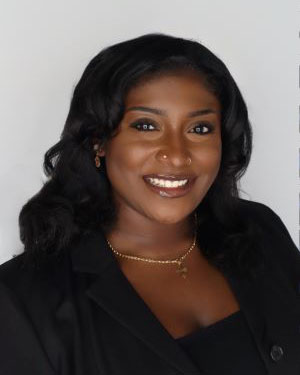
Thereasa Whyte ’26 CLAS
During my junior year at Villanova, I chose to write my political science research seminar paper on the impacts of crime-based political messaging on voter decision-making. Under the guidance of Dr. Dixon, I explored how political campaigns use fear-based narratives about crime to shape voter priorities, candidate favorability, and trust in institutions. My research included a survey experiment design where participants would be randomly assigned to view either a crime-focused ad or a non-crime ad, with pre- and post-surveys capturing shifts in perception and voting intention. The project drew heavily on theories of agenda-setting, racial priming, and emotional appeals, while also identifying gaps in the literature concerning social media and demographic differences.
The paper examined how “tough on crime” rhetoric distorts the democratic process by pushing voters toward punitive policies while obscuring deeper social causes of crime. I found this research particularly meaningful because of my broader academic interests in criminology and political science, as well as my own lived experiences seeing how fear-based narratives disproportionately affect marginalized communities. My criminology coursework, especially classes like Justice & Society as well as The Sociology of Race & Racism, gave me the foundation to critically analyze how political rhetoric interacts with structural inequalities.
Being named a runner-up for the St. Catherine of Siena Undergraduate Peace and Justice Research Award for this paper, affirmed the significance of my work and its contribution to understanding how rhetoric can either promote justice or reinforce inequality. Beyond the recognition, the project strengthened my ability to design research, synthesize theoretical perspectives, and connect abstract academic debates to real-world political challenges.
I fully believe that pursuing criminology and political science at Villanova has prepared me to apply research to pressing social issues. For example, my internship with the Pennsylvania House of Representatives allowed me to see firsthand how crime rhetoric shapes legislative priorities, reinforcing the themes of my paper. Additionally, my involvement in the Philadelphia Justice Project: Villanova Chapter has deepened my passion for addressing how policy, rhetoric, and justice intersect.
This project not only pushed me as a researcher but also solidified my long-term goal of attending law school and working in policy to ensure that political narratives do not distort justice but instead serve communities equitably. I am deeply grateful to Dr. Dixon and the Villanova faculty whose mentorship has shaped me as both a scholar and an advocate.
Department Chair:
Dr. Allison Payne
Office: SAC 204
Phone: 610-519-5299
Administrative Assistants:
Mary Ann Hostler
Sociology
Phone: 610-519-4742
Shelly DuBois
Criminology
Phone: 610-519-4786
FOLLOW THE SOCIOLOGY AND CRIMINOLOGY DEPARTMENT