
Villanova University’s Chef Jimmy Harris Takes Bronze in National Association of College & University Food Services 2026 Culinary Challenge
A Cycle of Mentorship and Skill-Building Enriches Villanova’s Dining Services
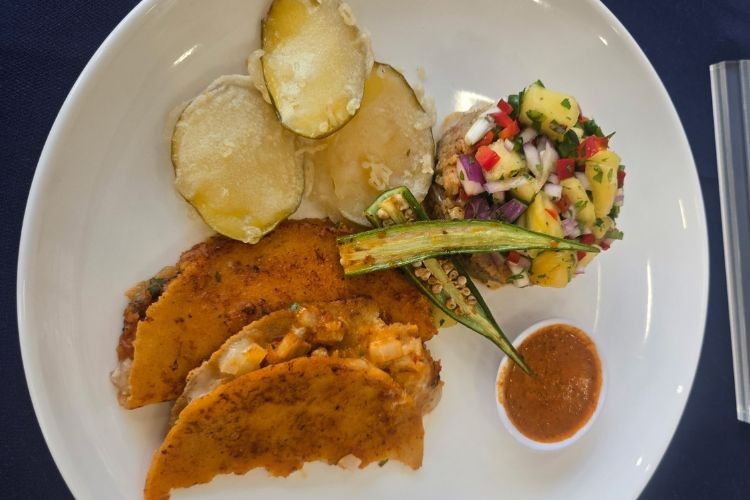
Chef Harris cooked catfish birria tacos with an okra pineapple salsa and a side of catfish dirty rice for the 2026 NACUFS Culinary Challenge.
VILLANOVA, Pa. (April 9, 2026)—On March 10, 2026, Chef Jimmy Harris, chef manager at Villanova University, left the familiar kitchen of Dougherty dining hall and stepped into a different cooking landscape—the National Association of College & University Food Services (NACUFS) 2026 Culinary Challenge. One recipe and a frenzied hour later, he walked away from the competition with a bronze medal and newfound culinary skills to share with his fellow Villanova chefs.
Launched in 2001 and adjudicated by the American Culinary Federation (ACF), the NACUFS Culinary Challenge is an annual competition that recognizes exceptional culinary expertise in collegiate foodservice. Chefs from universities across the country are tasked with creating an original, nutritionally-balanced dish featuring a designated protein and a surprise ingredient chosen by NACUFS, and preparing it live for a panel of judges. The dishes are judged on organization, technique and taste, using a 100-point scale.
For this year’s Challenge in Washington, D.C., the mandatory ingredients chosen were a nod to the upcoming 2026 NACUFS National Conference location in New Orleans. Each participant received two 3–5-pound skin on, gutted, whole catfish and fresh okra. Competitors were required to create an original recipe using two different cooking methods for the catfish and prepare four servings of that recipe for the judges.
As Chef Harris started developing his recipe, he hoped to create something drastically different from the variants of the traditional fried catfish and okra that he expected some competitors to choose. After circulating through numerous ideas and even drawing inspiration from Villanova’s own dining hall offerings, he kept returning to dishes with Latin influence. Finally, he settled on his recipe for submission: catfish birria tacos with an okra pineapple salsa, complete with catfish dirty rice. To satisfy the NACUFS requirement of having two different cooking methods for the protein, Chef Harris used poached catfish in the tacos and steamed catfish for the dirty rice side.
After his recipe was approved by NACUFS, Chef Harris practiced cooking the meal at least once a week alongside mentor Chef Chris Wiseley, who earned his own bronze medal at the NACUFS Competition in 2025. Chef Harris accompanied Chef Wiseley to the Challenge last year and observed both the competition and the judging portion.
“Competing this year was definitely less nerve-wracking since I went last year and knew what to expect,” said Chef Harris. “I was able to sit in on the critique when Chris competed and hear what the judges were looking for. I got a lot of free insight that most people don’t have prior to competing.”
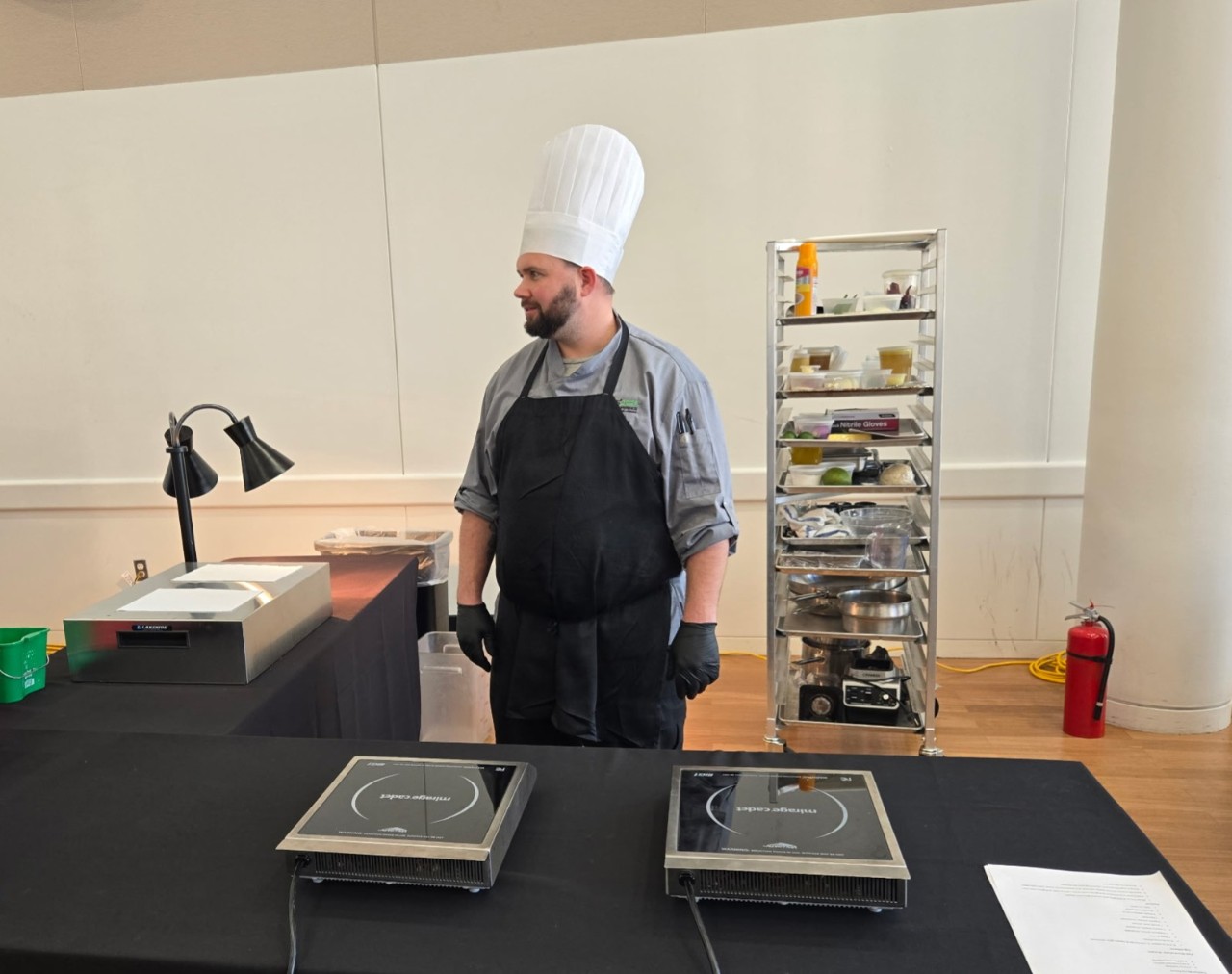
Chef Harris preparing to compete in Washington, D.C.
Based on his observations from last year, Chef Harris knew the judges would be monitoring food waste, cart organization, meat preparation and aptitude of skills. He also had to practice preparing his dish within the allotted one hour of cooking time, a challenging feat. Chef Wiseley guided Chef Harris in advance of the competition, giving him recommendations for shortcuts and strategies to beat the clock.
Chef Harris will do the same next year, as he steps into the mentor role. He will train Chef Laszlo Lengyel, executive chef for Dougherty Hall, who intends to compete in the 2027 Culinary Challenge. Chef Lengyel accompanied Chef Harris to the Challenge this year, observing in the same way Chef Harris did during the 2025 competition.
The guided instruction each chef receives from the previous competitor continues to benefit on campus dining as well.
“The mentorship we have built into this competition creates a ripple effect across our entire dining program,” said Andrew Camuso, executive director of Dining Services. “Each year, our chefs return with new techniques, fresh ideas and a renewed sense of creativity that directly enhances the quality and variety of what we serve our campus community.”
Participation in the NACUFS Challenge continues to inspire Villanova chefs to innovate their culinary craft and collaborate with others to create a unique and diverse dining experience on campus.
“Here inside the dining hall, this is my world and I'm completely confident in everything I do,” said Chef Harris. “It can be stressful being thrown into a competition with people who are the best at their craft for their respective universities. But I got to meet and learn from those other great chefs, which was a very rewarding experience.”
It’s one he will assuredly draw from as he passes the plate to Chef Lengyel and continues the cycle of mentorship and skill-building that helps strengthen Villanova Dining Services each year.
“I’m looking forward to utilizing everything I learned and watching someone else’s recipe come together next year,” said Chef Harris. “It’s gratifying to see how the skills we learn and pass to each other for the competition live on within our kitchens on campus.”