The “Serena Effect:” How Serena Williams’ GLP-1 Advocacy Raises New Questions for Sports Integrity Law
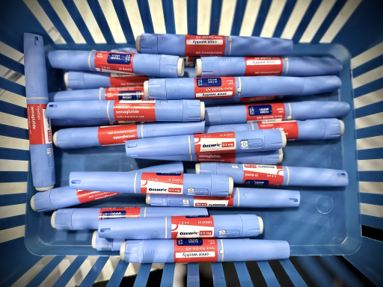
Photo Source: chemist4u, Bundle of Ozempic Pens, Openverse (CC BY 2.0).
By: Aryn Chartock* Posted: 11/12/2026
Introduction
The term “Serena Effect” gained widespread prominence throughout Serena Williams’ prime tennis career to highlight her impact on and off the court, yet few could have predicted that her influence would eventually transform the legal and medical debate around weight-loss drugs in professional sports.[1] The twenty-three-time Grand Slam Champion recently brought the national conversation surrounding weight-loss medications into professional sports through a prominent commercial campaign for Ro, a direct-to-consumer telehealth platform providing Glucagon-like-peptide-1 (GLP-1) treatments.[2] Describing her personal experience losing over thirty pounds post-pregnancy and asserting that experience was supported by science, Williams confronts the world, particularly the professional sports community, with an issue it can no longer ignore.[3]
Weight-loss medications have seen immediate, global adoption before regulators and athletes fully understand their long-term impact, unlike traditional performance-enhancing substances where usage patterns typically emerge after long-term clinical observation.[4] With millions of people across the globe actively utilizing GLP-1 receptor agonists, the sheer volume of widespread consumer usage amidst ongoing scientific debate and limited longitudinal research presents an unprecedented challenge for sports governing bodies and other regulatory entities.[5] Beyond the scientific uncertainty surrounding these medications, both national and international legal frameworks govern the use of pharmaceutical substances by professional athletes.[6] The World Anti-Doping Code serves as the foundational rulebook for unifying anti-doping policies from across hundreds of professional sports organizations and agencies across the nation.[
In response to rapid proliferation and significant physiological effects of these compounds, in 2024, the World Anti-Doping Agency (WADA) included GLP-1 receptor agonists in its official Monitoring Program to track potential patterns of misuse among competitive athletes.[8] GLP-1 receptor agonists are not classified as controlled substances under the United States Food and Drug Administration (FDA); however, their profound impact on body composition modification creates clear performance advantages that leave future WADA status uncertain.[9] Williams’ endorsement brings these emerging regulatory and legal challenges into immediate public focus as sports organizations struggle to establish clear guidelines.[10]
The “Serena Effect”
The phrase "Serena Effect" captures Williams’s ability to dismantle institutional barriers, redefine market endorsements, and shift social norms across sports and culture.[11] Instead of driving the Serena Effect solely through her on-court athletic conduct as she had throughout her playing career, Williams continues her legacy of shifting cultural norms by bringing the conversation surrounding weight-loss drugs directly to professional sports.[12] This public discourse was dramatically expedited in early 2026 when Williams went public in a widely viewed Super Bowl commercial campaign for Ro, revealing her personal use of GLP-1 medications to manage weight following her recent pregnancy.[13]
Williams joined forces with Ro to spark the conversation and to reduce the stigma behind pharmaceutical-assisted weight management.[14] Although substantial medical research regarding long-term physiological outcomes remains underdeveloped, this public advocacy raises complex legal questions regarding how sports governing bodies regulate pharmaceutical usage across the globe.[15] Williams accelerated the anti-doping regulatory timeline for GLP-1 medication, compelling agencies to evaluate prospective drug prohibitions far before substantial research has the opportunity to establish definitive standards.[16]
Anti-Doping Laws
Anti-doping regulation rests on the foundational premise that athletes deserve the right to compete on a “clean and even playing field,” where athletic success is determined strictly by dedication and talent rather than pharmaceutical assistance.[17] The United States Anti-Doping Agency (USADA) serves as a signatory to the World Anti-Doping Code and complies with all WADA standards.[18] For a substance or method to be placed on the prohibited list, it must meet two out of three criteria: (1) actual or potential performance enhancement; (2) actual or potential health risk to the athlete; or (3) violation of the "spirit of sport."[
While GLP-1 receptor agonists are not currently prohibited by USADA or WADA, WADA actively monitors and evaluates their usage among competitive athletes through its official Monitoring Program to determine whether a future prohibition is warranted.[20] Adding to the administrative complexity, different GLP-1 medications rely on distinct primary active pharmaceutical ingredients—such as semaglutide in Ozempic and Wegovy, versus tirzepatide in Mounjaro and Zepbound—creating a lack of therapeutic and regulatory continuity across the drug class.[21] Furthermore, USADA explicitly emphasizes that only FDA-approved, prescribed formulations comply with anti-doping integrity guidelines.[22] Consequently, any competitive athlete who procures a GLP-1 without a valid physician's prescription, utilizes non-injectable compounded alternatives, or obtains unapproved generic versions operates outside USADA standards and exposes themselves to strict liability anti-doping violations if they compete under these conditions.[23]
The Unknown Impact of GLP-1s in Professional Sports
Short-term clinical data demonstrates substantial reductions in total body weight and body fat, creating theoretical performance advantages across sports. [24] Independent research reveals that such body mass loss produces direct physiological benefits, including improved heat tolerance, decreased joint loading, and enhanced movement velocity.[25] Consequently, WADA is actively evaluating ongoing scientific studies, adverse-event reports, athlete usage data, and feedback from international sports federations to determine whether GLP-1s warrant formal addition to the prohibited list, making it an official banned substance in professional sports.[26]
Leagues like the National Basketball Association and Major League Baseball operate under independent collective bargaining agreements rather than direct WADA oversight, with no professional leagues currently prohibiting use of GLP-1 medications.[27] However, the competitive implications are particularly acute in weight-categorized sports, where rapid body mass manipulation directly impacts competitive eligibility.[28] This potential impact on weight based competitions mirrors the historical anti-doping rationale behind banning diuretics—substances that facilitate rapid fluid excretion to satisfy weight thresholds—because GLP-1s similarly enable accelerated weight management.[29]
Alternatively, medical commentators note that organic exercise itself frequently "outperforms the drug" regarding systemic anti-inflammatory responses and long-term cellular adaptation.[30] Existing research demonstrates that a reduction in weight loss correlates with a reduction in inflammation, which positively influences recovery timelines and athletic performance.[31] However, current sports medicine literature lacks sufficient longitudinal data to establish whether GLP-1-induced weight loss provides conclusive evidence to meet two out of three prongs under WADA's three-element framework.[
The Unknown Future of GLP-1s in Professional Sports
As the availability of weight-loss drug medications becomes more readily obtainable, access to the drugs without a physician’s prescription poses an increasing concern to the world of professional sports.[33] With limited research and a drug class that encompasses many different medical indications, such as diabetes and obesity, athletes like Williams show that there is a compelling need to re-evaluate how sports governing bodies regulate this medication in the future of the World Anti-Doping Code.[34] Williams transformed a private medical decision into a public policy catalyst through her partnership with Ro, demonstrating that the "Serena Effect" extends far beyond athletic records and into the structural evolution of sports law.[35] Williams directly challenges how WADA interprets its three-prong classification framework by framing her experience as one backed by science instead of taking a “shortcut,” forcing regulators to define the boundary between legitimate clinical care and impermissible performance modification.[36]
Ultimately, the Serena Effect proves that sports governing bodies can no longer rely on ambiguous "spirit of sport" standards; they must establish clear, diagnostic-based regulations that reconcile modern clinical medicine with the principles of player health, integrity, and privacy.[37] These enforcement questions gained heightened urgency during global athletic showcases, such as the FIFA World Cup in the summer of 2026, and will remain at the forefront of sports integrity law leading into the 2028 Olympic Games in Los Angeles.[38] It remains critical to observe how international anti-doping agencies and domestic professional leagues adapt their regulatory frameworks as research develops.[39]
Ultimately, Williams’ advocacy ensures that the intersection of metabolic healthcare and athletic competition will remain one of the most defining legal frontiers in modern sports.[40] By forcing regulators to confront the reality of modern pharmaceuticals, Williams advanced the conversation surrounding GLP-1s in sports, ultimately compelling WADA to define how its three-prong framework applies to emerging weight-loss treatments whose competitive and health impacts remain largely unknown.[41] Anti-doping governance must evolve alongside modern medicine to safeguard athlete care and maintain competitive balance, grounding future regulatory decisions in a comprehensive understanding of long-term impacts while remaining cautious to premature enforcement.[42]
*Aryn Chartock, Jeffrey S. Moorad Sports Law Journal, J.D. Candidate, May 2028 Villanova University Charles Widger School of Law.
[1] See Kurt Streeter, The Serena Effect, N.Y. Times (Sep. 22, 2022), https://www.nytimes.com/2022/09/02/briefing/serena-williams-us-open-tennis.html (coining phrase “Serena Effect” to describe Serena Williams’ unprecedented cultural impact across global athletics, sports marketing, and societal gender norms, demonstrating that cultural power derived not merely from athletic dominance on court, but also from outspoken advocacy and embrace of her Black identity in historically exclusionary spaces, such as professional tennis).
[2] See Matthew Futterman, Serena Williams and the Coming Reckoning with GLP-1s and Performance Enhancement, N.Y. Times (June 30, 2026), https://www.nytimes.com/athletic/7347270/2026/06/10/serena-williams-tennis-comeback-glp1-rules-performance-enhancement/ (outlining Serena Williams’s high-profile participation as paid ambassador for telehealth platform Ro, emphasizing her public framing of glucagon-like-peptide-1 usage as scientifically valid weight management, rather than improper shortcut).
[3] See Liz Clarke, The Serena Effect Changed Every Aspect of Women’s Tennis, Wash. Post (Aug. 28, 2022), https://www.washingtonpost.com/sports/2022/08/28/serena-williams-legacy-final-us-open/ (examining how Williams structurally transformed women’s athletics, detailing her role in elevating compensation and sports endorsement valuations, redefining athletic power and physicality standards on court, and dismantling racial barriers in professional tennis); see also Futterman, supra note 2 (pointing out significance of Williams publicly sharing her personal use of Zepbound, widely accessible GLP-1 formulation, thereby normalizing prescription weight-loss medications and reframing weight loss treatments through lens of elite global athlete).
[4] See Dani Blum, What We Know About Weight-Loss Drugs Is Rapidly Changing, N.Y. Times (June 8, 2026), https://www.nytimes.com/2026/06/08/well/glp1-drugs-weight-loss.html (comparing GLP-1s to other drug classes and noting scientists lack long-term observational and clinical data on GLP-1 usage because widespread global adoption preceded conclusion of major clinical research findings); see also Futterman, supra note 2 (explaining limitations of conventional weight-loss strategies and highlighting Williams’s success as practical evidence of GLP-1 efficacy despite limited long-term research).
[5] See Christopher Rowland, Americans are taking GLP-1 Drugs in Record Numbers, Wash. Post (July 7, 2026), https://www.washingtonpost.com/health/2026/07/07/americans-are-taking-weight-loss-drugs-record-numbers/ (reporting 2025 Gallup poll findings indicating eleven percent of United States adults actively use injectable or oral GLP-1 agonist formulations for metabolic control or weight loss); see also Blum, supra note 4 (describing GLP-1 popularity due to fast short-term weight-loss results, citing clinical studies demonstrating fifteen-to-twenty percent of their body weight over seventy-two weeks).
[6] See United States Anti-Doping Agency, Clean Sport Handbook § 2, at 2 (2026), https://www.usada.org/wp-content/uploads/2026-Clean-Sport-Handbook_v2.pdf (establishing binding administrative authority and regulatory scope of national anti-doping protocols over competitive athletes, based on World Anti-Doping Agency Anti-Doping Code).
[7] See World Anti-Doping Code, World Anti-Doping Agency, at 10 (2027), https://www.wada-ama.org/sites/default/files/2026-10/2027_world_anti-doping_code_code_october_final.pdf (outlining World Anti-Doping Agency purposes in establishing World-Anti Doping Code, including protecting athletes’ fundamental right to participate in anti-doping sports to promote health, fairness, and equality).
[8] See Analysis of GLP-1 Receptor Agonists, World Anti-Doping Agency (2024), https://www.wada-ama.org/en/resources/scientific-research/analysis-glp-1-receptor-agonists-semaglutide-liraglutide-etc-blood (announcing inclusion of GLP-1 receptor agonists within WADA’s official monitoring program to track misuse patterns, physiological impacts, and competitive prevalence among non-diabetic athletes).
[9] See FDA’s Concerns with Unapproved GLP-1 Drugs Used for Weight Loss, U.S. Food & Drug Admin. (Oct. 1, 2026), https://www.fda.gov/drugs/drug-alerts-and-statements/fdas-concerns-unapproved-glp-1-drugs-used-weight-loss (warning consumers regarding safety hazards, dosing inaccuracies, and other misinformation linked to unapproved or compounded GLP-1 formulations, which prove especially prevalent because most formulations are not controlled substances).
[10] See Melissa Hogenboom, Could a Drug Designed for Weight Loss Help Athletes Perform Better?, British Broad. Corp. (Aug. 17, 2026), https://www.bbc.com/future/article/20260814-should-glp-1s-be-considered-performance-enhancing-drugs (evaluating known short-term benefits of weight loss and fat reduction on movement, endurance, and power metrics across various disciplines).
[11] See Streeter, supra note 1 (describing Serena Williams as both greatest tennis player of all time and advocate for females and traditionally racially marginalized communities in professional sports).
[12] See Katie Deighton, Serena Williams Is the Surprising New Face of Weight-Loss Drugs, Wall St. J. (Aug. 21, 2026, at 9:00 ET), https://www.wsj.com/articles/serena-williams-is-the-surprising-new-face-of-weight-loss-drugs-1d17361f (discussing Ro’s intentions to destigmatize GLP-1 usage, highlighting Williams’s public endorsement of treatment as effective clinical intervention after experiencing postpartum weight-loss struggles).
[13] See Brian Steinberg, Serena Williams Super Bowl Commercial Pitches GLP-1 From Ro, Yahoo! Sports (Jan. 28, 2026), https://sports.yahoo.com/articles/serena-williams-super-bowl-commercial-140000571.html (detailing Williams’s involvement in promoting and normalizing GLP-1 usage through widely broadcasted Super Bowl LX commercial centered on phrase that individuals can be “healthier on Ro.”).
[14] See id. (explaining that by capturing consumer frustration with ineffective weight-loss strategies, Ro’s use of Williams seeks not only to expand customer base, but also to foster empathy for individuals struggling with weight management).
[15] See Blum, supra note 4 (describing current regulatory and clinical landscape for weight-loss medications as uncertain due to ongoing debates regarding long-term health effects and appropriate dosage standards).
[16] See Futterman, supra note 2 (explaining how Serena Williams’ high-profile advocacy accelerated anti-doping scrutiny, forcing regulatory agencies to confront GLP-1 classification timeline far sooner than anticipated despite limited longitudinal data).
[17] See World Anti-Doping Code, supra note 7 at 10-11 (detailing purposes, scope, and organization of World-Anti Doping Program centered around advancing global anti-doping effort “through universal harmonization of core anti-doping elements.”).
[18] See United States Anti-Doping Agency supra note 6 at 2 (explaining that United States Congress recognized United States-Anti Doping Agency (USADA) as way to protect clean athletes in United States).
[19] See World Anti-Doping Code, supra note 7 at 25 (outlining three criteria for inclusion on WADA’s Prohibited list, requiring substance or method to meet at least two standards: (1) potential to enhance or enhancing sport performance, (2) actual or potential health risk to athlete, or (3) violation of spirit of sport).
[20] See Analysis of GLP-1 Receptor Agonists, supra note 8 (describing GLP-1 history in World Anti-Doping Agency Code, where initial clinical indications addressed type-two diabetes, but subsequent weight-loss efficacy promoted accelerated off-label usage among non-diabetic populations, including competitive athletes).
[21] See id. (highlighting key regulatory contention GLP-1 drugs pose to WADA objective of universal harmonization, complicated by lack of consistency across Semaglutide-containing formulations).
[22] See FDA’s Concerns with Unapproved GLP-1 Drugs Used for Weight Loss, supra note 9 (cautioning public regarding adverse event reports involving FDA-unapproved generic or compounded GLP-1 formulations, posing significant public health safety risks).
[23] See Weight Loss Drugs: What Athletes Need to Know about GLP-1s, World Anti-Doping Agency (2026), https://www.usada.org/spirit-of-sport/weight-loss-drugs-glp-1s/ (clarifying that GLP-1s remain permitted in sport under WADA monitoring, while emphasizing athletes taking GLP-1 agonists must obtain valid physician diagnosis for FDA-approved indications and use FDA-approved formulations to ensure compliance).
[24] See McKenzie Beard, Will Ozempic get banned from the Olympics and World Cup?, N.Y. Post (June 22, 2026, at 7:29 ET), https://nypost.com/2026/06/22/health/will-ozempic-get-banned-from-the-world-cup-and-the-olympics/ (quoting Dr. Paul Gross, physician specializing in diabetes, weight management, and metabolic dysfunction noting that “GLP-1s can significantly reduce body weight and body fat, which could theoretically benefit athletes in sports where power-to-weight ratio, endurance efficiency, speed or weight-class requirements are important[.]”).
[25] See Hogenboom supra note 10 (listing several known physiological advantages of GLP-1 medications and emphasizing that absence of clinical evidence does not constitute evidence of absence regarding athletic performance enhancement).
[26] See Analysis of GLP-1 Receptor Agonists, supra note 8 (reasoning that while long-term athletic effects remain largely unknown, placement of GLP-1s on WADA’s official monitoring list alerts public and athletes to future regulatory restrictions).
[27] See Beard, supra note 23 (acknowledging that while major professional sport leagues in United States currently exclude GLP-1 drugs from anti-doping policies, regulatory landscape remains subject to future shifts).
[28] See id. (pointing to weight-class sports like boxing and wrestling where rapid weight loss ahead of competition imposes unfair implications on participating athletes).
[29] See Hogenboom, supra note 10 (noting validity of supporting arguments that GLP-1 drugs enhance athletic performance, drawing regulatory comparison to diuretics, which were banned for facilitating rapid body mass excretion for weight-reduction purposes).
[30] See Beard, supra note 23 (contending that elite athletic performance depends on factors beyond merely body weight, making classification of GLP-1 drugs as performance-enhancing substances complex amid sparse long-term empirical data).
[31] See Hogenboom, supra note 10 (evaluating short-term benefits of weight reduction on movement, inflammation, endurance, and accelerated recovery timelines).
[32] See FDA’s Concerns with Unapproved GLP-1 Drugs Used for Weight Loss, supra note 9 (supporting GLP-1 usage only when prescribed for chronic weight management associated solely with obesity, diabetes, or combination of both, creating administrative confusion because United States Food and Drug Administration approved several types of GLP-1 agonists for distinct clinical purposes).
[33] See Blum, supra note 4 (recognizing that as popularity of GLP-1s expands with athletes like Serena Williams promoting their use, “so does speculation about whether today’s weight-loss wonder drugs could eventually become tomorrow’s prohibited substances.”).
[34] See Hogenboom, supra note 10 (emphasizing necessity for professional sports industry to monitor potential regulatory changes surrounding GLP-1s, as enforcement policies may shift rapidly and yield widespread impact across athletic governance).
[35] See Clarke, supra note 3 (describing Serena Williams’s career in tennis, noting Hall of Fame American tennis player John McEnroe named Williams among “pantheon GOATs of GOATs.”).
[36] See Futterman, supra note 2 (attributing Williams’s tennis comeback largely to opportunity enabled by GLP-1s, with Williams reflecting that weight remained the single opponent she could not defeat).
[37] See Nicholas Florko, Are GLP-1s Performance-Enhancing Drugs?, Atlantic (June 20, 2026), https://www.theatlantic.com/health/2026/06/glp1-weight-loss-doping-sports-serena-williams/687634/ (highlighting regulatory uncertainty created by Williams attributing GLP-1s to enhancing her physical performance from professional tennis to routine fitness training).
[38] See Beard, supra note 23 (explaining that in regulating Olympic sports, Paralympic sports, and FIFA World Cup competition, WADA maintains active surveillance of GLP-1 drugs, though leading experts consider formal prohibitions prior to 2028 Olympic Games unlikely).
[39] See Blum, supra note 4 (questioning long-term trajectory of weight-loss medications across professional sports, emphasizing that future outcomes remain largely unknown while characterizing widespread use of GLP-1s to “real-time experiment that offers far more data than a carefully controlled clinical trial can.”).
[40] See Hogenboom, supra note 10 (concluding intersection of modern pharmaceutical technological advancements and athletic integrity represents evolving conversation in sports, noting distinct lack of studies conducted on elite athletes taking drug).
[41] See Futterman, supra note 2 (pointing to Williams as one of world’s most prominent athletes competing at highest level of sport having taken GLP-1 drugs, returning back to court after taking three years off from sport and coming back to play in Wimbledon and reunite with her sister and fellow legend Venus Williams).
[42] See World Anti-Doping Code, supra note 7, at 10 (emphasizing core mandate of anti-doping guidelines to protect athlete health, which requires aligning ongoing enforcement with evolving medical treatments to preserve competitive integrity).