
Is CPR Always
the Right Answer?
the Right Answer?
Villanova experts from Engineering, Nursing and Philosophy
review best practices—physical, ethical and otherwise—and the latest
developments in cardiopulmonary resuscitation
When a trio of American researchers developed cardiopulmonary resuscitation, or CPR, in the 1960s, many in the medical community were skeptical. Some physicians favored open-heart massage over external chest compressions, amid concerns that patients could be injured and doctors sued.
But CPR would, in fact, become the standard for attempting to restore blood flow and oxygenation to the heart and brain following a cardiac event or other life-threatening episode, such as overdosing on drugs or nearly drowning.
Despite dramatic medical TV dramas leading viewers to believe that CPR is a panacea, the reality is something far different. The survival rate for cardiac arrest—aided by CPR—is about 10% for out-of-hospital incidents and 21% for in-hospital events, according to the American Red Cross.
Six decades after it helped to transform critical care, CPR continues to fuel conversation. Three Villanova scholars—in Mechanical Engineering, Nursing and Philosophy—consider the future of CPR, and the practical, mechanical and philosophical implications of an intervention that, despite its limitations, is still credited with saving up to 200,000 American lives every year.
Engineering a New Era of CPR
For C. “Nat” Nataraj, PhD, the Mr. and Mrs. Robert F. Moritz Sr. Endowed Chair in Engineered Systems, CPR isn’t just a medical procedure. From the perspective of an engineer, it’s a dynamic system ripe for innovation.
“Everything that changes with time—fluid flow, thermal behavior, even robotic motion—can be modeled,” he says. “CPR is just another complex dynamic system.”
Dr. Nataraj’s journey to biomedical research began with a personal crisis: His son (now grown and healthy) faced serious medical challenges as an infant. That experience connected Dr. Nataraj with Children's Hospital of Philadelphia (CHOP), where he began working on neurological damage prediction in children.
His professional interests have expanded to include CPR. “We’re still in the dark about what actually works during CPR,” he says. In hospitals, doctors might track blood pressure or heart rate during resuscitation, but most people performing CPR, especially bystanders, have no idea whether it’s working.
“Out-of-hospital CPR often relies on blind repetition, without feedback,” Dr. Nataraj says. “You’re pressing on someone’s chest, but you don’t know what’s really happening in their body.”
Even in hospitals, he adds, monitoring is limited, and it’s often invasive. Getting accurate blood pressure readings during CPR may require inserting a catheter into a major artery, an invasive procedure for an already fragile patient. And while tools like electrocardiograms are standard, few hospitals measure more sophisticated indicators like carbon dioxide output or brain perfusion in real time.
One of Dr. Nataraj’s most pointed criticisms is the lack of personalization in current CPR protocols. “An infant, a teenager and a 60-year-old should not be receiving the same compressions,” he says. “But that’s often what happens.”
Blood pressure targets, carbon dioxide levels and heart responses vary significantly by age and physiology. CHOP and other hospitals have begun to develop age-specific guidelines, thanks in part to modeling work being done by researchers like Dr. Nataraj.
In collaboration with CHOP and other medical institutions, Dr. Nataraj and a team of postdoctoral scholars and PhD students analyze hospital data from thousands of cardiac arrest patients to create artificial intelligence models that can predict health outcomes.
One cutting-edge project focuses on what’s known as extracorporeal membrane oxygenation (ECMO). It’s a highly invasive procedure that temporarily replaces the function of the heart and lungs. The idea is to determine which patients, during CPR, would benefit from ECMO and which would not survive.
“If we can identify, within a few minutes of cardiac arrest, who is unlikely to survive with CPR alone, we can direct them immediately to ECMO,” Dr. Nataraj says.
To make that possible, the team analyzes a wide range of data: preexisting conditions, patient age, ventilation settings, drug dosages, breathing analyses, and compression force and depth. The goal is to create algorithmic decision-making tools that guide physicians in real time.
Dr. Nataraj has received multiple grants from the National Institutes of Health to study CPR. The most recent was a two-year grant for which he is collaborating with CHOP physicians to explore the use of ECMO to improve the survival rates of children undergoing CPR.
Such innovations could be a decade away, Dr. Nataraj says, but the interdisciplinary work between engineers and physicians is gaining momentum. New models, sensors and AI tools are emerging to personalize and improve resuscitation.
With a consortium of universities, hospitals, companies and nonprofits, including the American Heart Association and the American Red Cross, Dr. Nataraj envisions the development of a next-generation device akin to an AED (automated external defibrillator) but vastly more sophisticated. Such a machine would noninvasively create physiological readings, including blood pressure, respiration, heart rate and gas waveform recordings, and then compute a personalized treatment protocol.
The device, he suggests, would perform ventilation, compression and defibrillation automatically, adjusting in real time to the patient’s changing condition.
Dr. Nataraj sees opportunities to take this promising research even further. “I just came back from an international summit on critical care,” he says. “Everyone from top critical care physicians to researchers was saying the same thing: We should be doing more.”
MEET THE EXPERTS

C. “Nat” Nataraj, PhD
Mr. and Mrs. Robert F. Moritz Sr. Endowed Chair in Engineered Systems, College of Engineering
As founding director of the Villanova Center for Analytics of Dynamic Systems, Dr. Nataraj’s research interests marry physics-based engineering and machine learning to model mechanical, electromechanical and biomedical systems. In 2023, he was awarded a patent for NovaVent, a low-cost mechanical ventilator. Along with a doctoral student, he and a group of Engineering researchers were awarded another patent in 2025 for the development of a software-based system that can diagnose the nature and magnitude of defects in mechanical and electrical systems. He’s now working with other researchers and medical personnel to use engineering to improve and optimize the CPR process.

Michelle McKay, PhD, RN, CCRN
Associate Professor of Nursing, M. Louise Fitzpatrick College of Nursing
Dr. McKay is a critical care nurse at Thomas Jefferson University Hospital, with more than 25 years of experience caring for patients who have experienced traumatic injury or undergone organ transplantation. At the M. Louise Fitzpatrick College of Nursing, she is codirector of the Gerontology Interest Group, an interdisciplinary initiative dedicated to improving the care of older adults through education, research and service. Dr. McKay has been recognized by the National Hartford Center of Gerontological Nursing Excellence as a Distinguished Educator in Gerontological Nursing. Her areas of expertise include older adults, frailty, fear of falling, critical care and nursing education.

Peter Koch, PhD
Associate Professor of Philosophy, College of Liberal Arts and Sciences
Dr. Koch’s research focus is on ethics and politics in medicine. In courses with themes that include anarchism in medicine; ethics for health care professionals; law, morality and authority; and death, disease and disability, Dr. Koch engages with health care professionals, scholars and the broader public to develop actionable solutions to important practical and philosophical challenges. His writings have appeared in top academic journals, including The American Journal of Bioethics, The Journal of Medical Ethics, The Journal of Law, Medicine & Ethics and The Journal of Medicine and Philosophy.
Providing Critical Care
Health care professionals know that sense of urgency well. It plays out daily in critical care units of hospitals, where quick response and teamwork can mean the difference between life and death, according to Michelle McKay, PhD, RN, CCRN, an associate professor in the M. Louise Fitzpatrick College of Nursing who has worked as a nurse at Thomas Jefferson University Hospital for 25 years.
“When a patient needs CPR in a hospital unit, the nurse can just step into the hallway and yell for help,” says Dr. McKay. Unlike other areas of the hospital, critical care units maintain a low nurse-to-patient ratio and are staffed with physicians, nurse practitioners and physician assistants who are always nearby. This proximity is often the difference between life and death.
While CPR outside the hospital frequently involves untrained bystanders and limited equipment, in-hospital CPR comes with what Dr. McKay calls a “survival advantage” because patients are more likely to survive the procedure in a hospital setting. “We have our necessary equipment in our crash cart right there, with medications and anesthesia to intubate,” she says. “We have everything within reach.”
Dr. McKay has seen technology and systems improve. Defibrillators have evolved from clunky paddles to adhesive pads that can deliver precise shocks. One of the most notable advances is the LUCAS device, a mechanical system that delivers high-quality, consistent chest compressions, allowing providers time to determine causes for cardiac arrest and the treatments needed.
Yet CPR is not always the right choice. “It’s not a cure-all,” Dr. McKay says. The success of CPR often depends on the patient’s overall health and the circumstances leading up to the event. Older patients with chronic illnesses or those who are already critically ill may not survive CPR, or they may suffer serious complications, including broken ribs or sternums caused by chest compressions.
Conversations about whether CPR aligns with a patient’s wishes and prognosis are becoming more common. “Our team talks about goals of care every day,” Dr. McKay says. “Sometimes, the kindest act is not to perform CPR, but to provide a peaceful, dignified death.”
Rethinking Resuscitation
From a biomedical ethics standpoint, whether to perform or withhold CPR is anything but straightforward. These are the kinds of questions Peter Koch, PhD, associate professor of Philosophy, explores regularly with hospital personnel.
Dr. Koch, who began his journey into biomedical ethics during graduate studies in philosophy, says he was drawn to the field for its unique blend of theory and practice. A chance encounter with a hospital-based ethicist led him into clinical settings, and he eventually wrote a dissertation on patient welfare. He then completed a postdoctoral fellowship in clinical ethics.
“So much in philosophy can be pretty abstract and theoretical,” Dr. Koch says. “This was different. It mattered to real people in real situations.”
Dr. Koch’s recent work dives into the moral complexities surrounding CPR, particularly the often-misunderstood harm-benefit analysis that guides these decisions. He notes how media portrayals have shaped public perception of CPR as a near-magical lifesaving intervention.
“In movies, someone gets shocked once and walks away,” Dr. Koch says. “But in reality, CPR can involve broken ribs, prolonged suffering and a minimal chance of recovery.”
This disconnect can create friction between medical teams and families. Doctors, understanding the physical burdens and futility of CPR in certain cases, may recommend a do-not-resuscitate (DNR) order. Meanwhile, families, wanting to maintain hope, may resist such suggestions.
Dr. Koch’s academic paper “What’s the Harm in Cardiopulmonary Resuscitation?” (The Journal of Medicine and Philosophy, 2023) has drawn interest from ethicists and clinicians alike for expanding how we define harm, particularly in end-of-life scenarios.
Dr. Koch suggests that there is a lack of shared understanding about what harm even means. “It’s not always obvious,” he says. “Everyone involved may have good intentions, but they’re working from different moral frameworks.”
In hospitals across the United States, CPR-related disputes often emerge when no DNR order exists and a patient’s condition deteriorates. Physicians and family members alike may disagree among themselves about the best course of action.
This tension has sparked controversial discussions about unilateral DNR orders, in which physicians can enter a DNR order without family consent. While not widely adopted, such policies reflect the evolving power dynamics and ethical stress faced by health care teams.
Dr. Koch emphasizes that his work isn’t about drawing a hard line or reaching consensus, but instead encouraging “pluralistic” conversations. “If we can understand the multiple ways people define harm, we can have more constructive discussions—even if our definitions differ,” he says.
Though Dr. Koch no longer consults full time in hospitals (he now focuses on research and teaching), his past work with institutions such as Houston Methodist and Baylor College of Medicine involved hundreds of ethics consultations each year.
“The ethicist is not advocating for one party over another,” Dr. Koch says. “Our role is to highlight ethical values, clarify the patient's wishes and help the team reach a reasoned decision.”
Villanova scholars studying this issue from a variety of perspectives have seen a willingness to engage in real dialogue—among patients, families, researchers and health care professionals—about the risks and rewards of CPR.
Dr. McKay says that, over her career as a nurse, there has been a shift in the tone of the discussion around CPR and other interventions. “We're having more conversations earlier—about do-not-resuscitate orders, living wills and what patients actually want,” she says. “We have teams of specialists that help clarify goals, manage symptoms, and support patients and families through difficult decisions.” ■
CASE IN POINT
Keeping the Beat
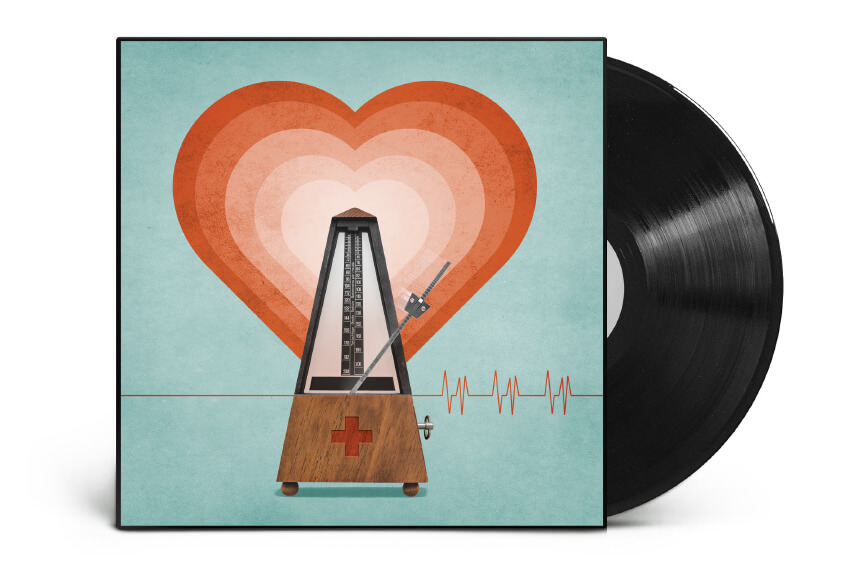
Administering successful CPR compressions is a rigorous, up-tempo exercise. During trainings on the technique, instructors often suggest using a song to keep the beat—a practice that is endorsed by Michelle McKay, PhD, associate professor of Nursing.
"Performing CPR is a high-adrenaline situation, so singing songs with the right tempo can help keep you steady under pressure," Dr. McKay says. "In high stress, anything that helps maintain focus and proper rhythm is worth using."
The American Red Cross has even developed a "CPR Playlist," a collection of 25 songs with between 100 and 120 beats per minute, or BPM. The songs, such as “Stayin’ Alive” by the Bee Gees and “Break My Heart” by Dua Lipa, "act as a mental cue during CPR, confirming you're providing consistent, high-quality chest compressions—crucial in maintaining proper blood circulation," according to the American Red Cross website.
NEXT IN FEATURES
Drosdick Hall–a state-of-the-art building expansion–unites the College of Engineering in one location, serving as a catalyst for cross-disciplinary innovation