HUMANITIES ALUMNI STORIES
Olivia Pfeiffer ’22 CLAS - ESG Reporting Specialist, FMC Corp.
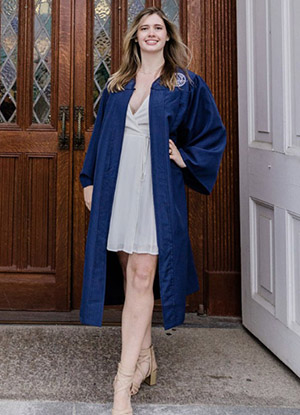
Olivia Pfeiffer ’22 CLAS is grateful that the Department of Humanities gave her the courage to pursue her dream job. As a double major in Economics and Humanities with a minor in Sustainability, Pfeiffer considered taking a traditionally safe job offer out of college. Instead, she chose to reject the safe choice to find a position that intersects with her passions. Pfeiffer is now the first environmental, social and governance reporting specialist at the chemical manufacturing company she has worked for since June 2022. “There was no playbook I could follow,” she recalls. “But Humanities provided a framework to use the uncertainty as an advantage—to ask big questions with unclear answers.”
The critical thinking and analytic skills gained in the classroom have proven indispensable to Pfeiffer as she achieves success in her chosen field. “In Humanities, you have to engage with complex texts and then discuss them in class,” she explains. “I spend a lot of my time now studying government sustainability regulations and distilling those in a way that’s easily understandable and actionable for my company.”
In appreciation for all she received from Villanova, Pfeiffer wanted to give something back, so she helped launch the Great Books Fund to coincide with the Department of Humanities’ 20th anniversary in 2023. During the past two 1842 Days, nearly $10,000 was raised to provide free copies of the greatest books to Humanities students. “It makes me incredibly happy to know these great books can be theirs to keep forever.”
Hannah Phillips '24 CLAS - JD Candidate, Boston College Law School
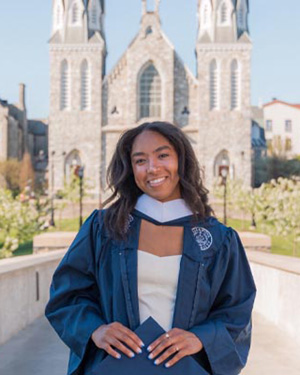
As someone who had her future mapped out from a young age, Hannah Phillips ’24 CLAS participated in mock trial teams in middle school, high school and college to prepare for her goal of becoming a lawyer. “I want to make a difference,” she explains. “Not everyone has access to great lawyers, and I want to be someone who provides great representation to people who don’t typically get it.” She also knew part of her plan would be to double up on majors to make Humanities integral to her Villanova education. A Political Science and Humanities major with minors in Communication and Spanish, Phillips recalls, “I wanted to learn not only how to be successful in life but also what will make me a better human being.”
Phillips considers the preparation she received invaluable, especially as she enters the high-pressure environment of law school. Now at Boston College, for the first time living away from family and friends, she goes back to one text in particular, Hannah Coulter by Wendell Berry, a novel that explores the importance of community. “As I try to figure out a balance between the demands of law school and the rest of my life, I’m realizing that those human connections are what’s going to sustain me through three stressful years.”
Another lesson Phillips has taken into this next phase is how she approaches conversation. “I leave preconceptions at the door and come to the table in an open and vulnerable manner,” she says. “I’ve discovered I learn the most when I’m willing to listen to understand, as opposed to waiting to speak my position.”
Jeremy Puntel '19 CLAS - Seminarian, Archdiocese of Philadelphia
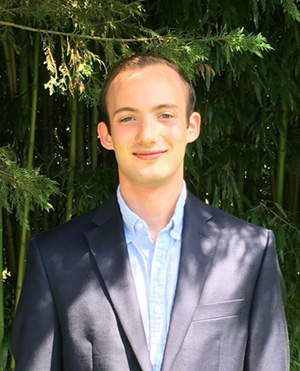
Jeremy Puntel ’19 CLAS felt the call to become a priest in high school but was hesitant to take the first step. He still had questions that needed answers and decided that the classes and curriculum offered by the Department of Humanities provided the academic atmosphere he was searching for. What he found at Villanova was a space where, he says, “more robust resources for thinking could be nurtured and exercised fruitfully.”
Puntel recalls it was under the patient tutelage of his Humanities professors that the world’s greatest philosophers, like Plato and Aristotle, became more accessible to him. He also began to reaffirm his Catholic faith while examining Augustine’s Confessions. In his junior year, he gained deeper insight into the Bible at Blackfriars Hall, University of Oxford, where he studied as a recipient of the Catherine Barr Windels Scholarship, which is given each year to a Humanities student.
After graduation, Puntel received his master's degree in Theological Studies from the John Paul II Institute in Washington, DC, and ultimately entered St. Charles Borromeo Seminary in the Archdiocese of Philadelphia. Now in his third year studying to be a priest, Puntel continues to be guided by his Humanities background. “I keep in mind that each person is a unique and free relationship with the infinite,” he says. “This means their questions never have a ‘canned’ answer.” And when searching for those answers, he’s thankful to have an education spanning 3,000 years of human wisdom and a broad array of disciplines to draw upon.
Robert Duffy, PhD, ’13 CLAS - Headmaster, Chesterton Academy of Our Lady of Hope
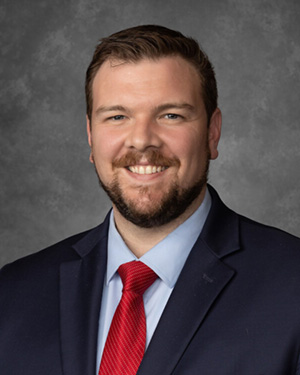
A desire to delve into the biggest questions about “what it means to be human” enticed Robert Duffy, PhD, ’13 CLAS to the Department of Humanities. It was the start of a journey that allowed him to explore the history of philosophy, theology and literature, from the ancients to the present day, within a community of friends who were striving for a life of wisdom, virtue and joy.
After Villanova, Dr. Duffy furthered his intellectual growth, ultimately earning his master’s and doctoral degrees in Philosophy from Fordham University. His thirst for knowledge led to a career as an educator at two different classical schools. “These jobs have allowed me to continue the quest and mission that began in my time as a Humanities undergraduate,” says Dr. Duffy.
As a teacher and headmaster, he strives to follow what he was taught at Villanova and help his students and employees flourish in a complicated world. One skill he relies on is the practice of civil discourse. “In classroom discussions, you had to be vulnerable with your ideas, patient and confident in articulating them, and a good listener,” says Dr. Duffy, who sees these habits as pivotal for building community. “Working together in class seminars helped me see that it’s not important just to get the right answer, but to get there as a team, based on the contribution of every member,” he continues. “When multiple voices are freed to reflect on problems, questions or tasks, surprising insights come out, which enrich the whole organization.”
Department of Humanities
St. Augustine Center Room 304
Villanova University
800 Lancaster Avenue
Villanova, PA 19085
Chairperson: Dr. Michael Tomko
Administrative Assistant: Laura Klee
FOLLOW THE HUMANITIES DEPARTMENT