MA IN POLITICAL SCIENCE
The Master's Program in Political Science offers a wide range of courses in American politics, international relations, comparative politics and political theory.
The courses permit students to explore key issues in contemporary domestic and international politics, with a strong grounding in existing scholarship and an emphasis on real-world context and relevance. Our program is ideal for students considering PhD programs, preparing for law school, or interested in careers in government service, journalism, the non-profit sector, foreign service, or secondary education.
Our faculty is committed to our students' development throughout their course of study. Our diverse faculty embrace a variety of methodological and theoretical approaches to the study of politics and have a wide range of scholarly interests.
Our program also provides opportunities for students to take courses in quantitative methods and statistical analysis, both within our department and in other departments. Students interested in advanced quantitative methods can enroll in courses in the Department of Public Administration or the Department of Mathematics and Statistics. Students interested in Advance Mapping Software can enroll in GEV 7040, Intro in GIS.
All courses are small, discussion-based seminars with a maximum enrollment of 15 students. Courses meet in person in the evening, with the option of taking classes during the summer.
REQUIREMENTS AND CAPSTONE OPTIONS
Students must complete 30 credits (10 courses) and a capstone experience to earn a Master's degree in Political Science. All students must complete the required PSC 7000: Research Concepts and Approaches, which introduces students to the approaches and methods used in political science research. Additionally, each student must complete one course in American Government, one course in either International Relations or Comparative Politics, and one course in Political Theory. The remaining six courses can be drawn from any sub-field of political science.
Students have the option of taking up to six graduate-level credits (normally, two courses) from other departments that will count toward the Political Science MA degree. Students have taken graduate courses in History, Public Administration, Applied Statistics, Geography and the Environment, Communications, Philosophy, or Education as part of their Political Science MA. We strongly encourage students who are interested in working in public policy or policy research, or in pursuing a PhD in the social sciences, to take at least one course in quantitative methods (either in our department or in another department), although this is not a requirement for the Political Science MA degree.
Beyond these general guidelines, the Political Science Graduate Director helps students customize a plan of study that is best suited to their interests and career aspirations.
The capstone experience for the MA degree is a comprehensive written exam that students take in their final semester.
Students are required to complete ten courses (for 30 credits) and pass a comprehensive written exam in their final semester. For the comprehensive exam, each student must answer one general question, and one additional question in one of the following three subfields: American Government, Comparative Politics, or International Relations. A written essay of approximately 10 double-spaced pages is required for each answer.
Full-time students typically complete 15 credits (five courses) during their first year, usually taking two courses in the first semester and three courses in the second semester. This enables full-time students to comfortably meet all their degree requirements within two years. Students can complete their work more rapidly by taking advantage of summer courses. Summer study is an attractive option for some students, but there is no requirement to enroll in summer courses.
Part-time students are welcome and encouraged to apply. We aim to provide a flexible framework that accommodates full-time students, as well as working professionals who complete their degree on a full-time basis or one course at a time.
Student Outcomes
Villanova’s Master’s program in Political Science prepares graduates for success in advanced study and a range of professional careers. Many alumni have gone on to top-ranked doctoral programs, while others pursue impactful careers in a variety of fields, reflecting the strength and breadth of the program.
- International institutions and NGOs, such as the International Foundation for Electoral Systems and the International Finance Corporation
- U.S. State Department and U.S. embassies
- Intelligence, military and national security agencies (including the FBI, the Pentagon, the National Geospatial Intelligence Agency, U.S. Navy, U.S. Marine Corps, and Lockheed Martin)
- U.S. government agencies, such as the Department of Justice and the U.S. Committee for Refugees and Immigrants
- On Capitol Hill, in the U.S. House and Senate
- Government relations and lobbying positions at law firms and within corporations
- Education (Center for Education Reform, Teach for America)
- Public health (Boston Scientific, Karolinska Institute in Sweden)
- Labor movement (IBEW LU 614)
- State government (PA Dept of Labor)
- Local government (City of Philadelphia’s Budget Office, Baltimore City Department of Public Works)
- Private sector (Morgan Stanley, Raymond James & Associates)
- Data analytics (SSRS, Qualtrics, Analyst Institute)
- American University, School of International Service, PhD in International Relations
- Brown University, Department of Political Science
- Cornell University, Department of Government
- Ohio State University, Department of Political Science
- Syracuse University, Maxwell School of Citizenship & Public Affairs, Political Science Department
- UC San Diego, Department of Political Science
- University of Essex (UK), Department of Government
- University of Illinois Urbana-Champaign, Department of Political Science
- University of Maryland, Department of Government and Politics
- University of Minnesota, Department of Political Science
- University of Virginia, Department of Politics
Faculty Excellence
Villanova Political Science faculty are award-winning scholars, accomplished teachers and mentors, and widely recognized experts in their fields. Their research, teaching, and public engagement have earned national and international awards, prestigious fellowships, and frequent media coverage.
- Teaching: Dr. Camille Burge-Hicks, Villanova’s Lindback Award & Junior Faculty Award.
- Books: Dr. Olukunle Owolabi, multiple APSA and ISA awards (2023 & 2024); Dr. Daniel Mark, First-Time Author Award, University of Notre Dame Press (2024); Dr. Mark Schrad, Francesco Guicciardini Prize, ISA (2022).
- Articles: Dr. Jennifer Dixon, APSA’s International History and Politics section’s Outstanding Article Award (2022) and Politics and History section’s Mary Parker Follett Prize (2017); Dr. Marcus Kreuzer, APSA’s Comparative Politics section’s Luebbert Best Article Award (2020); Dr. Erinn Lauterbach, Best Article Award, American Journal of Political Science (2019).
- Research Fellowships: Dr. Olukunle Owolabi, Center for Advanced Study in the Behavioral Sciences Fellowship, Stanford University (2025-26); Dr. Marcus Kreuzer, Faculty Fellowship, Notre Dame Institute for Advanced Studies (2023-24); Dr. Deborah Seligsohn, Rockefeller Brothers Fund Research Grant (2022-23) and Woodrow Wilson Center Fellowship (2021-22); Dr. Catherine Warrick, National Science Foundation, Law and Social Science fellowship and Fulbright faculty fellowship to the University of Exeter (UK).
- Media & Public Engagement: Faculty expertise featured in print, online, radio, TV, and podcasts, including Drs. Camille Burge-Hicks, Mark Schrad, David Barrett, Matthew Kerbel, Jennifer Dixon, and Marcus Kreuzer.
Ready for the Next Step?
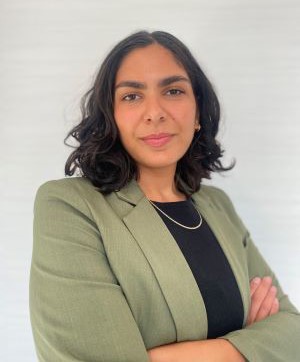
Dr. Jennifer M. Dixon
Graduate Program Director
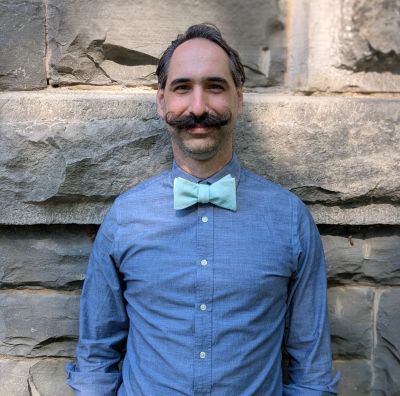
Fathe Allen
Senior Administrative Assistant
Department of Political Science