ALUMNI NEWS
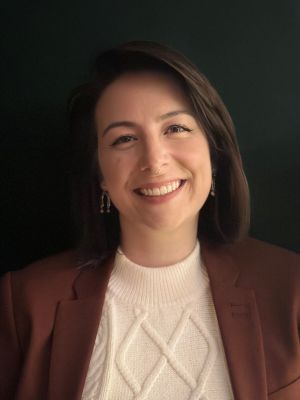
Alex Frantz '11
Food systems are shaped by structures, incentives, and histories that influence how food is produced, distributed, and accessed. Studying sociology at Villanova gave me a framework for understanding those connections.
Sociology helped me to see food systems as a field I could spend a lifetime exploring, one that would continually challenge me, teach me something new, and offer opportunities to make a difference. My career has come full circle, from advocating for local food in university dining halls, to supporting farmers through third-party certification, to leading local sourcing and sustainability at Midwest Foods. Villanova’s values of Veritas, Unitas, Caritas resonate with the curiosity, collaboration, and care this work requires.
An independent study and senior seminar let me explore food and agriculture through topics including the Farm Bill, corner markets, and food deserts. Service learning at Graterford still informs my work with Chicago and Cook County’s Good Food Purchasing Initiative to improve food in correctional facilities. An especially memorable class - Sociology of Law - challenged me to consider the gap between policy on paper and what it takes to make it work in practice.
As Director of Local & Sustainability at Midwest Foods, a family- and woman-owned produce distributor, I connect local farmers, including beginning and underrepresented growers, with foodservice teams at hospitals, universities, hotels, stadiums, and other institutions. My work spans organic and regenerative agriculture, social responsibility, sustainable packaging, and customer sustainability goals. Working with large foodservice companies and retailers has shown me how purchasing decisions shape opportunities for farms of all sizes and geographies.
Our partnership with The Conservation Fund illustrates how addressing one barrier can benefit the wider system. Farmers may have the skills to grow high-quality food but lack access to affordable land. Conservation easements help lower land costs and permanently protect farmland for the next generation. Paired with market development and dependable purchasing, this work helps farmers scale, gives chefs access to distinctive local products, and helps Midwest Foods differentiate our offering and win business.
VeggieRx connects community health with viable markets for farmers. Its produce-prescription model supports people managing diet-related health conditions while creating demand for local produce and incorporating nutritionally and culturally relevant foods. Our cold storage, refrigerated transportation, and packing infrastructure make distribution possible, showing how existing business capabilities can help address community needs.
An estimated 30–40% of the U.S. food supply goes uneaten, and industry specifications can determine what gets left in the field. Through our membership in the U.S. Food Waste Pact, I’ve seen how tackling a systemic issue like food waste requires involving supply-chain partners from the start and building solutions that can truly work across the entire system to stand the test of time.
I continue learning through leadership roles in farmers markets, industry sustainability, food waste reduction, farm-to-institution, and urban agriculture. I also share sustainability’s business case through industry writing and was honored as a 2025 Crain’s Chicago Business Notable Leader in Sustainability.
Sociology taught me to look beyond a good idea and ask what might prevent it from succeeding. In food systems, that might mean a farmer who cannot afford land, a community without the infrastructure to access fresh produce, or a food-waste solution that works for one business but not the entire supply chain. My work connects the people, resources, and business incentives needed to address those barriers, making solutions viable for farmers, customers, and communities over time.
Department Chair:
Dr. Allison Payne
Office: SAC 204
Phone: 610-519-5299
Administrative Assistants:
Mary Ann Hostler
Sociology
Phone: (610) 519-4742
Shelly DuBois
Criminology
Phone: (610) 519-4786