
The Business Case for Lean Six Sigma

Have you ever tried to explain the value of Lean Six Sigma to organizational leadership? More than likely, you’ve encountered a familiar challenge: The process problem may be clear to you, but the business case is not yet clear to them.
You may see the cost of a delayed handoff, recurring error or inconsistent workflow. Leadership, however, is weighing that issue against budgets, staffing needs, competing investments and broader strategic priorities. The question is rarely whether the process could be improved, but why improving it should command attention now.
Rather than leading with the methodology, practitioners need to connect Lean Six Sigma to the outcomes leaders are already responsible for improving. When that connection is clear, Lean Six Sigma becomes easier to understand as a way to advance organizational objectives rather than another isolated improvement initiative.
What Is Lean Six Sigma at the Enterprise Level?
Lean Six Sigma brings together two complementary approaches. Lean helps organizations identify work that adds unnecessary time, effort or complexity, while Six Sigma uses data to reduce errors and inconsistent results. Together, they offer a structured way to understand problems, address their causes and sustain improvements.
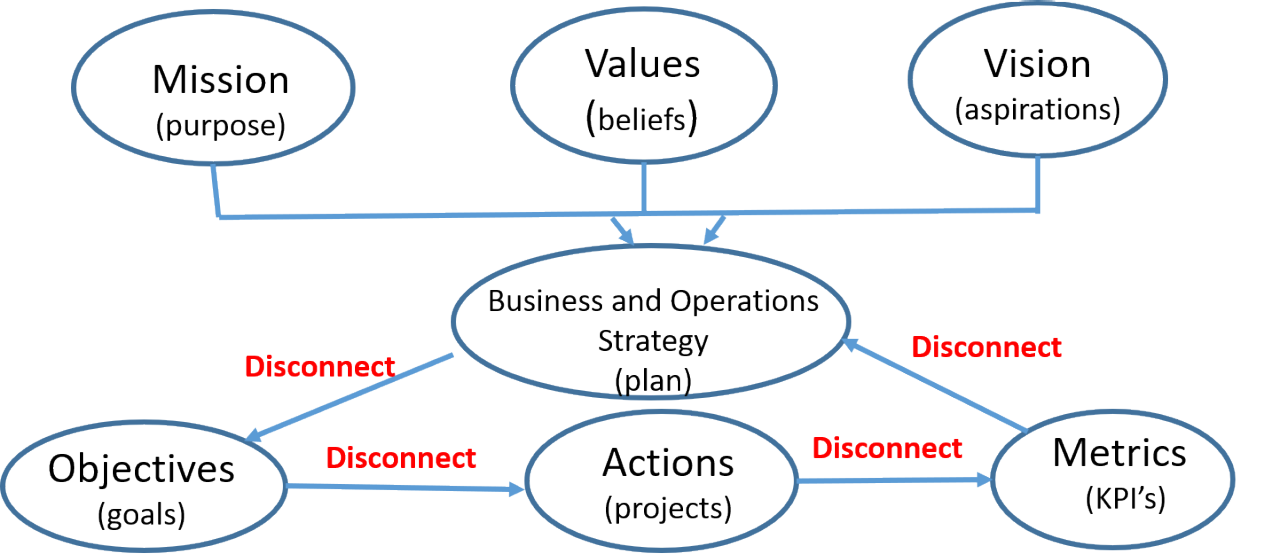
At the enterprise level, though, the focus extends beyond completing individual projects. Lean Six Sigma projects should have a clear line of sight to the organization’s purpose and strategic objectives. That requires leadership to identify where process performance is limiting those objectives, select the right improvement projects and provide the support needed to carry them through.
Enterprise-level Lean Six Sigma, then, isn’t about doing more projects across more departments. It’s about making those projects part of the larger business system and using their results to help advance organizational priorities.
What Business Problems Can Lean Six Sigma Help Address?
When you’re making the case for Lean Six Sigma, it helps to begin with a business condition leadership already recognizes. That might be a growing backlog, repeated errors, inconsistent service or a process that relies too heavily on workarounds. You may also see teams duplicating effort or struggling to determine where delays begin.
Those conditions are often symptoms. Lean Six Sigma gives teams a structured way to examine what within the process is contributing to the result. By establishing the current condition and defining what better performance should look like, teams can determine where improvement work should be focused.
Not every organizational challenge is a process problem. Lean Six Sigma won’t resolve unclear strategic direction, weak demand or broader leadership and cultural challenges on its own. It’s most useful when the organization can identify a process, define the outcome it needs and gather enough evidence to understand current performance.
What Is the Business Value of Lean Six Sigma?
When presenting Lean Six Sigma to leadership, the number of projects completed or tools used won’t necessarily make the strongest case. What matters is whether those projects move an organizational objective in the right direction.
That requires distinguishing between a process measure and its business impact. Reducing cycle time, for example, is a process result. Its value may be greater capacity, faster customer response, a smaller backlog or lower operating costs. Reducing defects may translate into less rework, lower risk or a more consistent customer experience.
Published case studies show what that connection can look like. An Environmental Protection Agency case study reported that JEA, an electric, water and wastewater utility in northeast Florida, achieved $579 million in cumulative cost savings over 10 years through its Lean and Six Sigma initiatives. An American Society for Quality case study reported that a Ford Motor Co. Six Sigma project reduced paint expenditures and achieved $2 million in annual savings.
Those results aren’t benchmarks every organization should expect. The stronger business case comes from the organization’s own evidence: what current performance is costing, limiting or putting at risk and how improvement would contribute to a strategic priority.
How Should Lean Six Sigma Professionals Present the Case to Leadership?
Leadership may be less interested in the mechanics of DMAIC, statistical tools or belt levels than in why a problem matters, what improvement could achieve and how the work supports the organization’s objectives.
A stronger business case starts by answering five questions:
1. What business condition needs to improve?
Define the problem in terms leadership already recognizes, such as cost, capacity, quality, risk or customer experience.
2. Why is the problem worth addressing now?
Show what maintaining the current state means for performance or strategic priorities.
3. How does the project connect to an organizational objective?
Make the line of sight between the improvement work and the broader business goal explicit.
4. What would meaningful improvement look like?
Connect the process measure to a business result leadership can evaluate.
5. What will the organization need to support the work?
Clarify the roles of sponsors, project leaders, managers and employees.
This is also where top-management support becomes critical. Selecting the right Lean Six Sigma projects and connecting them to strategic priorities is a leadership responsibility. Projects may also uncover barriers that cross departmental boundaries or require decisions about policies, resources or accountability. Practitioners can lead the improvement work, but leaders must create the conditions for it to succeed.
Why Does Enterprise-Wide Lean Six Sigma Training Matter?
Lean Six Sigma can be difficult to sustain when its knowledge and practices remain concentrated within a small group. If improvement is going to support organizational strategy, people at different levels need to understand their role in the system.
That doesn’t mean everyone needs the same training. Senior leaders need to understand how projects support business objectives and where sponsorship is required. Managers need enough knowledge to recognize opportunities and support improvement teams. Practitioners need deeper analytical and project leadership skills, while employees need to understand how their process knowledge contributes to solving problems and maintaining improvements.
Training is an enabler rather than the strategy itself. It works best when leadership has established what the organization is trying to achieve, selected improvement efforts that support those objectives and created clear ownership for sustaining the results.
From Individual Projects to Organizational Capability
The strongest business case for Lean Six Sigma begins with the outcomes the organization needs to improve, not the methodology itself. When leadership can see a clear line between strategic objectives, Lean Six Sigma projects and measurable results, improvement work becomes part of how the organization advances its goals.
Develop Your Lean Six Sigma Capabilities at Villanova
Villanova University offers Lean Six Sigma programs and courses designed to help working professionals strengthen process improvement skills and prepare to lead improvement efforts within their organizations.
About Villanova University’s College of Professional Studies: Founded in 2014, the College of Professional Studies (CPS) provides academically rigorous yet flexible educational pathways to high-achieving adult learners who are balancing professional and educational aspirations with life’s commitments. The CPS experience embodies Villanova’s century-long commitment to making academic excellence accessible to students at all stages of life. Students in CPS programs engage with world-class Villanova faculty, including scholars and practitioners, explore innovative educational technologies and experiences, and join an influential network of passionate alumni. In addition to its industry-leading programs at the nexus of theory and practice, CPS has built a reputation for its personal approach and supportive community that empowers adult students to enrich their lives, enhance their value in the workplace, and embark on new careers.
PURSUE THE NEXT YOU™ and visit cps.villanova.edu for more information about the college, including a full list of education and program offerings.