
The Pro File: Villanova's professional education blog on the changing world of work








When everything feels urgent, productivity decreases as teams struggle to prioritize workflow. Lean thinking helps teams create and improve workflow, shaping clarity around what creates value and eliminating what doesn't.

When it comes to job searches, most professionals don’t struggle because they lack ability. They struggle because hiring systems and promotion conversations can’t always clearly see their abilities.

Contract management often becomes part of someone’s role before it becomes their title. For professionals who are new to the field or beginning to take on more contract-related responsibilities, building the right foundational skills early can make a meaningful difference. Developing those skills can help strengthen judgment, reduce risk and support more strategic contributions across teams and organizations.

AI is becoming part of everyday work across marketing, operations, administration and communications, often in ways that feel routine and low risk. But when people use AI tools without fully understanding how those systems handle instructions and sensitive information, small moments of convenience can create larger organizational vulnerabilities. For nontechnical teams, responsible AI use starts with recognizing how prompt injection and data leakage can show up in ordinary workflows and why stronger judgment matters.

Project management often looks straightforward from the outside: timelines, meetings and deliverables moving from start to finish. In practice, the work asks much more of the people leading it, especially when priorities shift, teams need alignment and the path forward becomes less clear. Building the right skills early can help project managers lead with greater clarity, adaptability and strategic judgment across the work that matters most.

If a contract involves goods, the UCC is often in the background, even when nobody names it. It influences how agreements form, how terms conflict and what remedies are available when performance breaks down. If you’re building NCMA-aligned contract knowledge or working toward becoming the contract expert your team relies on, this is one framework worth understanding early.

When an AI answer “sounds right,” it’s easy to trust it. But confidence doesn’t always mean correct. False predictions, often called hallucinations, are a real risk when using generative AI. To understand why models hallucinate and the types of errors professionals see most often, it helps to know how generative AI produces outputs, then apply simple guardrails that support responsible use in your work.

Why is it that some content performs while some doesn’t? Is your content underperforming, or failing to perform at all? Publishing is easy. Earning trust is harder. When content tries to do too much, audiences move on fast. Here are a few ideas to help you create content that serves a purpose so you can start earning attention by offering something clear, valuable and worth coming back to.

Digital marketing works best when every channel, message and metric is pulling in the same direction. A clear strategy helps you define goals, focus resources and turn day-to-day tactics into measurable results. In this article, you’ll find the “why” behind digital marketing strategy, plus the tools and metrics that help you measure what matters and keep improving over time.

Process improvement has a branding problem. When leaders hear “Lean Six Sigma,” they often picture tools, templates and a lot of time spent mapping workflows. If they’re supportive, they’ll say yes because it feels like the responsible thing to do. If they’re skeptical, they’ll ask the question that shuts projects down fast: What’s the ROI?

Projects don’t unravel only when something dramatic breaks. More often, they drift off course because of a surprise that didn’t make it into the plan: a dependency that slips, a vendor delay that compounds, a stakeholder shift that quietly changes what “success” means.

If you work in HR, you’ve seen how quickly unclear goals and inconsistent feedback can derail a performance review cycle. You’re often asked to step in after expectations have already drifted and conversations have gotten tense. Putting the human back in performance reviews starts with raising the quality of goal-setting and feedback because they sit at the center of performance management, coaching, talent development and motivation, the very areas where HR leaders are poised to create the most impact.

Why today's marketing professionals need practical content creation skills —and how to build them with confidence.

Generative AI is everywhere, but using AI tools isn’t the same as understanding generative AI. This guide provides a clear, practical overview of what generative AI is, how generative AI systems work at a high level and what responsible, effective use looks like in the workplace, helping professionals build foundational AI literacy and make more informed decisions as AI becomes part of everyday work.

Entrepreneurship isn’t a restart. It’s a repurposing of everything you’ve learned along the way. After decades of building expertise in the corporate world, you may reach a moment of clarity. The daily grind of corporate life has turned the work that once energized you into something that exhausts you. Perhaps the idea of applying your hard-earned years-long experience to something of your own has increasingly become more and more appealing.

The CMBOK, or the Contract Management Body of Knowledge, defines the knowledge areas, competencies and practices that make up the contract management profession. The National Contract Management Agency (NCMA) uses the CMBOK as an organizing framework to identify its knowledge objects, ensure NCMA programs and publications stay within the boundaries of the profession, and ensure that all areas of knowledge are covered.

Change isn’t something that happens occasionally; it’s the constant backdrop of everything we do. Markets shift, technologies disrupt and priorities evolve. For leaders, that means expanding the focus from delivering results today to knowing how to navigate uncertainty and guide others through it tomorrow—and in the future.

Projects rarely fail because teams lack talent or motivation. More often, they unravel slowly as the scope expands, one small request at a time. A new feature, an added deliverable, an unplanned approval step—all made with good intentions. Before long, timelines slip, budgets stretch and the original goal becomes hard to recognize.

Applying DMAIC within a single process is a test of discipline. Applying it across an enterprise is a test of leadership. At the Lean Six Sigma Black Belt level, the familiar Define, Measure, Analyze, Improve and Control framework evolves from a tactical roadmap into a system for managing complexity.

Many professionals already perform the core functions of project managers without the formal title or training, bridging departments, managing deliverables and solving problems daily. True project management, however, connects execution to strategy, ensuring that every initiative aligns with business goals and produces measurable outcomes. Through structured frameworks and formal training, professionals can turn informal experience into recognized expertise, positioning themselves as strategic leaders who translate vision into results.

Busy doesn't always mean productive. We’ve all had those weeks that feel like a blur: back-to-back meetings, endless emails and a to-do list that never seems to shrink. But what if the real problem isn’t how hard you’re working, but what you’re working on?

For years, conversations around Total Rewards in HR have centered on pay scales and benefits packages. While those remain core components, a narrow focus misses the broader truth: Total Rewards is about designing a holistic HR strategy that aligns organizational purpose with employee experience, creating a system that supports engagement, retention and long-term organizational health.

For many marketing professionals, career progress can feel frustratingly out of reach. You might be creating strong campaigns, writing compelling copy, or designing standout visuals, yet still hitting roadblocks when it comes to promotions or job searches. Increasingly, the difference between those who advance and those who feel stuck isn’t just creativity—it’s the ability to interpret and act on digital marketing analytics.

To thrive in an AI-driven economy, professionals must move beyond prompts and into confidence. That means moving past just asking questions and into learning how to evaluate answers, apply AI responsibly and integrate it into workflows in meaningful ways.

Supply chains have always lived with disruption, but the scale and speed of recent shocks have exposed deeper weaknesses: brittle networks, shallow risk buffers and overreliance on linear processes. The question many leaders are asking is not how to return to normal, but how to design operations capable of absorbing volatility and sustaining performance. That shift—from recovery to resilience—demands a different caliber of process leadership.
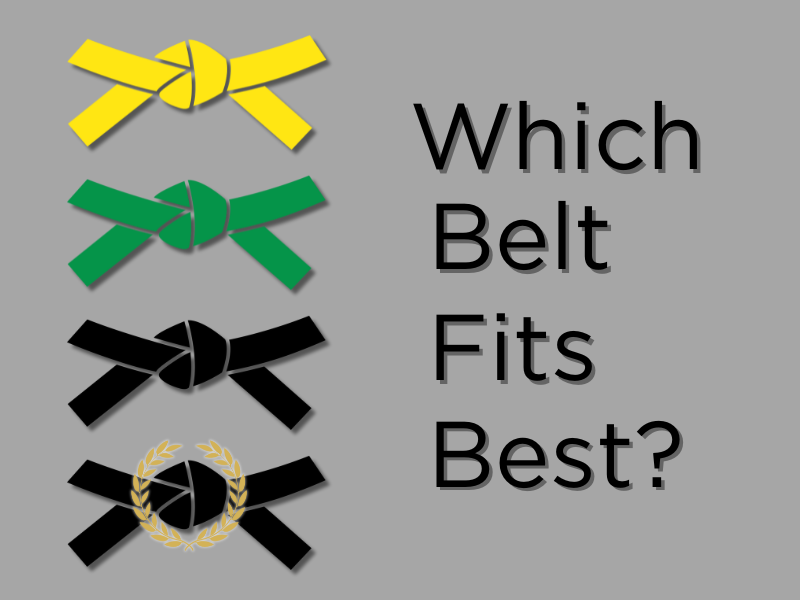
Discover the career value behind each Lean Six Sigma belt level. This article explores the distinctions between training and certification, helping you understand how each belt can strengthen your skill set and open new professional opportunities. Learn how progressing through the Lean Six Sigma ranks can position you for leadership and long-term professional success.

What every self-employed professional should consider before outsourcing their marketing.
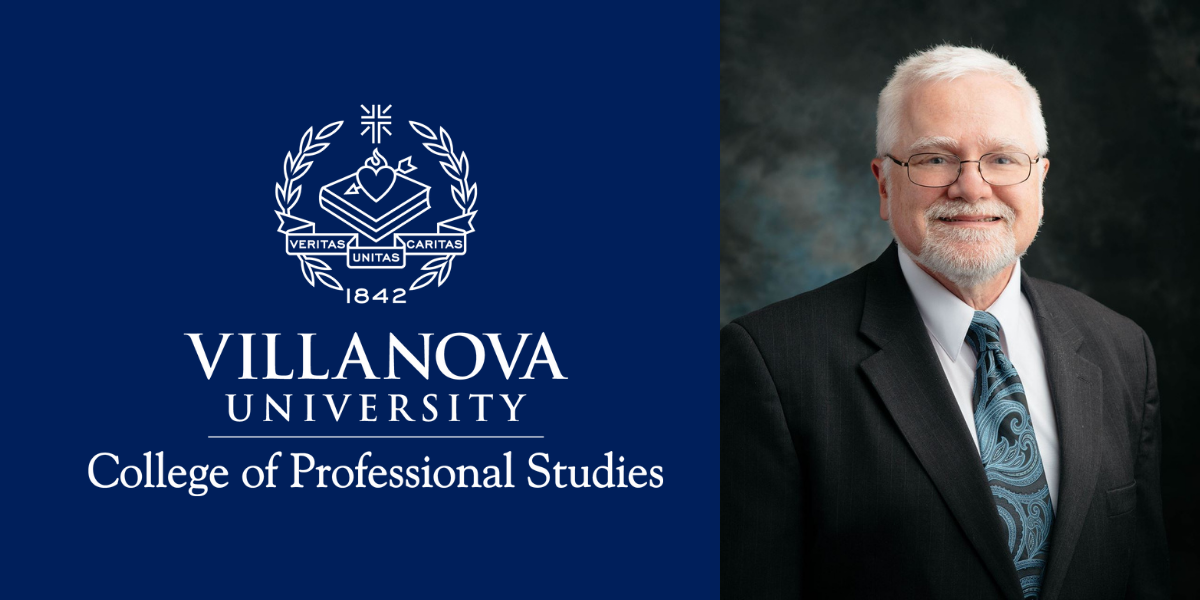
In professional education, the value of a course depends on how well faculty can connect theory to the realities of working adults. At Villanova, that connection is shaped by faculty practitioners who bring field experience, perspective and practical judgment into the classroom. For Marv Meissner, that means combining decades of industry, leadership and training experience with a teaching approach rooted in real-world application.

Human resources is no longer confined to paperwork and policy—it’s a central driver of business strategy and employee experience. As organizations navigate remote work, shifting labor laws and rising expectations around engagement and retention, HR roles have grown more specialized and impactful. Discover which path best aligns with your career goals.

AI is reshaping contract management and procurement roles, changing how professionals evaluate risk, manage compliance and deliver value. As automation takes on more of the contract lifecycle, experienced professionals must strengthen the judgment, oversight and strategic leadership needed to guide the field’s future.
The post-pandemic landscape promised recovery. Instead, it delivered a reckoning. Just as supply chain leaders began to recalibrate after COVID-19 revealed the limits of lean operations and underinvested digital infrastructure, a new wave of geopolitical and economic turbulence has emerged—this time, driven by tariffs.
In most organizations, process improvement still sits in a corner—siloed, underfunded and occasionally tapped when KPIs start slipping. Experienced Black Belts recognize that reactive fixes aren’t enough—instead, they work to embed continuous improvement into the very fabric of how the organization operates.

The instructional design and learning experience design (LXD) landscape is shifting, again. As organizations adjust to hybrid work models, rising upskilling demands and an ever-expanding ecosystem of digital tools, learning and development professionals are entering a new era. It’s no longer enough to build content. Today’s instructional designers must architect learning experiences that are measurable, adaptive and learner-centered.

The government contracting landscape is undergoing significant transformation. From rapid technological advances to new regulatory updates and heightened performance expectations, contract managers across federal, state and local agencies face increasing complexity in a market that saw more than $759 billion in federal contract spending in FY2023 alone. Navigating this developing environment requires not just experience—but strategic upskilling.

Feeling stuck in your job search? Discover why it’s so hard to get hired right now—and how professional education can help you move forward with confidence.

Learn what DMAIC stands for and how this 5-step Lean Six Sigma method helps professionals improve processes, reduce waste and drive measurable results.

Whether you’re a creative professional, an aspiring strategist or someone ready for a career reset, digital marketing training offers a unique combination of relevance, adaptability and immediate ROI. The best part? You don’t need to start from scratch—you just need to upskill strategically.

As technology reshapes the workplace, it's not automation but human insight, strategy and ethical leadership that will define the future of HR--and the professionals who lead it.







The workforce is evolving faster than ever before. Emerging technologies, new business models and shifting economic conditions are redefining what it takes to thrive professionally. For today’s workers, success depends not only on prior education or past experience but on a commitment to continuous learning. Professional education and certificate programs have risen to meet that need, offering flexible, impactful ways for individuals to upskill, reskill and advance their careers.