
THE RED ZONE
The “Red Zone” is the period of time that lasts from the start of the fall semester through Thanksgiving in which statistically there is a higher prevalence of sexual assault on college campuses. National data suggests that more than 50 percent of sexual assaults that occur on college campuses occur during this time period, and that new students can be especially vulnerable.
FREQUENTLY ASKED QUESTIONS
Various overlapping risk factors, including the many new environmental and social dynamics students experience at this time, can increase vulnerability and create opportunities for exploitation. Unfamiliarity with on- and off- campus geography and norms, increased independence, social pressures and power dynamics, and high-risk social environments can contribute to heightened vulnerability.
While these factors may impact risk, no person who experiences sexual violence is responsible for their harmful experience. The underlying cause of the “Red Zone” is not these risk factors themselves, but rather when individuals who target exploit vulnerable populations.
YES! Every member of our community has a role in preventing sexual violence and creating a culture of care, consent, and respect. While responsibility for harm rests with the person who causes it, there are steps we can take to look out for one another:
- Learn about consent and healthy relationships: Attend programs, workshops, and trainings to help you better understand consent, communication, boundaries, and healthy relationships.
- Look out for your friends: Check in with friends at social events. Make a plan before going out, stay connected throughout the night, and help ensure everyone gets home safely.
- Pay attention to concerning situations: Trust your instincts. If a situation feels uncomfortable, coercive, isolating, or unsafe, it is okay to leave, check in, or intervene.
- Challenge harmful attitudes and behaviors: Speak up when you hear victim-blaming comments, inappropriate or harmful jokes, or language that dismisses consent and respect. Challenge events or spaces that create opportunities to exploit vulnerable populations. Small conversations make a big change in shifting campus culture.
- Practice bystander intervention: Bystander intervention provides tools to: prevent harm before it occurs, interrupt behaviors that could lead to harm, and respond with care after harm has happened.
Bystanders play a critical role in preventing sexual violence and other types of harm. A bystander is anyone who witnesses a situation and has the opportunity to help, ignore the situation, or contribute to the behavior.
Being a bystander does not mean putting yourself in danger. Every situation is different, and effective intervention can take many forms. The most important thing is to choose the safest action available and do something rather than nothing.
One helpful framework is the 4 Ds of bystander intervention.
- Direct: Address the situation directly when it feels safe to do so.
- Examples: "Are you okay?", "I don't think they're interested. Let's give them some space.", "That comment isn't okay." Check in with someone who appears uncomfortable or unable to advocate for themselves.
- Distract: Create a distraction that interrupts the situation without directly confronting anyone.
- Examples: Start a conversation with one of the people involved. Ask someone to help you find a friend or locate an item. Invite the person to join you somewhere else. Show something on your phone or start a group activity that changes the focus of the interaction.
- Delegate: Ask for help from someone else who may be better positioned to intervene.
- Examples: Reach out to a friend, Resident Assistant, bartender, event host, coach, or Public Safety officer. Ask a group of friends to check in together. Share your concerns with someone who has more authority or influence in the situation.
- Delay: If you cannot intervene in the moment, check in afterward.
- Examples: Ask, "How are you feeling about what happened?" Offer support and listen without judgment. Help the person connect with resources. Let them know what you observed and that you are available if they need support.
Consent is an explicitly communicated, reversible mutual agreement in which all parties are capable of making a decision. Consent is informed, voluntary, and actively given. Consent exists when all parties exchange mutually understandable affirmative words or actions indicating their agreement to participate voluntarily in sexual activity.
- Explicitly communicated. This means that someone communicates a “yes” to any and all sexual activity, ideally through words and actions. Consent MAY NOT be inferred from silence, passivity, lack or resistance or lack of an active response. A person who does not physically resist or verbally refuse sexual activity is not necessarily giving consent.
- Reversible. This means that someone reserves the right to change their mind. Consent can be withdrawn at any time and should be respected. Once withdrawal of consent has been expressed through words or actions, sexual activity must cease.
- Mutual agreement in which all parties are capable of making a decision. This means that someone who is physically incapacitated from alcohol or other drug consumption (voluntarily or involuntarily), or is unconscious, unaware, asleep, or otherwise physically impaired is considered UNABLE to give consent.
- Informed. This means that someone is informed of and has consented to all activity, including things like taking pictures or video, and has knowledge of a person’s sexual health status (e.g., sexually transmitted infections) before consenting to sexual activity. Other activities that might also be considered here are outlined in the policy regarding sexual exploitation.
- Voluntary. This means that if someone is hesitant, confused, or unsure, they should not feel coerced or threatened to consent. It also means that individuals with a previous or current intimate relationship do not automatically give either initial or continued consent to sexual activity.
- Actively given. This means that consent to one form of sexual activity does not constitute consent to all forms of sexual activity. Consent must be actively given throughout sexual activity.
The following further clarifies the meaning of consent:
- Each participant in a sexual encounter must obtain consent for all sexual activities. Consent to one form of sexual activity does not constitute consent to engage in all forms of sexual activity.
- Consent consists of an outward demonstration indicating that a person has freely chosen to engage in sexual activity. Relying on non-verbal communication can lead to misunderstandings. Consent may not be inferred from silence, passivity, lack of resistance or lack of an active response alone. A person who does not physically resist or verbally refuse sexual activity is not necessarily giving consent.
- If at any time it is reasonably apparent that either party is hesitant, confused, or unsure, both parties should stop and obtain mutual verbal consent before continuing such activity.
- Consent may be withdrawn by either party at any time. Once withdrawal of consent has been expressed through words or actions, sexual activity must cease.
- A person who is physically incapacitated from alcohol or other drug consumption (voluntarily or involuntarily), or is unconscious, unaware, or otherwise physically impaired is considered unable to give consent. For example, a person who is asleep or passed out cannot give consent.
- People with a previous or current intimate relationship do not automatically give either initial or continued consent to sexual activity. Even in the context of a relationship, there must be mutually understandable communication that clearly indicates consent to engage in sexual activity.
ON REPEAT
10 tracks you don’t want to skip–especially during the Red Zone.
SEPTEMBER 8, 2026
CONSENT IS SWEET
SEPTEMBER 22, 2026
FRESH CHECK DAY
SEPTEMBER 28, 2026
RELATIONSHIPS 101
SEPTEMBER 30, 2026
ONE LOVE: ESCALATION
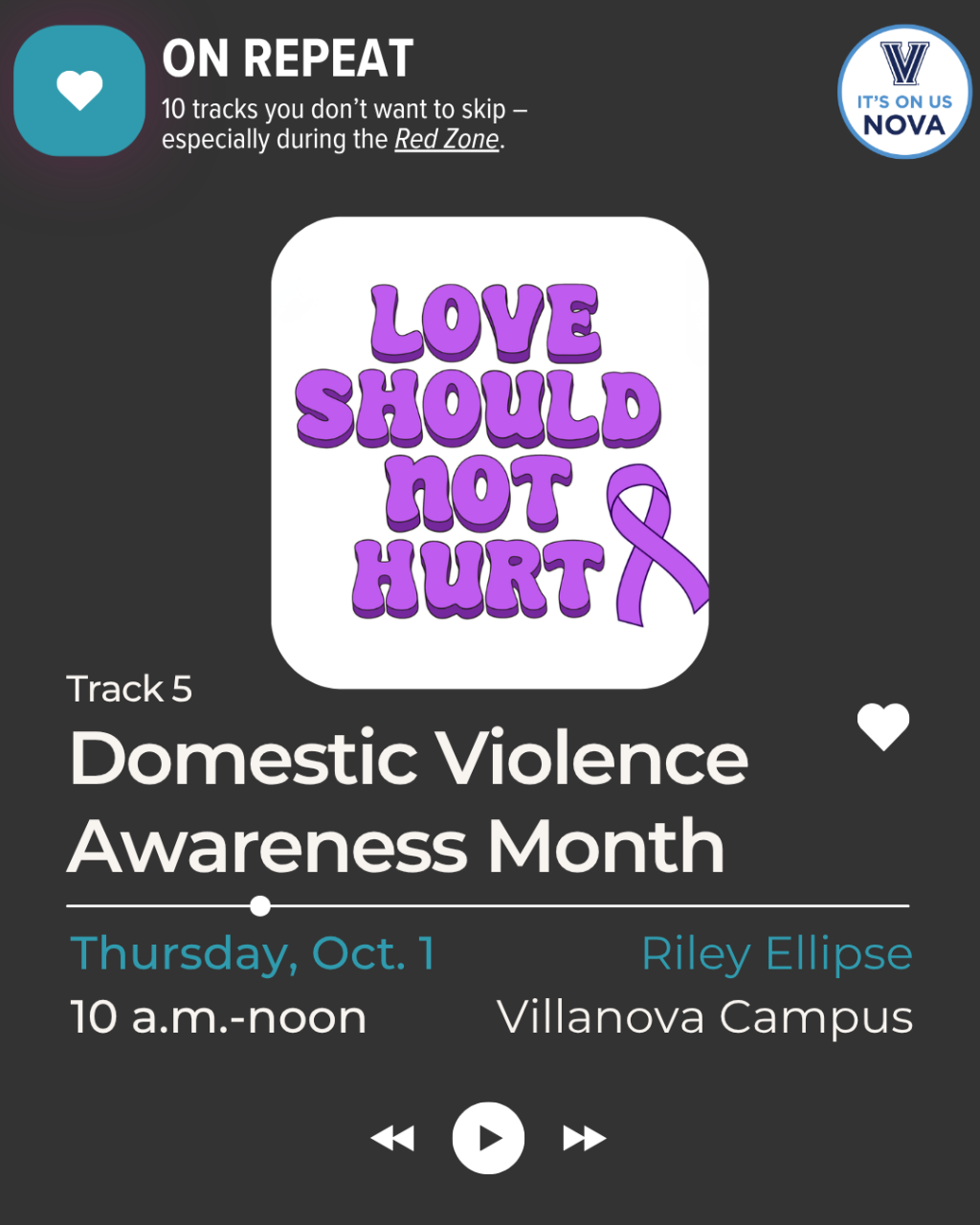
OCTOBER 1, 2026
DOMESTIC VIOLENCE AWARENESS MONTH
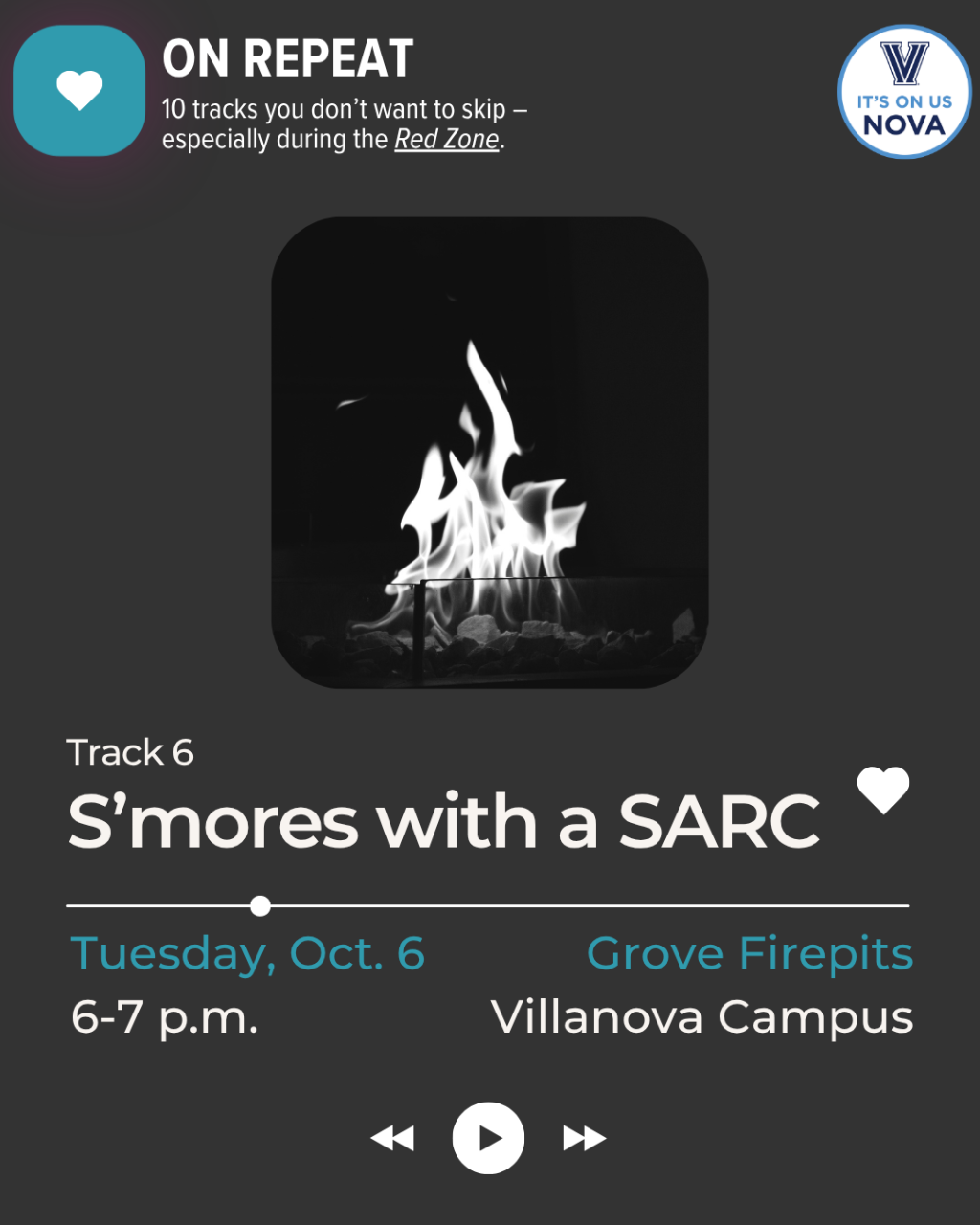
OCTOBER 6, 2026
S'MORES WITH A SARC
RED ZONE SIGNATURE EVENT
OCTOBER 26, 2026
CAN I KISS YOU?
Mike Domitrz brings his dynamic, high-energy, audience-driven “Can I Kiss You” event back to Villanova for a special presentation covering consent, respect and healthy relationships. Don’t miss this powerful evening at the Finneran Pavilion on Monday, Oct. 26!

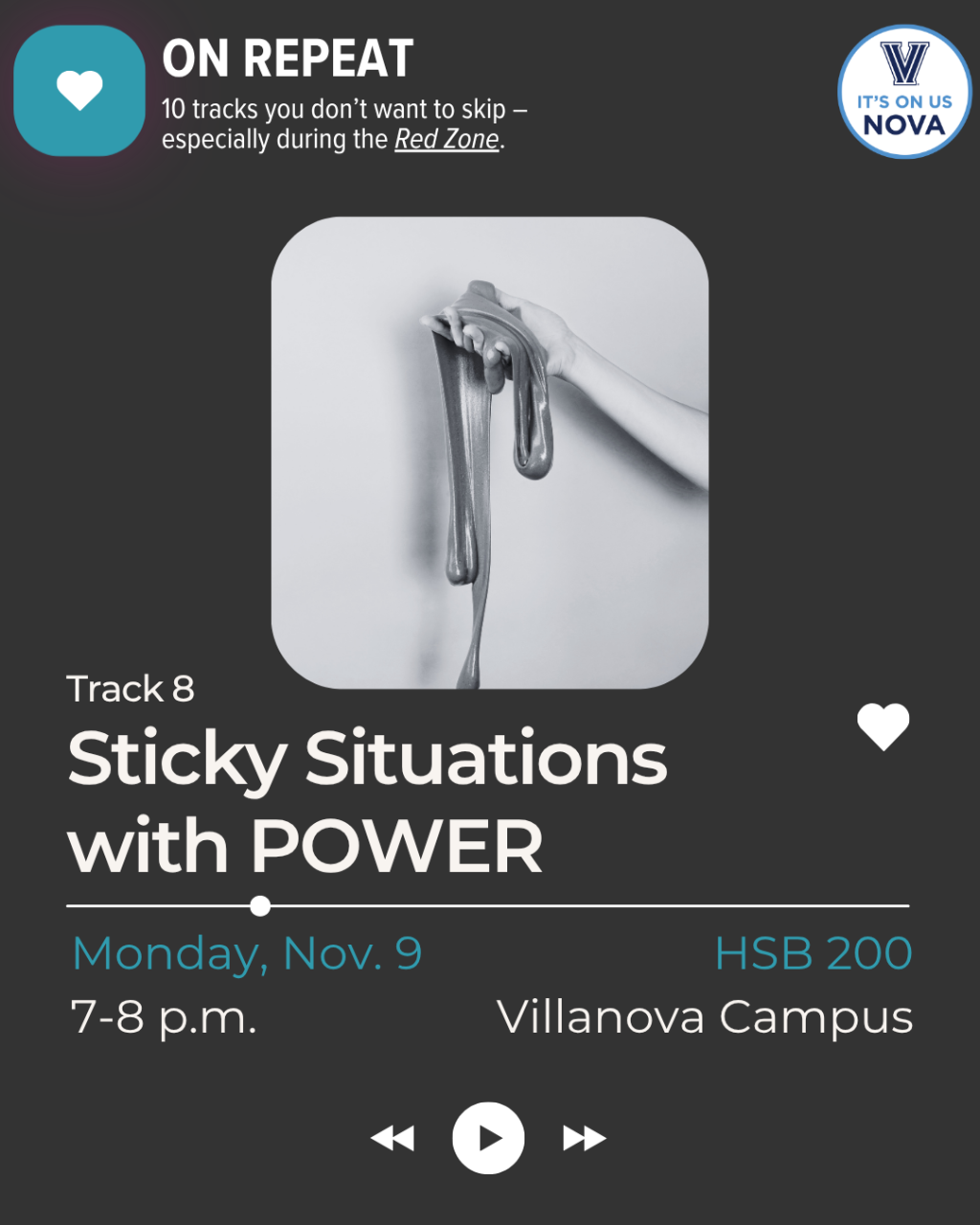
NOVEMBER 9, 2026
STICKY SITUATIONS WITH POWER
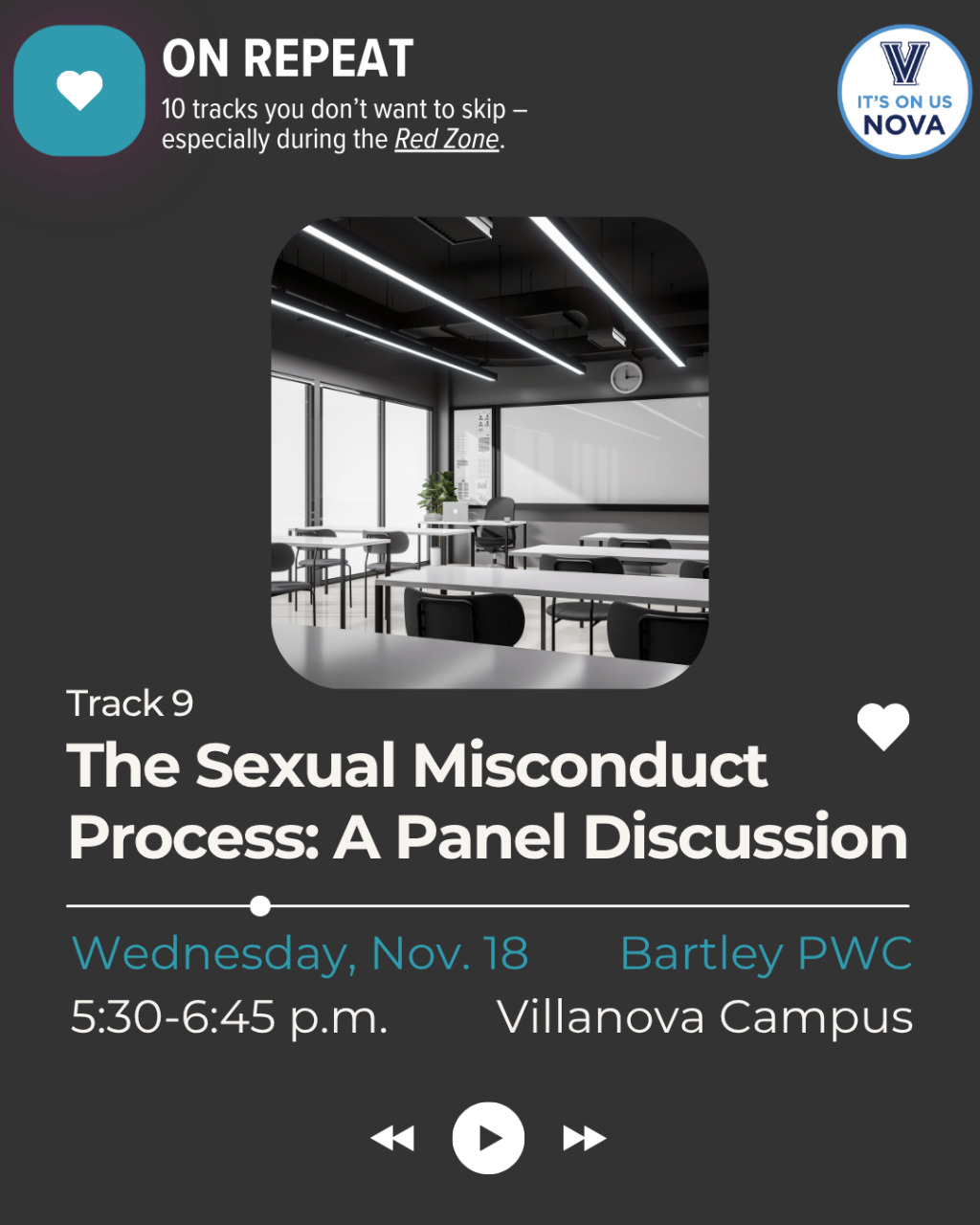
NOVEMBER 18, 2026
THE SEXUAL MISCONDUCT PROCESS: A PANEL DISCUSSION
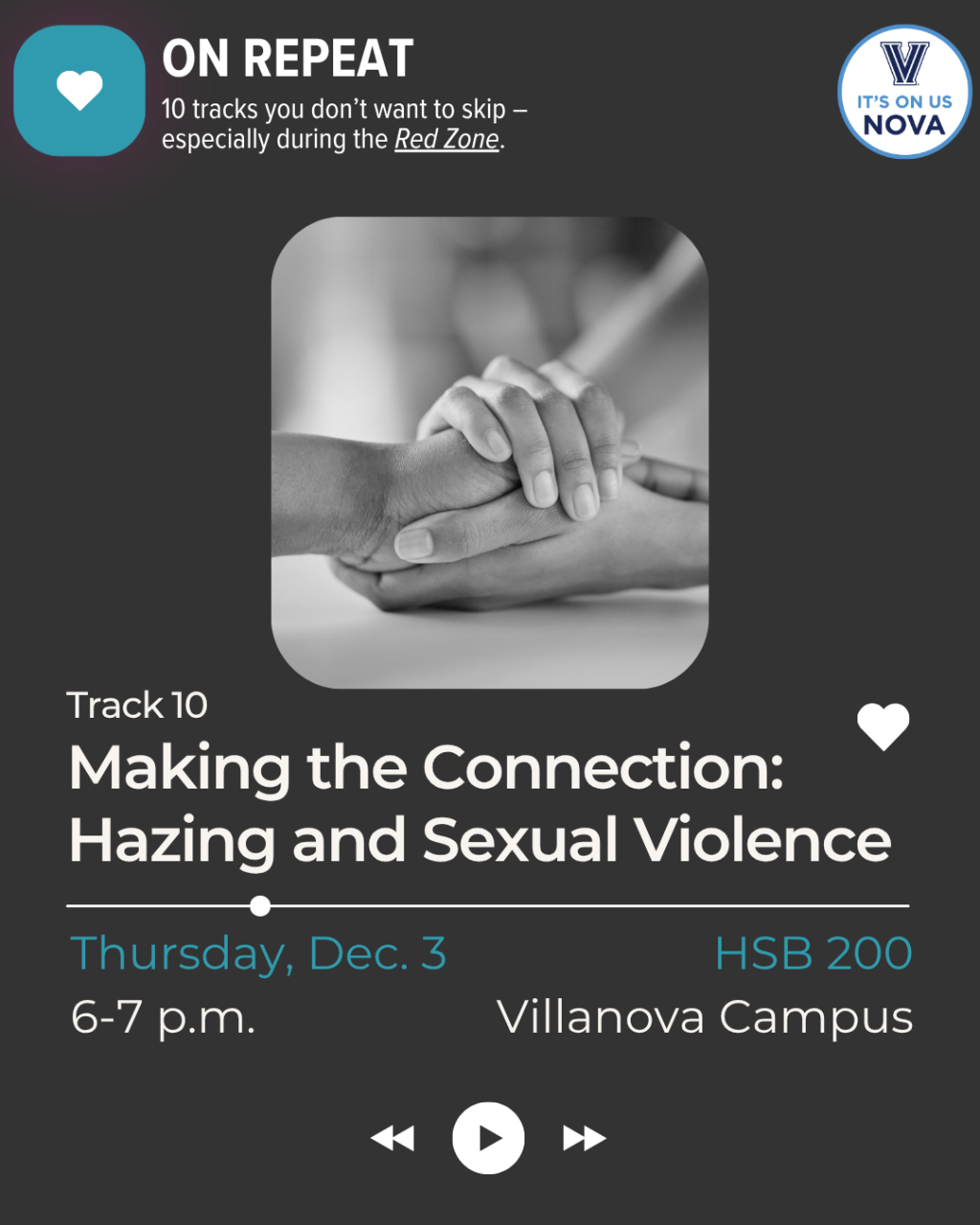
DECEMBER 3, 2026
MAKING THE CONNECTION: HAZING AND SEXUAL VIOLENCE
RESOURCES
Villanova offers many resources to help students, faculty, staff and families learn more about The Red Zone and how to prevent sexual violence, sexual misconduct and domestic violence. Explore our offices and programming:
The Title IX Office provides support and options to individuals impacted by sexual violence. The office oversees the University's reporting, complaint, investigation, and resolution processes, ensuring that concerns are addressed fairly, promptly, and in accordance with University policy. The Title IX Office connects community members with resources, provides information, and facilitates
The Sexual Assault Resource Coordinator (SARC) team is a group of Villanova staff and faculty members who care deeply about the issue of sexual violence and have completed extensive training on how to support survivors of sexual violence at Villanova.
A member of the SARC team is on available Monday-Friday, 9 am-5 pm for Villanova students who need support following an incident of sexual violence. Whether the incident occurred recently or days, weeks, months, even years ago, Villanova students can always seek the support of a SARC at 484-343-6028 or sarc@villanova.edu.
The Office of Health Promotion hosts a variety of events surrounding Domestic Violence Awareness Month (October) and Sexual Assault Awareness Month (April) as well as events and workshops throughout the year.
The Dean of Students Office serves as an initial point for making a report and can assist students with connecting to other offices.
Public Safety's 95-member staff provides on-campus coverage 24 hours a day, seven days a week, and a variety of services and resources to support a safe campus community. Public Safety also serves as an initial point for making a report of sexual assault and works with local authorities to investigate reports.
ADDITIONAL VIDEO RESOURCES
What if you had a really easy way to talk about consent? Watch these four short videos (60 to 90 seconds) from Mike Domitrz, Speaker, Author and Founder of The Center for Respect:

If you or someone you know has experienced sexual and/or dating violence, there are many resources available. Reporting sexual violence to any on or off campus resource does not automatically mean someone must go through a criminal and/or disciplinary complaint process. Contact the Title IX Office or visit https://www.villanova.edu/university/sexual-misconduct/support to learn more about available on and off campus resources to learn more.
IMPORTANT CONTACTS
24/7 RESOURCES:
Student Health Center: 610-519-4070
Public Safety: 610-519-4444
Delaware County Victim Assistance Center: 610-566-4342
Employee Health Advocate: 866-799-2728
CONFIDENTIAL RESOURCES:
University Counseling Center: 610-519-4050
Clergy in a pastoral capacity